The Doku follows the snow owls quest to survive winter. The animals travel from up north to central Europe and back. During their travels they‘ve developed plenty of strategies to make it through the harsh climates they encounter.
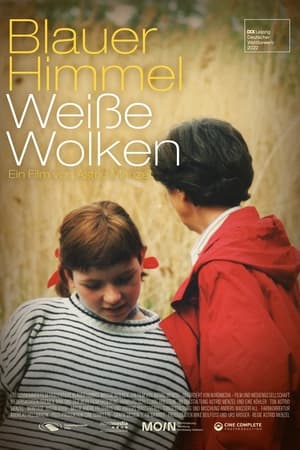
Grandma has become a little doddery. And since the death of her husband, called E.O., ever bigger gaps have opened in her memory, and her disorientation has increased. Director Astrid Menzel makes a decision: to take a ten-day canoe trip on northern German waters with her brother and the 86-year-old lady. An adventure whose outcome is uncertain and which the three travellers have to face anew at every stage.
Santino, a circus kid constantly on the move, listens to his great-grandfather's stories as his own life is just beginning.
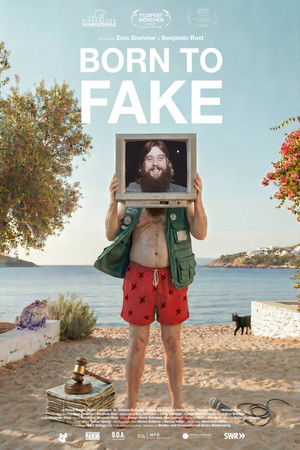
In 1996, one of the biggest media scandals in German history shook the public: Michael Born, a self-made journalist, had faked over twenty reports for the newly established private television station between 1990 and 1996. Some seemed amateurish, others dealt with absurd topics: child labor for IKEA in India, drug addicts licking toads to get high, and the Ku Klux Klan in the Eifel region were just some of his numerous fabrications. How did it come to this? Was Michael Born an enlightened figure who subversively exposed the tabloid system, a victim of the system, or simply a bumbling fraud? Film traces Michael Born's footsteps. Put together from hundreds of hours of raw material and the memories of former companions, an incredible story of forgery emerges. A media-theoretical film about levels of reality, fake news, and the question: Why do we actually believe what we see?
Ottobiography
SDP - Bunte Republik Deutschpunk
They sew our clothes, tan leather for shoes and bags. Twelve hours of work, every day. Despite this, the people in the supplier countries are often desperately poor. How does this poverty come about? Manfred Karremann explores this question using the example of Bangladesh, where much of what we use every day is produced. Bangladesh is the second largest textile producer in the world after China. The main reason for the poverty: goods are produced incredibly cheaply in Bangladesh. About nine cents an hour is paid for the dangerous work in a tannery. The seamstresses in the textile factories get a little more. Just enough to survive. Because that's what it's all about for the men, women and children who do any job, for any wage.
Ménopositive
Bruce Lee - Le Parcours d'un Guerrier
Morro do Cemitério
Public light rips through the night of a modern city. Sleeplessness is lit up by a computer monitor in an urban space, where day and night are no longer distinguished. Starting from videos of thermal cameras found online, a reflection goes through the changes in the contemporary city, the extension of social control mechanisms and the evolution of digital technologies to face the frontiers of a progressive expansion of the field of visible - and controllable - in the surveillance society.
A modest and loving portrait of a small enclave of old-fashioned beach huts by the North Sea. The sound track is fragments of conversations with the inhabitants, who themselves are not seen on screen; the protagonists on screen are the huts, the beach and the sea. And, only a stone’s throw away, the heavy industry of the Hoogovens furnaces.
The film is about Alexey Popogrebsky's film "How I spent this summer". In the film, there are no tedious reflections of the actors and the director about their film against the background of posters of the same film. But there is life itself, real, unmasked, and, despite the sea of comicality, it makes you horrified at how the Russian film process can take place…
The film, based on Robert Schumann's Pictures from the East, shows in an unusual perspective the work of Nizar Ali Badr, a Syrian sculptor whose unique language of stone sculptures radiates happiness and love in the face of war, destruction, migration, poverty and injustice. The animated sculptures made of pebbles present us with short stories. The soundtrack of the animation - original arrangements of melodies from Karlheinz Stockhausen's "Music Boxes" - is performed by Gidon Kremer and the musicians of his orchestra Kremerata Baltika.
This film is about Lyudmila (Lyala) Stanukinas, a documentary filmmaker, widow of director Pavel Kogan. The film was shot for 4 years as a chronicle, in the style of a"home handheld camera". But this is not a story about a director, but about a woman struggling with loneliness, who keeps love in her heart with all her might. The heroine exists in the episodes of the film without any author's comments. Also, the plot consists of fragments, "scraps" of old films, chronicles.
In the north of Russia, far beyond the Arctic Circle, on the shore of the White Sea, on the Kanin Peninsula, there is an amazing settlement. The houses in it, almost to the roofs, are covered with sand, and the streets are somewhere deep under the sand dunes. From a distance, this village can be mistaken for an abandoned one. But people live there. The film tells the story of the dramatic transformation of Shoina-a thriving fishing village-into a dying village, almost completely buried in the sand.
When the night falls, the sky comes alive. A flutter of wings that, for some, is the stuff of nightmares. One in every four mammals on the planet is a bat. But fear for these creatures is often misplaced, not all bats are blood-sucking beasts. The world of bats is incredibly diverse with some beautifully bizarre adaptations.
November 8, 2016 marked the 55th anniversary of the airing of the very first KVN program. The "Fun and Resourceful Club" has known good and bad times: for censorship reasons, it was closed in 1972, and revived only in 1986. But even without the broadcast, KVN existed on the student and amateur stages, lived, developed, and changed along with the time and the country. There is no such TV centenarian in the world. So who are they, the inventors of this "perpetual motion machine": Muratov, Yakovlev and Axelrod?
He is an influential bishop, a future patriarch, a possible confessor of Putin, a member of the Athos and Izborsk clubs. He is friends with Sechin and Mikhalkov, and lobbies for Vasilyeva's candidacy. The Minister of Culture, Medinsky, waits for him in the corridor for several hours. He is an ideologist of extreme church fundamentalism and a master of hardware games. He is Tikhon Shevkunov, the main character of the documentary film "The Confessor"by Sergey Yerzhenkov and Vladislav Pushkarev.
The protest events that took place in Moscow in 2011-2012 affected the fate of many people. After 5 years, the participants of these events share their stories.