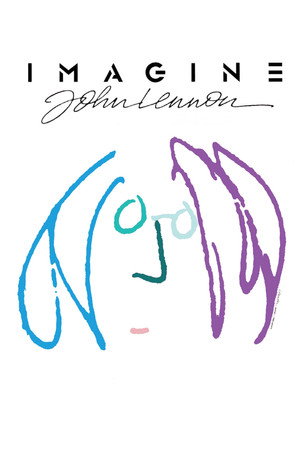
The biography of former Beatle, John Lennon—narrated by Lennon himself—with extensive material from Yoko Ono's personal collection, previously unseen footage from Lennon's private archives, and interviews with David Bowie, his first wife Cynthia, second wife Yoko Ono and sons Julian and Sean.
In the desolate countryside, haunted by recurrent dreams, a young drifter finds himself at the borderlands between the living and the dead.
Speaking Eyes
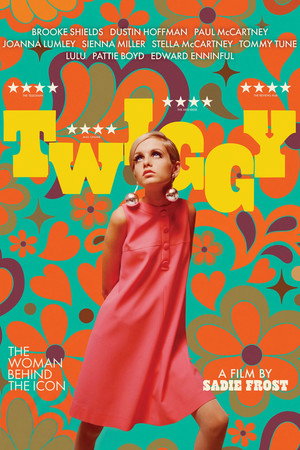
Twiggy takes a comprehensive look at the life story of UK model and cultural icon Twiggy, real name Lesley Lawson, whose career kickstarted in the 1960s. It features interviews with Twiggy and her husband Leigh Lawson, as well as commentary from Erin O’Connor, Paul McCartney, Lulu, Poppy Delavigne, Brooke Shields, Pattie Boyd and Zandra Rhodes.
An installation film that consists of a six-hour-long monologue performed by Edith Clever, who reads texts by Syberberg and many different authors, such as Johann Wolfgang von Goethe, Heinrich von Kleist, Plato, Friedrich Hölderlin, Novalis, Friedrich Nietzsche, Eduard Mörike, Richard Wagner, William Shakespeare, Samuel Beckett, and Chief Seattle.
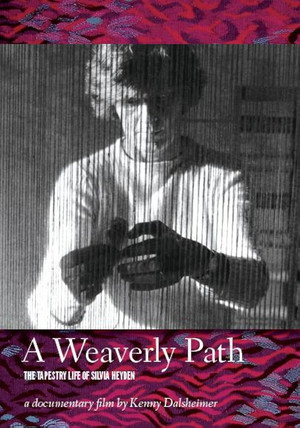
A Weaverly Path offers an intimate portrait of Swiss-born tapestry weaver Silvia Heyden. The film captures the inner dialogue and meditations of an extraordinary artist in the moments of creation. Heyden works for over a year to create works inspired by the Eno River in Durham, North Carolina. And she shares how nature, music, her Bauhaus inspired education at the School of the Arts in Zurich and her life experiences anchor and inform her art. Heyden was a 20th century modernist whose body of work redefines the art of modern tapestry.
Rolland, a 70 year-old man, exiled by his family due to his sexual orientation, makes peace with the past by finding himself in a small ghost town in the western part of Jalisco, San Sebastián del Oeste. Almost 40 years later, he wants to go back to his hometown, try to regain his daughter's love and be a part o his granddaughter's life.
This film features some of the most important living Postmodern practitioners, Charles Jencks, Robert A M Stern and Sir Terry Farrell among them, and asks them how and why Postmodernism came about, and what it means to be Postmodern. This film was originally made for the V&A exhibition 'Postmodernism: Style and Subversion 1970 - 1990'.
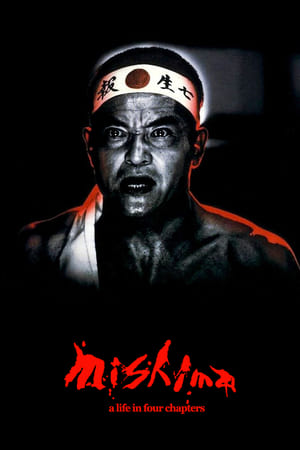
A fictional account of the life of Japanese author Yukio Mishima, combining dramatizations of three of his novels and a depiction of the events of November 25th, 1970.
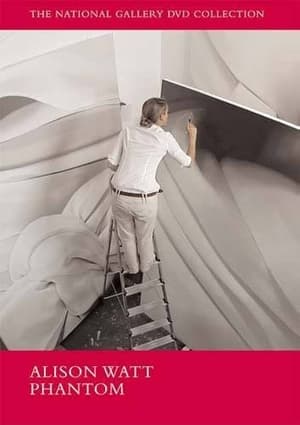
Alison Watt became the National Gallery's Seventh Associate Artist in 2006. This art film records her two-year residency, as she created paintings inspired by masterpieces in the National Gallery. She already had a lifelong attachment to paintings in the collection, yet the prolonged contact, particularly with Saint Francis in Meditation by Francisco de Zurbarán, led her to notice new details and unexpected nuances which influenced her own art. Through a series of interviews with Watt, this art film documents the formation of this exhibition, with particular emphasis on the creative process.
In 2003, eight Rhode Islanders created a secret apartment inside a busy mall and lived there for four years, filming everything along the way. Far more than a prank, the secret apartment became a deeply meaningful place for all involved.
A moment of weakness after a humiliating breakup leads Zahra, a young Muslim woman to play a forbidden lottery ticket. Her chance at escape becomes a spiritual crisis. While her coworker dreams of riches, she’s certain Allah is watching and waiting.
A taxi driver kicks a homeless woman out of his car. It'll be a long night until he can make amends.
The short film recreates the final scene of the 1984 film of the same name. The story centers on the encounter between Pedro Navaja and his wife Rosa, whose conflict leads to a violent confrontation that ends with the death of both characters.
A disillusioned songwriter and a restless receptionist confront their regrets over an Autumn weekend in Macon, Georgia.
In 1575, the young soldier Miguel de Cervantes is captured on the high seas by Barbary pirates and taken to Algiers as a hostage. Aware that a cruel death awaits him if his family does not pay his ransom soon, he finds refuge in his passion for storytelling.
A troubadour is expelled from the city when the queen sees his disfigured face. The palace guards smash his instrument as punishment, but the musician does not lose his determination to continue making music.
A man falls in love with a beautiful young woman and begins to suspect that he may have also loved her in a previous life.
The story follows Leah, a resilient young woman navigating a world reshaped by a sudden and terrifying outbreak. As society collapses and the threat of the undead looms, Leah struggles not only to survive the new dangers around her but also to process the emotional weight of her past. Through haunting flashbacks, we glimpse her relationship with Mason-her longtime partner-and the unresolved tensions, love, and missed moments that defined their life before everything changed. Blending intimate relationship drama with apocalyptic horror, the film explores how ordinary human conflicts are magnified in extraordinary circumstances. As Leah moves between memories of what once was and the harsh reality of what now is, she's forced to confront loss, love, and the difficult choices that come with survival.
Cranes and Voices explores the evocative power of sound through the experiences of people who hear voices and a collective of sound investigators, tenants documenting their neighborhood. By bringing together listening experiences, housing, and creative practices, the film approaches sound as an ambivalent force, questioning our ability to listen—to the city, to others, and to ourselves.