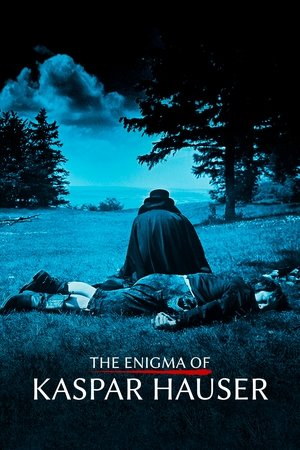
The film follows Kaspar Hauser, who lived the first seventeen years of his life chained in a tiny cellar with only a toy horse to occupy his time, devoid of all human contact except for a man who wears a black overcoat and top hat who feeds him.
A tribute to the controversial black activist and leader of the struggle for black liberation. He hit bottom during his imprisonment in the '50s, he became a Black Muslim and then a leader in the Nation of Islam. His assassination in 1965 left a legacy of self-determination and racial pride.
During World War II, the US Army's only all-Black, all-women battalion takes on an impossible mission: sorting through a three-year backlog of 17 million pieces of mail that hadn't been delivered to American soldiers and finish within six months.
In the summer of 1941, the United States and Japan seem on the brink of war after constant embargos and failed diplomacy come to no end. "Tora! Tora! Tora!", named after the code words used by the lead Japanese pilot to indicate they had surprised the Americans, covers the days leading up to the attack on Pearl Harbor, which plunged America into the Second World War.
"Selma," as in Alabama, the place where segregation in the South was at its worst, leading to a march that ended in violence, forcing a famous statement by President Lyndon B. Johnson that ultimately led to the signing of the Voting Rights Act.
Kicked out by his parents, a gay teenager leaves small-town Indiana for New York's Greenwich Village, where growing discrimination against the gay community leads to riots on June 28, 1969.
An aspiring young politician named Willy Brandt wants to become German Chancellor, but the current Chancellor Konrad Adenauer wants to prevent this at all costs and by any means necessary. Adenauer has the secret service and old alliances with a Nazi past on his side and has Brandt's election campaign spied on and torpedoed by informants in the party executive. He pulls out all the tricks to outdo the charismatic Brandt. The Federal Chancellor does not stop at damaging his reputation and defaming him - all in order to maintain his power and defeat the supposed communist "enemy".
The film consists of three novels: the first novel about Gobustan, an ancient human settlement. The second novel deals with the theme of the East and women. The third novel tells about January 20, 1990 and the Khojaly tragedy.
In 1933, Welsh journalist Gareth Jones travels to Ukraine, where he experiences the horrors of a famine. Everywhere he goes he meets henchmen of the Soviet secret service who are determined to prevent news about the catastrophe from getting out. Stalin’s forced collectivisation of agriculture has resulted in misery and ruin—the policy is tantamount to mass murder.
An American Ambassador is killed during an attack at a U.S. compound in Libya as a security team struggles to make sense out of the chaos.
The final entry in the Oversimplified second Punic war series. Will knock your togas off.
After numerous military operations, Major Müller can't find a way back into civilian life. Following his urge to communicate, the Major is looking for listeners and encouragement. He doesn't find either. Instead, the repeated monological memory of his own heroic deeds determines his present – with all the consequences. This 30-minute short film is based on the statements made by the mercenary Siegfried Müller in the documentary “The Laughing Man” (Walter Heynowski and Gerhard Scheumann, DEFA studio for newsreels and documentaries, 1966), as well as records from the German colonial period in Africa. An intensive contribution to the necessary public debate about the consequences of military operations.
Hortus Malabaricus is a poetic exploration of Kerala’s lost herbal heritage, unfolding the story of a 17th-century manuscript where native wisdom met colonial curiosity. Blending history, memory, and nature, the film journeys through forgotten texts and living voices, reviving the deep-rooted bond between people, plants, and place a timeless legacy etched in leaves and language.
The destruction of the traditional legal system is probably one of the lesser-known yet essential goals of the Nazi state. The aim was to establish the supremacy of the "people's community" over the individual by subjugating the judicial system. The documentary looks at the careers of four people who were actively involved or became victims.
Born into poverty in Panama, Cirilo McSween’s journey is one of defiance, resilience, and triumph over systemic barriers. Against the backdrop of Jim Crow America, he confronts racism while pursuing the American Dream. From his arrival in the U.S. as an ambitious immigrant to his rise as a trailblazing entrepreneur and civil rights activist, McSween’s life stands as a testament to determination and community. Through tireless advocacy for equality and opportunity, he helped shape both Panama’s identity and Chicago’s civil rights movement. A confidant of Dr. Martin Luther King Jr., a pioneering insurance executive, and a philanthropist empowering underserved communities, McSween’s story bridges nations and generations. CIRILO, A Legacy Untold illuminates a transformative figure whose legacy continues to inspire across the Americas.
In 1941, a Jewish woman on the run with forged papers involuntarily shares a train compartment with a German officer.
'THE QUEST: Nepal' is an epic journey to deeper understand and climb the most iconic mountain on earth, Everest, and to unveil the fascinating culture, history and nature of Nepal. From experiencing Mt. Everest like never before to witnessing remarkable rarely seen stories from one of the most unique countries in the world, 'THE QUEST: Nepal' is truly a one-of-a-kind cinematic journey like no other, and one which embodies the incredible human spirit of adventure that lives inside us all!
The Prophet Joseph Smith is dead, killed by a mob. Enemies of the LDS Church think the church will die with Joseph. In fact, that danger is a real possibility. The crisis is undeniable, and the saints in Nauvoo are in chaos.
On an expedition through Latin America, Italian General Italo Balbo made the Atlantic crossing with his seaplane squadron, which left Boloma, entered Brazilian territory via Natal and now ended its journey in the capital Rio de Janeiro. Arrival of the fascist squadron at Enseada de Botafogo. People, many in boats, applaud the descent of the seaplanes. A group of officers searches the soldiers in profile. Italo Balbo, Ambassador Vittorio Cerrutti and Royal Consul Onorevole Mammalella watch the parade of troops. A group of officers with Col. Magdalena, "the intrepid hero of several aerial feats". At the Catete Palace, Balbo and Cerrutti are received by the President of the Provisional Government, Getúlio Vargas, and his ministers. The Italian delegation leaves the Catete Palace.
It was arguably the deadliest conference in human history. The topic: plans to murder 11 million Jews in Europe. The participants were not psychopaths, but educated men from the SS, police, administration and ministries. The invitation to the meeting at Wannsee came from Reinhard Heydrich, head of the Reich Security Main Office. The Wehrmacht's campaigns of conquest in Eastern Europe marked the beginning of the systematic murder of Jews in Poland and the Soviet Union. In mid-September 1941, Hitler made the decision to deport all Jews from Germany to the East. Although there had been transports before, Hitler's order represented a further escalation in the murderous decision-making process. Persecution and discrimination had been part of everyday life since 1933. But as a result, the living conditions for the Jews in the Third Reich became even more difficult, among them the Berlin Jew Margot Friedländer, born in 1921, and the Chotzen family.