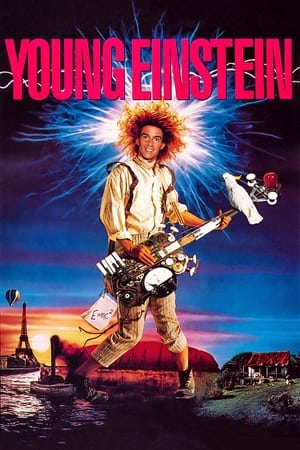
Albert Einstein is the son of a Tasmanian apple farmer, who discovers the secret of splitting the beer atom to put the bubbles back into beer. When Albert travels to Sydney to patent his invention he meets beatuiful French scientist Marie Curie, as well as several unscrupulous types who try to take advantage of the naive genius and his invention.
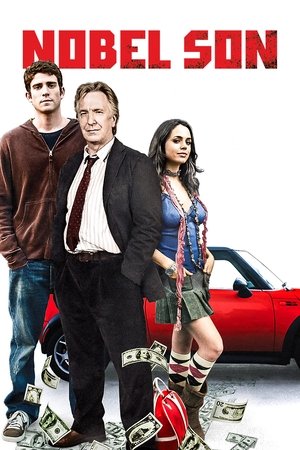
Soon after his insufferably arrogant father wins the Nobel Prize for chemistry, Barkley Michaelson is kidnapped by Thaddeus James, a young genius who claims to be Barkley's illegitimate half-brother. Motivated not so much by money as revenge, Thaddeus tries to convince Barkley to help him carry out a multimillion-dollar extortion plot against their patriarch.
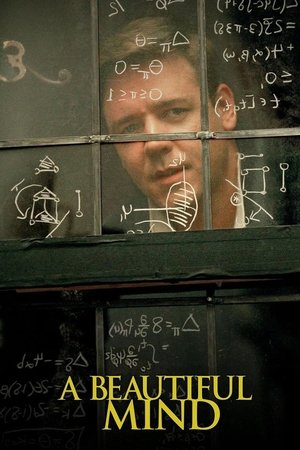
From the heights of notoriety to the depths of depravity, John Forbes Nash Jr. experiences it all. As a brilliant but socially awkward mathematician, he made a groundbreaking discovery early in his career and stands on the brink of international acclaim. But as the handsome and arrogant Nash accepts secret work in cryptography, he becomes entangled in a mysterious conspiracy. His life takes a nightmarish turn and he soon finds himself on a painful and harrowing journey of self-discovery.
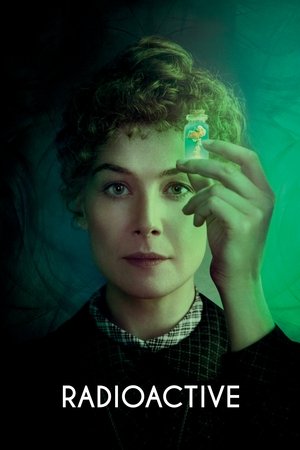
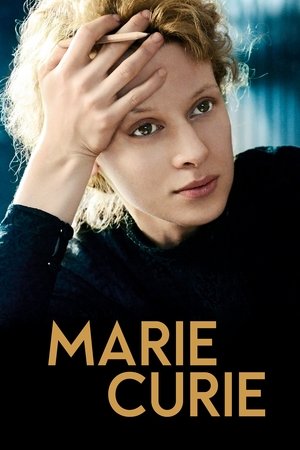
The story of Nobel Prize winner Maria Skłodowska-Curie and her extraordinary scientific discoveries—through the prism of her marriage to husband Pierre—and the seismic and transformative effects their discovery of radium had on the 20th century.
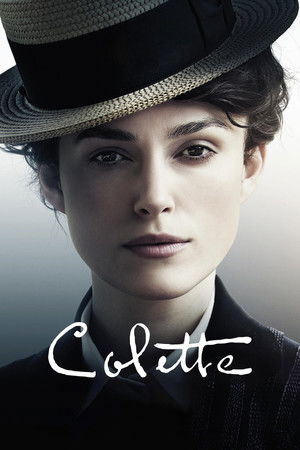
After marrying a successful Parisian writer known commonly as Willy, Sidonie-Gabrielle Colette is transplanted from her childhood home in rural France to the intellectual and artistic splendor of Paris. Soon after, Willy convinces Colette to ghostwrite for him. She pens a semi-autobiographical novel about a witty and brazen country girl named Claudine, sparking a bestseller and a cultural sensation. After its success, Colette and Willy become the talk of Paris and their adventures inspire additional Claudine novels.
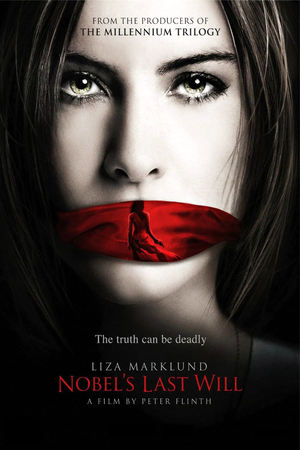
While covering the annual Nobel Banquet for tabloid Kvällspressen, crime reporter Annika Bengtzon witnesses a spectacular murder right in front of her. Two people are shot, one of them the controversial Laureate in Medicine, Aaron Wiesel. Annika is the key witness and is bound by the police not to disclose anything she has seen. A terrorist group with connections to the Middle East quickly admits responsibility for the murder. International press is all over the story, as are the police.
This John Nesbitt's Passing Parade short tells the story of Alfred Nobel, who invented dynamite, and later established the Nobel Prize.
In 1934, while traveling to Stockholm, where he is about to receive the Nobel Prize, the Italian playwright Luigi Pirandello recalls his life and his relationship with the loved ones who have inspired his art.
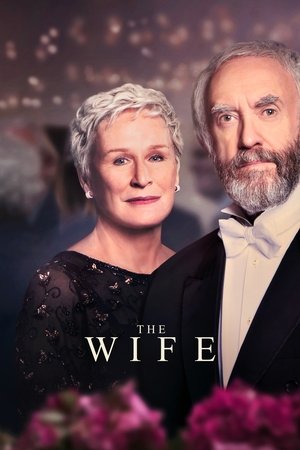
A wife questions her life choices as she travels to Stockholm with her husband, where he is slated to receive the Nobel Prize for Literature.
The most turbulent five years in the life of a genius woman: Between 1905, where Maria Skłodowska-Curie comes with Pierre Curie to Stockholm to be awarded the Nobel Prize for the discovery of the radioactivity, and 1911, where she receives her second Nobel Prize, after challenging France's male-dominated academic establishment both as a scientist and a woman.
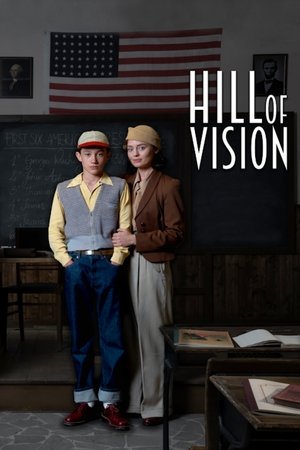
Italy, WWII. After his anti-fascist mother is arrested, Mario spends his childhood on the streets. In 1947 they are miraculously reunited and start a new life in America. Based on the life of Mario Capecchi, 2007 Nobel Prize in Medicine.
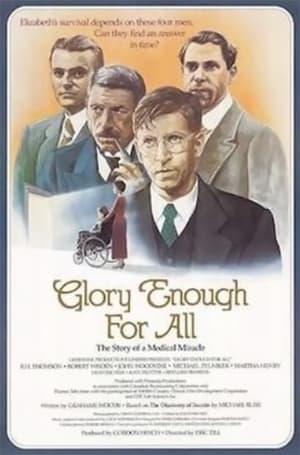
Glory Enough for All is the 1988 television movie depicting the discovery and isolation of insulin at the University of Toronto by Frederick Banting and Charles Herbert Best. It won the 1989 Gemini award for best miniseries.
Aliens have landed and are hiding on Earth, but need Earth’s scientists to help them fight an inter-planetary war.
A group of Nobel laureates descends on Stockholm to accept their awards. Among them is American novelist Andrew Craig, a former literary luminary now writing pulp detective stories to earn a living. Craig, who is infamous for his drinking and womanizing, formulates a wild theory that physics prize winner Dr. Max Stratman has been replaced by an impostor, embroiling Craig and his chaperone in a Cold War kidnapping plot.
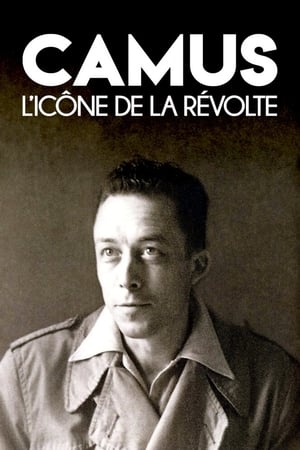
An account of the brief life of the writer Albert Camus (1913-1960), a Frenchman born in Algeria: his Spanish origin on the isle of Menorca, his childhood in Algiers, his literary career and his constant struggle against the pomposity of French bourgeois intellectuals, his communist commitment, his love for Spain and his opposition to the independence of Algeria, since it would cause the loss of his true home, his definitive estrangement.
Albert Camus died at 46 years old on January 4, 1960, two years after his Nobel Prize in literature. Author of “L'Etranger”, one of the most widely read novels in the world, philosopher of the absurd and of revolt, resistant, journalist, playwright, Albert Camus had an extraordinary destiny. Child of the poor districts of Algiers, tuberculosis patient, orphan of father, son of an illiterate and deaf mother, he tore himself away from his condition thanks to his teacher. French from Algeria, he never ceased to fight for equality with the Arabs and the Kabyle, while fearing the Independence of the FLN. Founded on restored and colorized archives, and first-hand accounts, this documentary attempts to paint the portrait of Camus as he was.
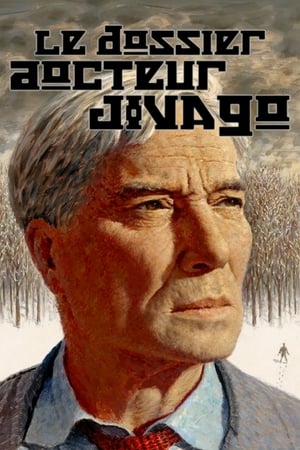
As Russian writer Boris Pasternak (1890-1960) thinks it is impossible that his novel Doctor Zhivago is published in the Soviet Union, because it supposedly shows a critical view of the October Revolution, he decides to smuggle several copies of the manuscript out of the country. It is first published in 1957 in Italia and the author receives the Nobel Prize in Literature in 1958, which has consequences.
Albert Camus, who died 60 years ago, continues to inspire defenders of freedom and human rights activists around the world today. The Nobel Prize winner for literature is one of the most widely read French-language writers in the world. He continues to embody the rebellious man who opposes all forms of oppression and tyranny while refusing to compromise his human values.
Astrophysicists show how black holes might hold answers to how the universe evolved, leading to life on Earth and, ultimately, the human race.
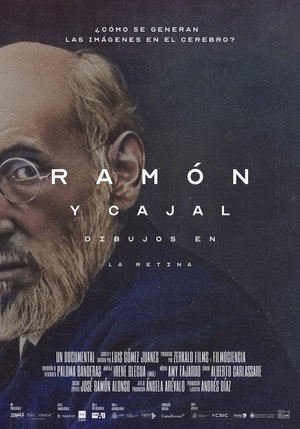
“Ramón y Cajal: drawings on the retina” is a documentary about the Nobel Prize winner that explores, from a contemporary perspective, his fascination with images as a bridge between the reality of the physical world and that created in the brain, with a new integrative approach to his artistic and scientific facets and his legacy, told through the experiences and points of view of researchers, artists, historians, family members, and other experts who consider Cajal a visionary who transcended his own science. In one of the laboratories, a machine answers Cajal's last question: how are images formed in the brain?