A handful of prisoners in WWII camps risked their lives to take clandestine photographs and document the hell the Nazis were hiding from the world. In the vestiges of the camps, director Christophe Cognet retraces the footsteps of these courageous men and women in a quest to unearth the circumstances and the stories behind their photographs, composing as such an archeology of images as acts of defiance.
The NFL has staged 48 Super Bowls. Four photographers have taken pictures at every one of them. In KEEPERS OF THE STREAK, director Neil Leifer tells the story of this exclusive club, made up of John Biever, Walter Iooss, Mickey Palmer and Tony Tomsic. With their cameras, they have captured football's biggest game of the year for almost five decades.
Bunny Yeager, once heralded as the world's prettiest photographer, had a huge influence in 20th-century pop culture though few people know her name. Whether by popularizing the bikini, helping discover Bettie Page, shaping the image of Playboy or inventing the selfie, Bunny was a trailblazer whose work bucked against conservative 1950s America and helped pave the way for the feminist movement and the sexual revolution. Yet the very changes she helped usher in would soon render her a forgotten relic...till now.
A documentary on how British double-dealing during the First World War ignited the conflict between Arab and Jew in the Middle East. The bitter struggle between Arab and Jew for control of the Holy Land has caused untold suffering in the Middle East for generations. It is often claimed that the crisis originated with Jewish emigration to Palestine and the foundation of the state of Israel. Yet the roots of the conflict are to be found much earlier – in British double-dealing during the First World War. This is a story of intrigue among rival empires; of misguided strategies; and of how conflicting promises to Arab and Jew created a legacy of bloodshed which determined the fate of the Middle East.
The film tells the story of the intimate and unprecedented encounter between the photojournalists of the Magnum Agency and the world of cinema. The confrontation of two seemingly opposite worlds – fiction and reality. For 70 years their paths crossed: a family of photographers, amongst them the biggest names in photography, and a family of actors and filmmakers who helped write the history of cinema, from John Huston to Marilyn Monroe to Orson Welles, Kate Winslet and Sean Penn.
This intriguing and beautifully-shot newsreel features sea-faring heroes, feisty females and a generous lick of paint for a Mississippi steamship.
This documentary profiles the major jets used by the RAF between 1945 and the mid-1950s, the period when the British air force was the second largest in the world
Portrait of an actress in constant evolution who, through risk-taking and side steps, has emancipated herself from the overly polished image forged by the Star Wars trilogy to become a talented and committed artist, a recognized ambassador for the feminist cause.
A contemplation of art and adventure in the southern wilds of New Zealand by both a landscape photographer and an adventure filmmaker. This film is the unexpected result of their two unique perspectives.
The life of internationally renowned artist and activist Nan Goldin is told through her slideshows, intimate interviews, ground-breaking photography, and rare footage of her personal fight to hold the Sackler family accountable for the overdose crisis.
The Holocaust began with the indiscriminate mass shootings by the Einsatzgruppen in the bloodlands of Eastern Europe and was perfected in the gas chambers at Auschwitz. “Bullets And Blueberries” explores the motives, methods and madness of the perpetrators, using never-before-seen images captured by the killers themselves — images that fully capture the banality of evil.
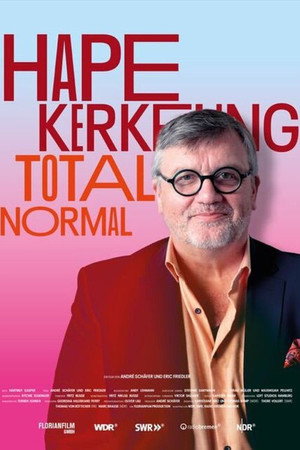
To mark the 60th birthday of the multi-talented comedian, singer and author Hape Kerkeling, the two documentary filmmakers André Schäfer and Eric Friedler have created a quiet, thoughtful and entertaining portrait of this often anarchic humorist. The film tells of his rapid rise as a teenager, his time and the blows of fate during the AIDS epidemic, the controversial forced outing, his confident exit from the show business and his new beginning. The film is a sensitive insight into the family history and a fast-paced journey through the career stages of a formative figure in German TV entertainment.
Fueled by a raging libido, Wild Turkey, and superhuman doses of drugs, Thompson was a true "free lance, " goring sacred cows with impunity, hilarity, and a steel-eyed conviction for writing wrongs. Focusing on the good doctor's heyday, 1965 to 1975, the film includes clips of never-before-seen (nor heard) home movies, audiotapes, and passages from unpublished manuscripts.
A beautiful collection of pictures ties Frank Cancian, an elderly photographer and retired professor of anthropology, American with origin from Veneto, to the people of Lacedonia, a small town in southern Italy. Thanks to the rediscovery of the photos taken in 1957 by the young Cancian in that rural village where he had arrived almost by chance, the story resumes there where it was interrupted 60 years earlier. And the thread of memories ties back to people and places, bringing with itself some essential reflections on how photography can become an ethnographic look at small communities.
Walker Evans/America profiles the great American photographer Walker Evans (1903-1975), whose style influenced a entire generation of photographers. He is best known for his collaboration with writer James Agee on the book "Let Us Now Praise Famous Men", which illustrated the plight of tenant farmers during the Great Depression. A pioneer of the documentary style of photography, Evans was the first photographer to have a one-man retrospective at The Museum of Modern Art. His photographs, from southern sharecroppers to New York subway riders, are point-of-view images that reflect his distinctive vision of America. Walker Evans/America contains rare interviews with Evans himself, recorded by filmmaker Sedat Pakay while a student at Yale University in the late 1960s.
Follow the animated journey of an Indigenous photographer as she travels through time. The oral and written history of her family reveals the story — we witness the impact and legacy of the railways, the slaughter of the buffalo and colonial land policies.
This documentary looks back on a career of a woman who, very early on, refused to accept the roles assigned to her. In the 1980s, while others were trying to please, she wrote "Les hommes préfèrent les grosses" (Men Prefer Fat Women), a manifesto ahead of its time, funny, feminist, and blunt. Later, with "Gazon maudit" (Damned Grass), she tackled homosexuality with a freedom that is still shocking today.
Armádní den
“There’s a bus stop I want to photograph.” This may sound like a parody of an esoteric festival film, but Canadian Christopher Herwig’s photography project is entirely in earnest, and likely you will be won over by his passion for this unusual subject within the first five minutes. Soviet architecture of the 1960s and 70s was by and large utilitarian, regimented, and mass-produced. Yet the bus stops Herwig discovers on his journeys criss-crossing the vast former Soviet Bloc are something else entirely: whimsical, eccentric, flamboyantly artistic, audacious, colourful. They speak of individualism and locality, concepts anathema to the Communist doctrine. Herwig wants to know how this came to pass and tracks down some of the original unsung designers, but above all he wants to capture these exceptional roadside way stations on film before they disappear.
A benefit concert and telethon organized by George Clooney and broadcast uninterrupted and commercial-free by the four major television networks just 10 days after the September 11, 2001 attacks on the World Trade Center and The Pentagon to raise money for the victims and their families,