A voyage from Earth to the edge of the universe.
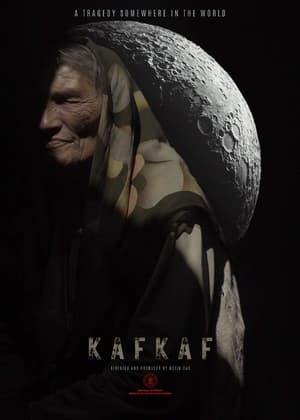
We are in Varto. On August 19th 1966, the peaceful silence of ancient lands was broken for 30 seconds. Those 30 seconds changed the destiny of many people for decades. Townsfolk run screaming from the earthquake, which is a mystery for them. People repeat the word “Kaf” to one another as they run away. Screams join the rumble of the roaring land. Houses are ruined, bodies are buried in the ground, snakes invade, bees attack, there is water shortage and great pain. Varto is in ruins. A new day comes, a month, a year and the story of a tragic journey continues for the people who survived. Survivors migrate to all corners of the country and the world. Varto was unknown in the world media until this terrifying incident. This film aims to witness the fate of a land and journey of the people who experienced the 1966 Varto earthquake, carrying its tragic marks for life.
ESPN Films’ latest documentary “Yankees-Dodgers: An Uncivil War” will debut Tuesday, September 27 at 9 p.m. ET on ESPN. In 1977 and 1978, the New York Yankees and Los Angeles Dodgers squared off in back-to-back World Series. Each club was a tenuous collection of talent and personalities that threatened to combust at any moment, but ultimately managed to reach the pinnacle of the sport. Produced by Mark Shapiro and Peter Guber in association with FILM45, directed by Fritz Mitchell and narrated by actor Rob Lowe, the documentary tells the story of a rivalry filled with colorful characters, seismic controversies and unforgettable moments.
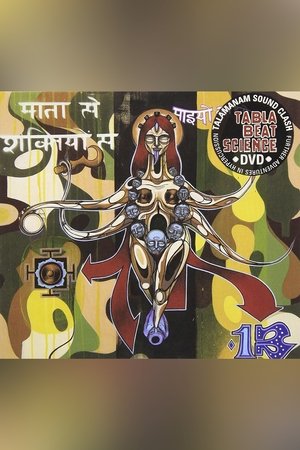
Filmed June 21, 2002 with 12 cameras at the legendary Fillmore in San Francisco, this DVD documents a Tabla Beat Science performance that features founders Zakir Hussain (Tablas) and Bill Laswell (Bass), along with Ustad Sultan Khan (Sarangi and Vocals), Ejigayehu "Gigi" Shibabaw (Vocals), Karsh Kale (Drums), DJ Disk (Turntable) and MIDIval PunditZ (Electronics). Directed by Alex Winter.
“The Fallbrook Story,” is a 20-minute film of Cold War-era uneasiness in which director Frank Capra rails against what he calls the evils of Big Bureaucracy. In 1951, Capra lived in Fallbrook, California on his 1,000-acre Red Mountain Ranch farm filled with olive groves. The federal government, which had purchased the old Rancho Santa Margarita land in 1941 to build Camp Pendleton, was concerned that ranchers upstream would take or pollute the Santa Margarita River, which ran through Camp Pendleton. Capra’s film documents how Fallbrook residents fought back against the federal government.
Perennially popular in China, paper-cutting is treasured for its ability to transform ordinary paper into intricately patterned, brilliantly colored works of art. This program, filmed in Hubei Province, charts the evolution of Chinese paper-cutting from traditional cutouts representing luck and health to modern visual art as it illustrates the designing, cutting, and coloring processes. Tsuwoo Wi, whose father was the only apprentice of the great Master Wang Lao Shang, is featured, along with Tsuwoo Tsuing, of Central Art College, Beijing.
Performances recorded as part of the American Dance Festival, at the Pilobolus Dance Theatre. Interviewees: Charles Reinhart, Stephanie Reinhart, Alison Chase, Michael Tracy.
Wayang Golék is the rod-puppet theater of Sunda (West Java), Indonesia, which incorporates a vibrant mixture of storytelling, songs, and instrumental music. This program introduces the Wayang Golék tradition, focusing on puppeteer, musician, and puppet-maker Atik Rasta and his family. The first part of the video features footage from an all-night performance, interwoven with interviews with the artists. The second part examines the music of the accompanying gamelan ensemble.
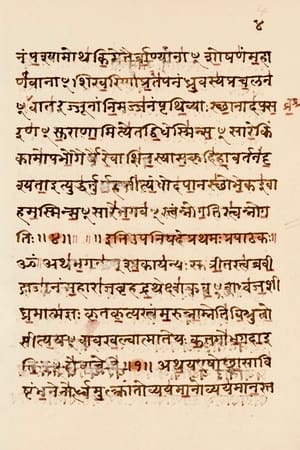
The Vedas are a large corpus of texts originating in Ancient India. Philosophies and sects that developed in the Indian subcontinent have taken differing positions on the Vedas.
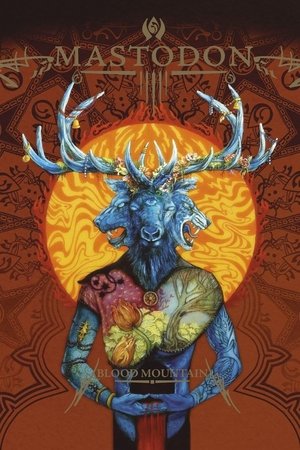
Video documentary of the making of Blood Mountain, the third full-length studio album and major label debut by American heavy metal band Mastodon.
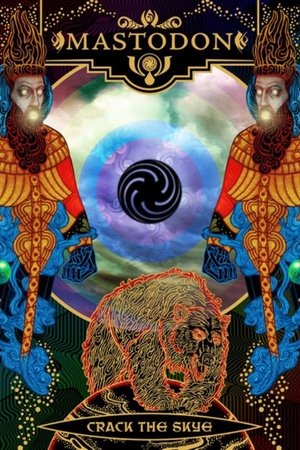
Video documentary of the making of Mastodon's Crack the Skye.
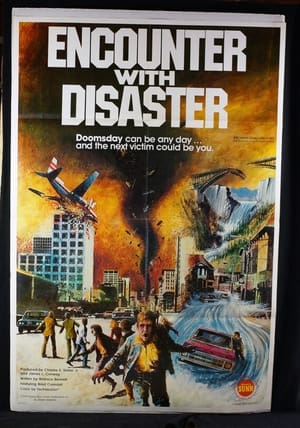
Depicts assorted natural and human disasters, including the crash of the Hindenburg (1937), earthquakes in Alaska (1964) and Long Beach (1933), the LeMans auto racing crash at which 82 people were killed (1955), Hurrican Camille (1964), the eruption of the Mt. Etna volcano (1971), a tornado (1974), the collapse of Idaho's Teton Dam (1976), the sinking of the Andrea Doria (1956) and the Texas City explosion which devastated Galveston (1947).
This astonishing glimpse into the restaurant world examines sexual harassment concealed within the industry, causing many employees to suffer in silence or leave their jobs rather than confront a celebrity chef or powerful owner who can ruin their career.
Contra o Golpe
When a rural entrepreneur hears stories of a German Tiger tank sunk in the border marshes, plans are hatched to find it and pull it out of the swamp with private machinery. The rhythms of the life of the tireless Ilūkštis and his relationship with his extended family are revealed as he chases the tank. But does the world need another tank when the fragility of human life is realised?
The Hundred Squares: "No more delays," the cry of citizens echoes from the lives of those barely holding out against discrimination and hatred. Struggling with diverse identities in their daily lives, citizens reflect on the meaning of "discrimination" through their own experiences and testimonies. They question and reflect on what is needed to eliminate it and speak out before the camera. The Blooming Equalities: discrimination law that has been on hold for 20 years. A lawyer, a researcher, a religious figure, a writer, and an activist stand in the square again after a year, and, in this time of rampant right-wing extremism and hate, they speak of an anti-discrimination law as "the right answer to ending the insurrection, the last line of defense for human dignity, a current that can no longer be held back, a square that cannot at all harm families, churches, and the nation, and a place where the voices of the less fortunate can be heard."
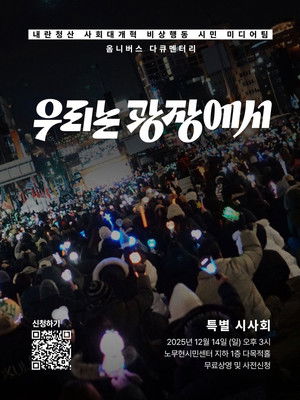
Ep1. The Martyr and the Left: Under the Yoon Suk-yeol administration, construction workers were branded as “construction gangsters,” forced to endure a period of hardship. Ep2. Purple Ribbon: Wearing purple jackets and holding purple light sticks, the families of the victims of the October 29 Itaewon Disaster stand out on the street. Ep3. Dream, Breath: “I” keep waking up from dreams of being chased, a recurring cycle that haunts me day after day. Ep4. Breaking the Silence: Chai-han, who once said their dream was to become a human-rights activist, gradually grows distant from that dream after entering university. Ep5. Dancing Volunteer: After the December 3 martial law was declared, Park Pyeong-hwa felt compelled to return to the square. Ep6. Beyound the Impeachment: We interviewed a diverse group of people who came to the square after the December 3 uprising.
Using photographs and films shot by a French Consul, Auguste François, in turn-of-the-century China, documents the historic events and everyday life he saw around him. Narration uses his letters, diaries, and notes.
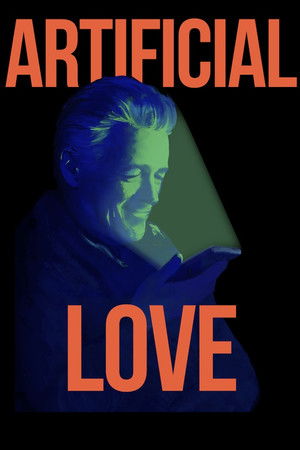
A lonely man falls in love with his ChatGPT companion, challenging the boundaries of love and what it means to be human.
Did you know that there are 100 trees for every Berliner or that West Berlin has the newest congress center in the world? This film shows the chocolate sides of the city in the areas of work, living, entertainment, sports and transport. He is one of several "recruitment films" with which the West Berlin Senate specifically wanted to convince new specialists from West Germany to work in West Berlin in the 1970s. Because of the island situation and politically unstable situation, West Berlin was particularly lacking in the influx of qualified workers.