Dissident artist Hu Jie has managed to make more than 30 documentaries. Films like Though I Am Gone and Searching for Lin Zhao's Soul are vital to understanding Chinese history and society. Widely recognized as the first artist to dare talk about the Great Famine, the labor camps, and the Cultural Revolution, Hu Jie is considered China's first historical documentary filmmakers.
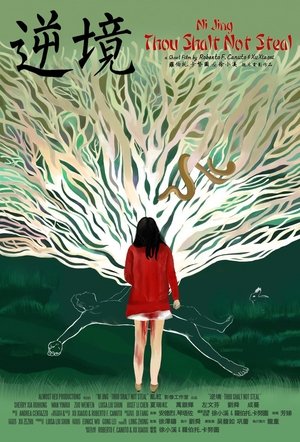
Six strangers awake inside a loft with no memory of how they got there and no escape. A seventh individual lies lifeless on a bed. Hourglasses count down the minutes as they fight to find a way out.
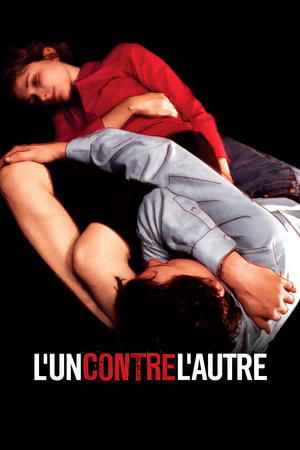
Jacques and Martine, an ordinary bourgeois couple, invite to dinner a friend whom they have not seen the last ten years. Since then he has become a media star and everything has to go just right at dinner.
Three generations of a family gather over a weekend. The sisters Sanne and Heidi have accepted their terminally-ill mother’s desire to die before her disease worsens; but, as the weekend progresses, their mother's decision becomes harder and harder to deal with, and old conflicts come to the surface.
After Shogo Ogami’s death in Hiroshima, Detective Shuichi Hioka successfully implemented Shogo Ogami’s plan, which was to control the yakuza to prevent further gang wars and save innocent people from getting harmed. Shuichi Hioka manages the criminal organizations, but, due to one evil person who gets released from prison, the situation drastically changes.
A group of young friends on a camping trip, deep in the South African countryside wake up to discover they have all swapped bodies.
Voices in Wartime is a 2004 documentary that explores the human experience of war through poetry. Combining interviews with soldiers, journalists, and historians, it reveals how war affects individuals and societies across time and place. The film features poets from around the world – from Homer and Wilfred Owen to Shoda Shinoe and modern writers in Iraq and Nigeria – showing how poetry expresses the pain, trauma, and truth of conflict. By linking verse with real-life accounts, Voices in Wartime highlights how poetry helps us understand the emotional and moral impact of war.
Peace suddenly breaks out in the Middle East – an unpleasant turn of events for many involved, who suddenly see their futures and livelihoods threatened. In the midst of the turmoil of this unexpected situation, Austrian UN officer Werner Baumschlager finds himself enlisted by various parties to sabotage the unwanted peace. And that's not all: his two lovers and his wife learn about each other and each hatch their own plans.
Complications arise when family and friends gather for a gay couple's backyard wedding.
A hymn to love and life, this film without commentary establishes through images a striking parallel between the serenity that times of peace bring to men and the anguish caused by the disasters and horrors of war. Archival footage, in black and white, was used to illustrate the moments of combat while an extremely agile camera captured in color the rural setting in which a young couple of lovers frolic. Hymne à l'amour et à la vie, ce film sans commentaire établit par l'image un saisissant parallèle entre la sérénité qu'apportent aux hommes les temps de paix et l'angoisse qu'engendrent les désastres et les horreurs de la guerre. Des métrages d'archives, en noir et blanc, ont été utilisés pour illustrer les moments de combat tandis qu'une caméra extrêmement agile a capté en couleurs le décor champêtre dans lequel s'ébat un jeune couple d'amoureux.
Asil is a young Syrian refugee awaiting documents in Turkey while processing the trauma of losing her home and family. Her story gives voice to a charming gigantic puppet named Amal, who represents millions of migrant and displaced children in a walk from the Syrian border in Turkey all the way across Europe. Escorted and animated by a group of puppeteers who are themselves refugees, Amal’s epic journey is one of compassion and discovery.
Successful model Samira Hashi makes an emotional return to Somalia, one of the most dangerous places in the world and the place she was born. Civil war broke out in 1991, 10 days after Samira's birth, but two years later her family managed to flee the country and she grew up in the UK.Now, as Samira and the war both turn 21, she's going back for the first time to visit the people and places she left behind. The contrast with her safe and glamorous life in London could not be starker as she experiences firsthand the war's effect on a generation of young people growing up in conflict.
A popular high school girl strains her relationship with her close-knit clique when she begins falling for a reclusive, lower-class schoolmate.
The heroes of the film: ordinary matches. A quarrel that breaks out over nothing turns into a real battle in which both warring sides are burned.
Aimless young Alexandre juggles his relationships with his girlfriend, Marie, and a casual lover named Veronika. Marie becomes increasingly jealous of Alexandre's fling with Veronika and as the trio continues their unsustainable affair, the emotional stakes get higher, leading to conflict and unhappiness.
Two monks on a mission choose very different paths
After the relatively low box office takings of 'Intolerance', D. W. Griffith would revisit his epic film three years later by releasing two of the film's interlocking stories as standalone features, with some new additional footage. The first of the two was 'The Fall of Babylon', which depicts the conflict between Prince Belshazzar of Babylon and Cyrus the Great of Persia.
To recoup losses from the extravagant roadshow presentations of Intolerance (1916), Griffith would revisit his epic film three years later by releasing two of the film's previously interlocked stories as standalone features, with additional footage and new title cards. The second of these was 'The Mother and the Law', which demonstrates how crime, moral puritanism, and conflicts between ruthless capitalists and striking workers cause ruin to the lives of marginal Americans.
Filmed in Cordoba, Granada, Seville, and Toledo, this documentary retraces the 800-year period in medieval Spain when Muslims, Christians, and Jews forged a common cultural identity that frequently transcended their religious differences, revealing what made this rare and fruitful collaboration possible, and what ultimately tore it apart.
Director Allan King's 1981 drama, based on true events, stars Ellen Burstyn as a strong-willed woman struggling to survive with her family in the Canadian wilderness.