Filmmaker Christopher Quinn observes the ordeal of three Sudanese refugees -- Jon Bul Dau, Daniel Abul Pach and Panther Bior -- as they try to come to terms with the horrors they experienced in their homeland, while adjusting to their new lives in the United States.
Born to Korean immigrant parents freed from indentured servitude in early twentieth century Mexico, Jerónimo Lim Kim joins the Cuban Revolution with his law school classmate Fidel Castro and becomes an accomplished government official in the Castro regime, until he rediscovers his ethnic roots and dedicates his later life to reconstructing his Korean Cuban identity. After Jerónimo's death, younger Korean Cubans recognize his legacy, but it is not until they are presented with the opportunity to visit South Korea that questions about their mixed identity resurface.
Meet American fighter pilots and bombers who raided Romanian targets in WW-II including its major oilfields centered on Ploesti and Romanians who defended them. 'Ace' pilot interviews, both American and Romanian, as well as US Air Force prisoners experiences are explored through rarely viewed Romanian archive footage. The documentary is seen through the eyes and words of Nicholas Dimancescu. He journeys back to Romania both to discover his own roots and also to uncover the stories of American and Romanian airmen who raided and defended Romania's oil refineries during World War II. The experiences of wartime 'aces' on both sides are recounted and two of them, once enemies who attacked one another over Romania, meet for the first time 66 years later.
This feature documentary takes us to the heart of the Jane-Finch "Corridor" in the early 1980s. Covering six square blocks in Toronto's North York, the area readily evokes images of vandalism, high-density subsidized housing, racial tension, despair and crime. By focusing on the lives of several of the residents, many of them black or members of other visible minorities, the film provides a powerful view of a community that, contrary to its popular image, is working towards a more positive future.
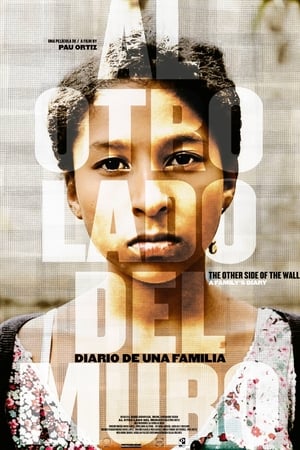
Claudia finds the diary her mother wrote at 17 after migrating from Peru to Chile. Reading it, she embarks on a journey into the past, reconstructing the story of a woman she thought she knew and, at the same time, reconnecting with her own roots.
This Ukrainian-Jewish teenager immigrated to San Francisco as a young child. Now on the brink of adulthood, she interviews her grandparents about their new lives yearning to see her American world through their eyes. Yelena understands that life in the US has changed her profoundly.
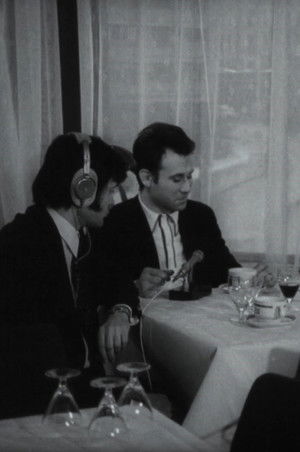
Procreation is the social duty of all fertile women, was the political thinking during the 1960s and 1970s in Romania. In 1966, Ceaucescu issued Decree 770, in which he forbade abortion for all women unless they were over forty or were already taking care of four children. All forms of contraception were totally banned. The New Romanian Man was born. By 1969, the country had a million babies more than the previous average. Romanian society was rapidly changing. By using very interesting archival footage and excerpts from old fiction films and by interviewing famous personalities from that time – gynecologists or mothers who were part of the new society - the director revives this period of tremendous oppression of personal freedom. Many deaths were caused by the mere fact that women, including wives of secret Romanian agents, famous TV presenters, and actresses, had to undergo illegal abortions. Many women were jailed for having them.
Paper Dolls follows the lives of transgender migrant workers from the Philippines who work as health care providers for elderly Orthodox Jewish men and perform as drag queens during their spare time. It also delves into the lives of societal outcasts who search for freedom and acceptance.
A deceptively simple set-up: the director and his father watch a 1988 football match which the father refereed, their commentary accompanying the original television images in real time. A Bucharest derby between the country’s leading teams, Dinamo and Steaua, taking place in heavy snow, one year before the revolution that toppled Ceaușescu.
Documentary that shows the changing attitude towards immigrant labor in The Netherlands. The documentary follows three immigrants that arrived in Holland 30 years ago to work in a bakery.
A documentary that exposes the shocking truths behind industrial food production and food wastage, focusing on fishing, livestock and crop farming. A must-see for anyone interested in the true cost of the food on their plate.
Pikilina is a Dominican-born woman of Haitian descent. Racial and political violence erupts when the country of her birth, the Dominican Republic, reverses birthright citizenship and she and 200,000 others are left stateless.
30 years after their emigration, Danni interviews his family and tries to learn their story to reconcile with the past.
This documentary follows 8 teens and pre-teens as they work their way toward the finals of the Scripps Howard national spelling bee championship in Washington D.C.
From humble beginnings in a small slate roofed village in Greece to the heyday of America's movie palaces, the Latchis Family built an empire of theatres throughout New England in the hard-scrabble years of the Great Depression. Their story is told through historically accurate footage, photographs and music from the Latchis family, local historical societies and national archives.
The San Francisco Foundation presents 2013 Community Leadership Awardee, Educators for Fair Consideration (E4FC), with The San Francisco Foundation Award, made to an organization demonstrating exemplary commitment to improving human relations in the Bay Area. E4FC provides direct support to and advocacy for highly motivated, college-bound undocumented students who had come to the United States as children and wished to remain. They are a leader in the field of immigrant work, providing youth tangible support and the space for them to tell their own story. As a result, E4FC's work is an essential part of the DREAMers movement catapulting the organizations role as a leader in both the Bay Area and as a national model in supporting and empowering immigrant youth. www.sff.org/cla
Chinese for Affirmative Action is a recipient of the San Francisco Community Leadership Award for being "a champion against discrimination and for advancing systemic change for a racially just society. With its foundation firmly in the Asian and Pacific American community, its grassroots and policy efforts cross cultures to ensure equal opportunities for communities of color, reduce language barriers, and promote immigrant rights across the Bay Area." - San Francisco Foundation
Wheels of Fate is a short documentary film about identity, belonging and acceptance. It reflects on Ryan Espadilla's experience immigrating to New Zealand. This film features the euphoria and sanctuary of inline skating as Ryan reveals inner struggles, trials and aspirations as he journeys towards a sense of belonging. It captures observation that speaks to the intricacies of the immigrant experience and the passion of inline skating.