Tribute to actor and director John Cassavetes who died in February 1989. Friends, associates and fellow directors remember the man and his work.
Young sociologist Stanislas Previne is writing a thesis on criminal women, so he visits Camille Bliss in prison for an interview. Accused of murdering her husband and her lover, Camille recounts her life and love affairs.
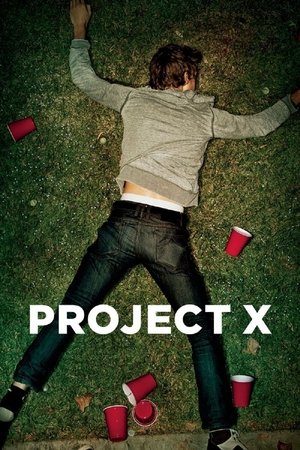
In the final film in the Matthew Reese mockumentary trilogy, we see Matthew, a high school senior, hosting a party to celebrate the start of winner break. It doesn't take long for things to get unhinged and for chaos to ensue.
In this mockumentary, high school senior Matthew Reese documents the final day of the first semester.
In this follow up to the mockumentary Finals, we see high school senior Matthew Reese filming himself working a boring shift at the local movie theater, Phoenix Theater on the first day of winter break.
A look at the state of the global environment including visionary and practical solutions for restoring the planet's ecosystems. Featuring ongoing dialogues of experts from all over the world, including former Soviet Prime Minister Mikhail Gorbachev, renowned scientist Stephen Hawking, former head of the CIA R. James Woolse
In 2001, Jimmy Wales published the first article on Wikipedia, a collaborative effort that began with a promise: to democratize the spreading of knowledge, monopolized by the elites for centuries. But is Wikipedia really a utopia come true?
An ambitious yet deluded film director named Jacob Lewis treks into the woods to create a found footage horror masterpiece. Accompanied by his misfit crew and a cast of problematic actors, Jacob learns that making his masterpiece film might not be quite as easy as he anticipated.
La rosa dei nomi
Explore how one man's relentless drive and invention of the atomic bomb changed the nature of war forever, led to the deaths of hundreds of thousands of people and unleashed mass hysteria.
When Francois Truffaut approached Alfred Hitchcock in 1962 with the idea of having a long conversation with him about his work and publishing this in book form, he didn't imagine that more than four years would pass before Le Cinéma selon Hitchcock finally appeared in 1966. Not only in France but all over the world, Truffaut's Hitchcock interview developed over the years into a standard bible of film literature. In 1983, three years after Hitchcock's death, Truffaut decided to expand his by now legendary book to include a concluding chapter and have it published as the "Edition définitive". This film describes the genesis of the "Hitchbook" and throws light on the strange friendship between two completely different men. The centrepieces are the extracts from the original sound recordings of the interview with the voices of Alfred Hitchcock, Francois Truffaut, and Helen Scott – recordings which have never been heard in public before.
Le Club: Claude Jade
First-time director Dirk Shafer also penned this raucous "mockumentary," a blend of fact and fiction that re-creates his 1992 reign as Playgirl magazine's Centerfold of the Year. When Shafer chooses to keep the fact that he's gay a secret from the magazine's editors, he finds himself living the ultimate lie -- and incapable of giving female readers what they really want. Will he succumb to his lover's pressures to come out of the closet?
Omnibus: François Truffaut
Japon : L'Empire du sexe virtuel
Director Guy Hamilton and several of the stars of Agatha Christie's "Evil Under The Sun" walk you through the making of the film.
55 years ago, on October 1 1968, the first brand advertising spot appeared on the French television screen. Over the next three decades, thousands of creative little films would seduce and build our collective memory. Kitschy or cult spots, humor, slogans, music, stars, gimmicks, grand spectacle or sex appeal: during its golden age, how did advertising convince? Thierry Ardisson has brought together almost 400 advertising clips to relive the era of the conquest of minds and wallets.
The first feature-length documentary that fully explores how the toxic social and political Canadian context after 1968 created some of the most nihilistic and imaginative Canadian cult films of the 1970s and 80s and beyond.
A French documentary or, one might say more accurately, a mockumentary, by director William Karel which originally aired on Arte in 2002 with the title Opération Lune. The basic premise for the film is the theory that the television footage from the Apollo 11 Moon landing was faked and actually recorded in a studio by the CIA with help from director Stanley Kubrick.
Plena Rondo