This award-winning PBS documentary sweeps viewers into a seafaring adventure with a community of Polynesians, as they build traditional sailing canoes, learn how to follow the stars across the open ocean, and embark upon a 2,000-mile voyage in the wake of their ancestors.
Documentary on Antoine de Caunes, a French television presenter, comedian, actor, journalist, writer and film director.
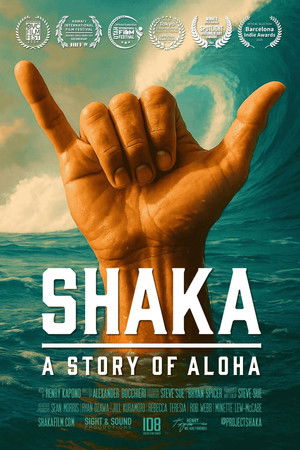
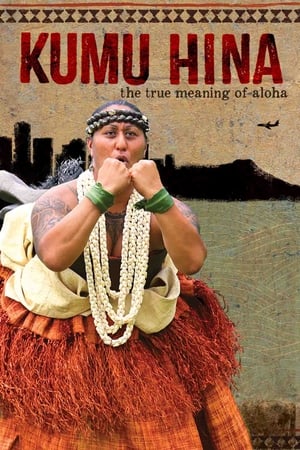
A documentary on the origin, meanings and uses of the gesture. The shaka sign is reputed to be over a century old, but its origins are the stuff of myths and legends. It turns out that kupuna (Hawaiian elders) have kept the story secret for almost a century. Why? They didn't want it told incorrectly or commercialized. But given advancing age and a world in need, they decided it was time to share the story.
Documentary about two boys and a girl who travel to surfing spots around the world.
Coral Reef Adventure follows the real-life expedition of ocean explorers and underwater filmmakers Howard and Michele Hall. Using large-format cameras, the Halls guide us to the islands and sun-drenched waters of the South Pacific to document the health and beauty of coral reefs. Featuring songs written and recorded by Crosby, Stills & Nash.
Atlantis is filmmaker Luc Besson's celebration of the beauty and wonder of the world beneath the sea, expanding upon themes touched on in his film The Big Blue. Combining stunning underwater cinematography and a hypnotic score by Eric Serra, Besson's singular vision defies dialogue or narrative structure to explore ocean life as you've never seen it before. Following the colossal success of The Big Blue, Luc Besson crisscrossed the world's seas and oceans to film the beauty and diversity of marine life: from the giant octopuses of Vancouver to the manta rays of the Pacific (New Caledonia), and the grey sharks of Tahiti. A film with no actors or sets other than the underwater world. A breathtaking view of marine species: sharks, dolphins, manatees, octopuses. An exploration of the seabed in the Bahamas, the Galapagos, Vancouver, and Tahiti.
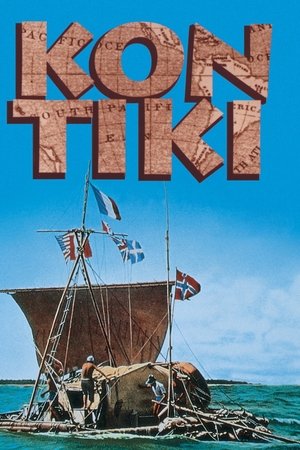
"Kon-Tiki" was the name of a wooden raft used by six Scandinavian scientists, led by Thor Heyerdahl, to make a 101-day journey from South America to the Polynesian Islands. The purpose of the expedition was to prove Heyerdal's theory that the Polynesian Islands were populated from the east- specifically Peru- rather than from the west (Asia) as had been the theory for hundreds of years. Heyerdahl made a study of the winds and tides in the Pacific, and by simulating conditions as closely as possible to those he theorized the Peruvians encountered, set out on the voyage.
Robert Kongaika runs from his family to join the military and becomes the first Tongan US Air Force Colonel. This is the true story of the island traditions, faith, and family that made him into the father he is today.
Riding Giants is story about big wave surfers who have become heroes and legends in their sport. Directed by the skateboard guru Stacy Peralta.
Bruce Brown's The Endless Summer is one of the first and most influential surf movies of all time. The film documents American surfers Mike Hynson and Robert August as they travel the world during California’s winter (which, back in 1965 was off-season for surfing) in search of the perfect wave and ultimately, an endless summer.
Featuring ten-time world surfing champion Kelly Slater, The Ultimate Wave follows a quest to find the perfect wave-riding experience. Filmed in Tahiti and among the islands of French Polynesia, the film showcases dramatic giant screen surfing action in a unique Pacific paradise.
Generations of vibrant racing communities have flourished in Hawai'i since the arrival of the first automobiles and motorcycles at the turn of the 20th century. Follow Mark Hanson, Psychology Professor and lifelong island "gearhead," as he explores the history, people and passion of the uniquely gracious speed culture that has been evolving in Hawai‘i for over a century.
The documentary follows leaders and community members from the tropical Pacific island nation who are making bold changes to move the needle on marine protection. With a population of under 2,000 people and a marine reserve covering 40% of its waters, Niue has demonstrated the ways in which traditional knowledge and contemporary science can live in harmony for the benefit of people and the planet.
An intimate glimpse of the first visible group of transgender men in the Pacific Islands - the Rogers of Samoa. From the loneliness of family rejection and homelessness to the camaraderie of church, cooking, and dance, their stories reveal the challenges and possibilities of life in an island society rooted in culture and tradition.
Nihi is a film biography of Titus Kinimaka, one of the last remaining professional big-wave riders of pure Hawaiian descent. As a boy, he won surf contests against those twice his age; by his teens, he was recognized as one of the best surfers to have ever hit the waves. In 1996 at age 41, Titus was named Waterman of the Year by the Hawaiian Lifeguard Association for outstanding rescues as a lifeguard. He has spent over twenty years spreading aloha spirit, traveling the world as an ambassador for surfing and Hawaiian culture
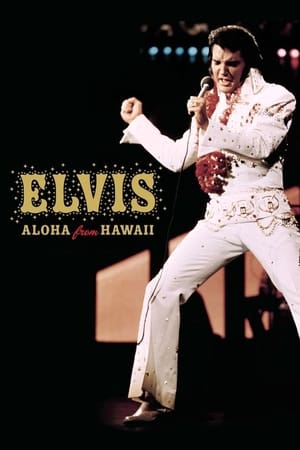
A 1973 concert by Elvis Presley that was broadcast live via satellite on January 14, 1973. The concert took place at the Honolulu International Center in Honolulu and aired in over 40 countries across Asia and Europe. Viewing figures have been estimated at over 1 billion viewers world wide, and the show was the most expensive entertainment special at the time, costing $2.5 million.
In 1965, Patsy Takemoto Mink became the first woman of color in the United States Congress. Seven years later, she ran for the US presidency and was the driving force behind Title IX, the landmark legislation that transformed women’s opportunities in higher education and athletics.
The history of surfing is like one long ride in which surfers relay the baton to each other across the years on a single, endless wave. In order to understand how this ancestral Polynesian tradition was able to span the globe and the eras until it became a competitive sport and eventually won a place at the Olympics, we’ll plunge into its history through the exceptional stories of those who allowed it to survive and be reinvented.
An in-depth look at the making of Lilo & Stitch (2002).
On August 27, 2011, the Billabong Pro Tahiti event on surfing's World Tour was placed on hold due to a massive swell bearing down on the famed big-wave spot, Teahupoo. Paddling into waves was out of the question and the Billabong Pro was given a layday. In one of the most talked about sessions of the decade, history was made as a handful of international chargers whipped into some of the most nightmarish waves ever surfed in Tahiti. The swell proved to be so immense that the Tahitian government issued a "Code Red" warning, banning the surrounding seas of boats and watercraft. The lineup at Teahupoo, it seems, was an exception. See the historic day through the eyes of two surfers -- the young gun Laurie Towner and the veteran Dylan Longbottom -- as they catch some of the biggest, most dangerous surf ever recorded, much of it captured with the super slow motion Phantom Camera for never-before-seen imagery.