Amérique latine, l'année de tous les dangers
A few decades after the destruction of the Inca Empire, a Spanish expedition led by the infamous Aguirre leaves the mountains of Peru and goes down the Amazon River in search of the lost city of El Dorado. When great difficulties arise, Aguirre’s men start to wonder whether their quest will lead them to prosperity or certain death.
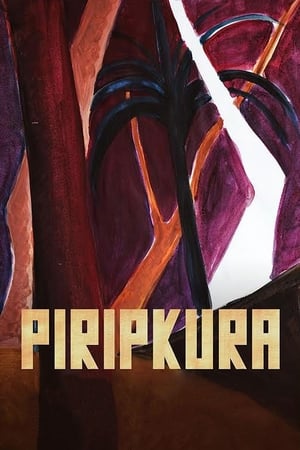
The last two surviving members of the Piripkura people, a nomadic tribe in the Mato Grosso region of Brazil, struggle to maintain their indigenous way of life amidst the region's massive deforestation. Living deep in the rainforest, Pakyî and Tamandua live off the land relying on a machete, an ax, and a torch lit in 1998.
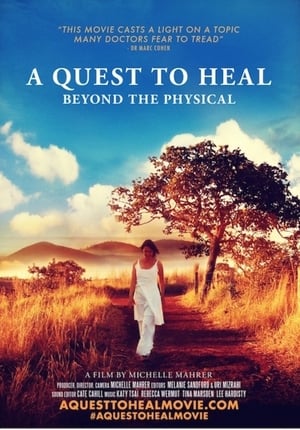
Joao Texeira de Faria, also known as John of God, is a world famous spiritual healer from Brazil who has been attributed to many miracles that science cannot explain. His work attracts both controversy and acclaim. For the past 30 years, thousands of people from all over the world have been flocking to his remote village in Brazil in search of cures for illnesses Western medicine offers little hope. Film maker Michelle Mahrer follows the journey of two of her friends on a healing odyssey to Brazil - Lya Shaked from Australia has terminal cancer, and Fred Porter from USA has HIV. Will they be lucky enough to receive a miracle?
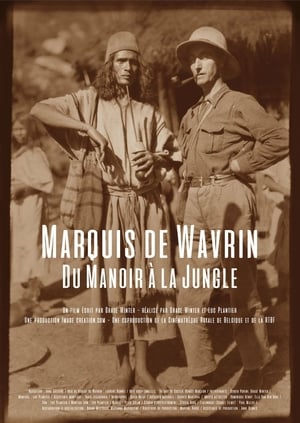
A documentary that invites us to discover the strange path led by the explorer-ethnographer Marquis de Wavrin who, in the 1920s and 1930s, made ethnographic films in several countries of Latin America.
Stephen Fry embarks on a journey to discover the stories behind some of the world's most fantastic beasts that have inspired myths and legends in history, story-telling and film.
A true-life drama in the 1920s, centering on British explorer Col. Percy Fawcett, who discovered evidence of a previously unknown, advanced civilization in the Amazon and disappeared whilst searching for it.
The ocean contains the history of all humanity. The sea holds all the voices of the earth and those that come from outer space. Water receives impetus from the stars and transmits it to living creatures. Water, the longest border in Chile, also holds the secret of two mysterious buttons which were found on its ocean floor. Chile, with its 2,670 miles of coastline and the largest archipelago in the world, presents a supernatural landscape. In it are volcanoes, mountains and glaciers. In it are the voices of the Patagonian Indigenous people, the first English sailors and also those of its political prisoners. Some say that water has memory. This film shows that it also has a voice.
Tells the story of the greatest natural disaster of the ancient world, an event that experts believe inspired the legend of Atlantis.
Humanity’s ascent is often measured by the speed of progress. But what if progress is actually spiraling us downwards, towards collapse? Ronald Wright, whose best-seller, “A Short History Of Progress” inspired “Surviving Progress”, shows how past civilizations were destroyed by “progress traps”—alluring technologies and belief systems that serve immediate needs, but ransom the future. As pressure on the world’s resources accelerates and financial elites bankrupt nations, can our globally-entwined civilization escape a final, catastrophic progress trap? With potent images and illuminating insights from thinkers who have probed our genes, our brains, and our social behaviour, this requiem to progress-as-usual also poses a challenge: to prove that making apes smarter isn’t an evolutionary dead-end.
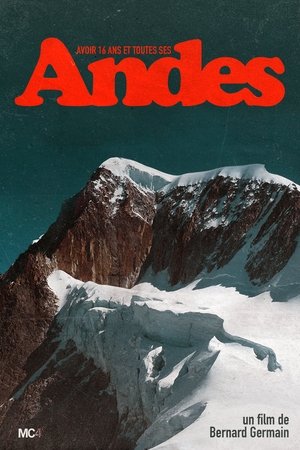
Buenos Aires, 1880. A journalist interviews Manuel Esteban Corvalán, one of the last living men who crossed the Andes in 1817 with José de San Martín, during the Argentinian and Chilean wars of independence, as one of his secretaries, when he was only 15 years old.
Images of Argentinian companies and factories in the first light of day, seen from the inside of a car, while the director reads out documents in voiceover that reveals the collusion of the same concerns in the military dictatorship’s terror.
Florian Hartung and Dirk Pohlmann have reconstructed a previously unknown dimension of the collaboration between Nazis and the CIA in the Cold War. Drawing upon recently released documents, the film exposes for the first time a perfidious, worldwide net that reaches deep into the power structures of the Federal Republic of Germany. Lending their authority to the fact-finders’ mission are high-ranking statesmen, journalists and historians.
CARO Vapor II is an exercise in imagination and a redefinition of what Brazilian popular music can be nowadays. From Rio’s samba jazz transported to the streets of Conjunto São Pedro in Fortaleza to Baião meeting the productions of the Neptunes, the artist understands old musical proposals as dreams of possible futures, pillars in the construction of a country whose work remains unfinished. Digging through these ruins and working their echoes in the present, he dares to envision another future. The exercises of imagining the past that haunt us have been exhumed and rebuilt. While this unfolds sonically, Don L’s pen reinforces: the Global South is what matters. Don scrutinizes the aspirations of what it means to be Latin American nowadays, in a world where virtually all experiences are heavily filtered by the internet and those in power. Territorial construction is also mental, provoking the listener by repeating, in new terms, the question: how much of your dreams was advertising?
Narrated by Academy Award winners Sissy Spacek and Herbie Hancock, River of Gold is the disturbing account of a clandestine journey into Peru's Amazon rainforest to uncover the savage unraveling of pristine jungle. What will be the fate of this critical region of priceless biodiversity as these extraordinarily beautiful forests are turned into a hellish wasteland?
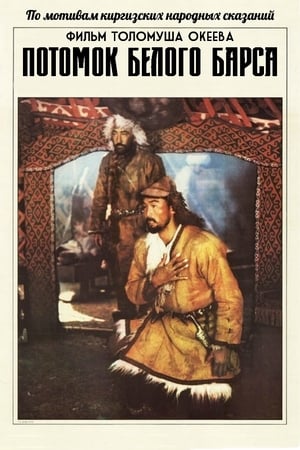
The Russian Descendant of the Snow Leopard is based on a famous Kirghizian folktale. Apparently the Kirghizian folks had plenty of time to tell this story: to print a full synopsis would result in a novelette. Essentially, the story involves a proud group of highland hunters called the Snow Leopards, who in order to survive a brutal winter must request help from the Lowland people. The price for this assistance is the hand of the Snow Leopard's daughter, who is promised in marriage to a wealthy Lowland trader. During the Springtime wedding celebration, the trader becomes fascinated by a stranger who wins all the athletic contests. This "male" contestant turns out to be a woman, who has arrived to seek freedom for her imprisoned husband. The subsequent romance between the trader and the beautiful stranger results in disaster and bloodshed for both the Snow Leopards and the Lowlanders.
The story of the Trojan Horse is probably one of the most famous stories ever told: after ten years of bloody war, the Greek coalition decides to lift the siege and depart, but not before leaving at the gates a huge wooden horse, which the Trojans confidently lead into the city. A few hours later, the once invincible Troy goes up in flames. What exactly happened? Is this myth true or false?
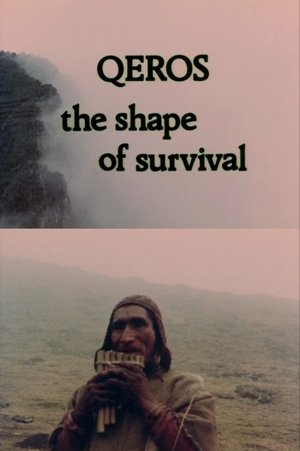
Exploration of the way of life of the Q’eros Indians of Peru, who have lived in the Andes for more than 3,000 years.
A whimsical blend of live action and animation, "Saludos Amigos" is a colorful kaleidoscope of art, adventure and music set to a toe-tapping samba beat. From high Andes peaks and Argentina's pampas to the sights and sounds of Rio de Janeiro, your international traveling companions are none other than those famous funny friends, Donald Duck and Goofy. They keep things lively as Donald encounters a stubborn llama and "El Gaucho" Goofy tries on the cowboy way of life....South American-style.
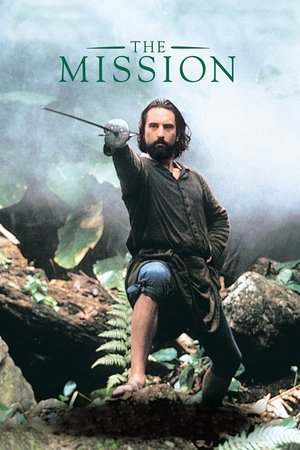
When a Spanish Jesuit goes into the South American wilderness to build a mission in the hope of converting the Indians of the region, a slave hunter is converted and joins his mission. When Spain sells the colony to Portugal, they are forced to defend all they have built against the Portuguese aggressors.