Víctor and Daniela, a young couple with a baby, are trapped in poverty. Víctor, trapped in a cycle of alcohol abuse, sees an easy, effortless solution in a mysterious pen shed that promises to fulfill his desires at no apparent cost: all he has to do is go inside, imagine his riches, and the next day they’ll be waiting right at his doorstep.
POEMA
Guided by a queer deity, a closeted man is forced to confront his parents as he tries to regain his lost sense of identity.
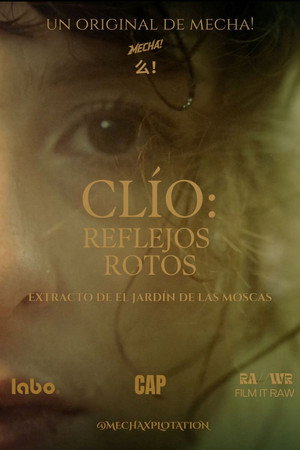
In a single, suffocating, uninterrupted three-minute shot, Clío immerses herself in an internal monologue that settles scores with the darkness. Facing her is Fancy: a woman who shines on the surface but manipulates from the shadows, acting as if pain didn't exist. However, Clío's true psychological horror doesn't lie in her patient's toxicity, but in the suspicion gnawing at her chest: what if she, from her position of power as a therapist, is just as manipulative? A minimalist cinematic exercise on the weight of seeing oneself reflected in the abyss of another.
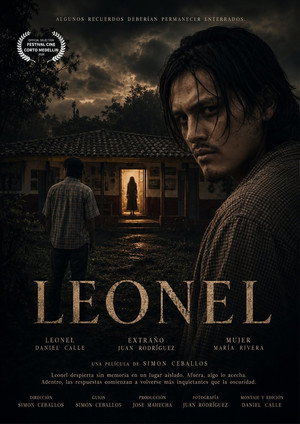
Leonel wakes up with no memory in an isolated farmhouse. Outside, something is watching him. As he tries to discover who he is and how he got there, strange events begin to reveal fragments of a past he would rather forget. Soon, the answers become more disturbing than the darkness surrounding him.
MEDO URBANO
TRANSMUTIS, or how dreams break the silence: a fascinating document. The final days in the life of "El Rubber," the film's central character, who guides us through a tour of his delirious way of looking at things—a uniquely particular magnifying glass that deserves to be shared with the world. El Rubber takes us far away while keeping us close; El Rubber's final days are learning and myth, the myth of everyone placed through the eyes of a madman who questions his existence and reflects on a reality we all inhabit without knowing what it means or where it marches. TRANSMUTIS is the way dreams reflect in the celestial vault of our reality, the breach in the silence of souls, and a desperate cry to know the deep truth that underlies daily life and its oneiric present.
DESPRECIO
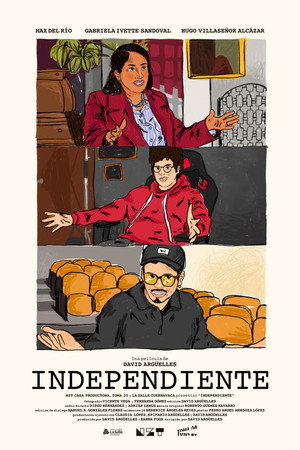
Three Mexican filmmakers — Max del Río, Gabriela Ivette Sandoval, and Hugo Villaseñor Alcázar — share their processes and challenges around a single question: How can an independent film get seen? Through the eyes of insiders, the documentary reveals the complex journey behind making cinema visible in Mexico.
Atrapats
1920: Madame Blanche discovers, reading the newspaper, that one of her tenants has been arrested. The woman, with the maid Tedla, goes to the police station to try and get her money. The inquiry starts from here: Monsieur is accused of homicide. The police will find ten paintings portraying ten women: the maid begin to tell the story of those ten women that she knew. But, one by one disappeared. A sequence of women stories. Along series of homicides. And just one killer.
Mi Asqueroso Filme
Analogy of the fobia of existence and of the terror of the multifactorial value of life.
Eli invents a collection of glowing jars filled with values that, when combined with animated story catalysts, create the perfect formula for success. His 10-year-old apprentice, Pauli, assists him in sorting the jars. When Pauli’s cousin Tino arrives, upset after being scolded for not helping his friend win a contest, he becomes the ideal candidate to test the formula.
El Erizo
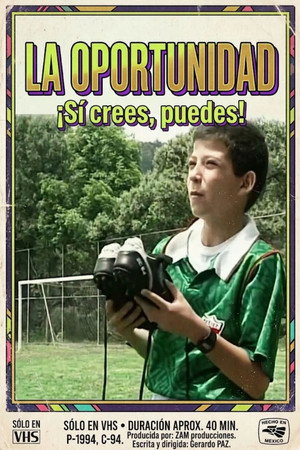
La Oportunidad
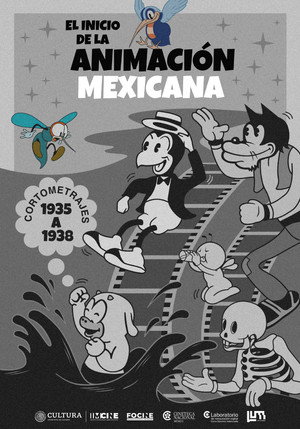
El Inicio de la Animación Mexicana 1935-1938
A young man named Mark discovers that he must take over for his dad as the superhero Man-Man to fight a new villain, Sigman, who is terrorizing the city.
The story of a busy man, who fills his time travelling to Africa, South America and the Middle East. His passion for his job has distanced him from his loved ones. He’s been divorced for three years and has since seen his son very little. When the latter disappears, he is forced to stand still, and soon discovers things about his ex-wife and, above all, his son. A terrible feeling of guilt overwhelms him and he decides to find his son at all costs...