The Alexander Ball is an observational documentary extravaganza celebrating Samoan-Māori-Australian trans woman of colour, Ella Ganza, and the Meanjin (Brisbane) ballroom scene, as she and her ballroom family prepare for one of the biggest pride events of the year: The Alexander Ball.
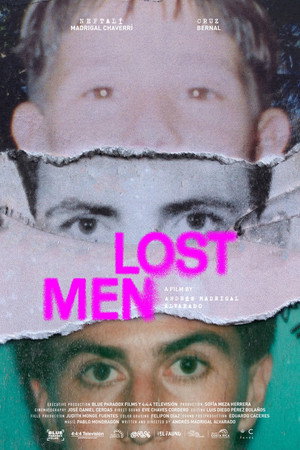
History of the stigmatization and marginalization to which the queer community was subjected in Spain during the Franco dictatorship.
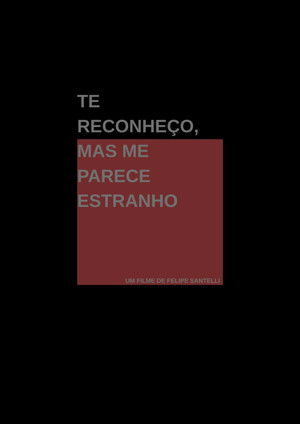
A documentary from Recife that follows the story of five friends, transforming memories into an audiovisual time capsule. Created as a graduation project in Design by Carlos Pontes (UFPE), the film unfolds as a collective letter seeking to eternalize not only memories, but also the intensity and restlessness of those who find in art, friendship, and acceptance a way of existing.
Guynel and Diovany are two young queer men with radically different personalities but from the same island, Martinique. After three years away, Guynel returns to his homeland to reconnect with his roots, his loved ones, and to come out to his father. Diovany, meanwhile, is about to finish his studies and is preparing to compete in one of Martinique’s first “Balls.” It marks the beginning of a dream that will likely one day lead him to the Parisian drag scene. Two intertwined destinies that, through their search for identity, tell the story of queer youth in Martinique and their passage into adulthood.
For decades, Le Tango, a legendary LGBTQ+ dance hall in Paris’s Marais district, welcomed everyone who loved to dance, regardless of gender or orientation. When the building was put up for sale in 2020, its music stopped, threatening to erase a vital community refuge. This documentary traces both the vibrant history and the fierce fight to save this iconic space. Through personal stories from regulars and activists—Grégoire, Giovanna, Christian, Livia, and others—the film revisits nights of drag balls, Dalida tributes, and joyous Madisons, revealing how Le Tango became a symbol of freedom and belonging. As filmmaker Antoine Vergez follows Hervé and the Tango 3.0 collective’s three-year struggle to reopen the club, the film becomes both a love letter to queer nightlife and a chronicle of collective resistance to cultural disappearance.
A cruise ship and 3,000 men – it is a universe without heteros and women that usually remains a mystery to the outside world. Once a year the Dream Boat sets sail for a cruise exclusively for gay men where most passengers are united by the wish to live life authentically as themselves in a protected place.
In a world where technology and humanity intertwine, Tiffany, a self-aware feminist "sex robot", embarks on a journey of self-discovery. Conversing with leading experts, Tiffany confronts the issues that have shaped her design and asks about queerness concerning sex tech.
After discovering a stranger’s livestream, a month unfolds under his balcony, through watching and being watched.
The documentary mixes reenactments with true accounts from four characters/actors who tell the stories of six black gay men, their experiences and their romantic relationships crossed by racism and homophobia.
BATE CABELO! unveils the story of an artistic creation that became a living symbol of memory, embodiment, and resistance.
Flora Valverde, a non-binary student of Cinema and Audiovisual at UFPB, recounts in a video letter their experiences to their idol David Bowie, updating him on the events that happened after his death in 2016.
For the last quarter century, Houston native Arden Eversmeyer journeyed across the country to record hundreds of oral "herstories" with a mostly invisible population that is rapidly disappearing. Old Lesbians honors Arden's legacy by animating the resilient, joyful voices she preserved in the Old Lesbian Oral Herstory Project, from first crush to first love, from the closet to coming out, and finally from loss to connection.
Amidst the Colombian Andes, a group of trans women from the Embera Chami community make their way into the international fashion scene, empowered through artistic collaboration and creation while preserving their spiritual heritage and ancestral connection to their territory.
A small bar in Sarajevo is a safe space for queer people.
Since the 1970s, lesbians from around the world have been drawn to the island of Lesvos, the birthplace of the ancient Greek poet Sappho. When they find paradise in a local village and carve out their own queer lesbian community, tensions simmer with the local residents. With both groups claiming ownership of lesbian identity, filmmaker Tzeli Hadjidimitriou—a native and lesbian herself—is caught in the middle and chronicles 40+ years of love, community, conflict, and what it means to feel accepted.
An edgy and unapologetic look at the growing impact that open LGBTQ music artists, and their straight allies, are having on the portrayal of sexuality and gender politics in music, and its affect on the normalizing of gay culture. Using artists personal experiences as a lens, we'll look at sexuality's influence on music and the role of social media in helping artists complicate mainstream expectations of identity. How far are artists willing to push their music, messages and imagery to challenge the way pop culture defines notions of sexuality, masculinity, femininity, gender and what it means to be queer?
Following the lives of Queer creatives behind Norwich’s queer collaborative ‘Stripped Sets’. We discover the reasoning behind the need for safe spaces, and the stories that come with them. Through live events, photoshoots and history, we see the process in creating such an important event.
Hard to imagine, but true: According to current estimates, out of 500,000 active male football professionals worldwide, under ten (10) are openly homosexual. While homosexuality hardly plays a role in other areas of life today, the topic seems to be completely taboo in professional football. The feature-length documentary THE LAST TABOO lets those who broke exactly this taboo tell their very personal stories alongside Thomas Hitzlsperger. Like the British professional footballer Justin Fashanu (*1961 in London; † 1998 in London), who broke this taboo for the first time in 1990 and paid for it with his life. His niece Amal tells his story. Marcus Urban, on the other hand, was about to make the jump to the Bundesliga as a teenager and, by deciding to come out, he also went against his big dream. The stories of the US professional Collin Martin and the British player-coach Matt Morton, on the other hand, suggest that normality is not far away.
A couple interrupts an intimate moment to discuss their relationship.
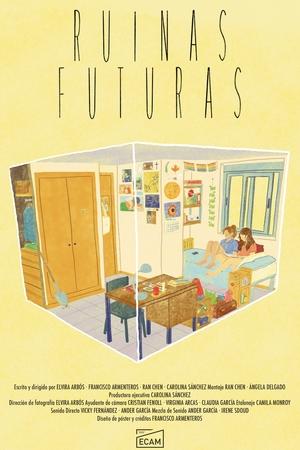
In a boarding school, legend has it that a time capsule has been hidden in the walls. They say it could change the world. Today, the new students fall in love, play cards, dream and laugh in their rooms, which in turn become their own time capsules, like snapshots of a generation at 20 years old.