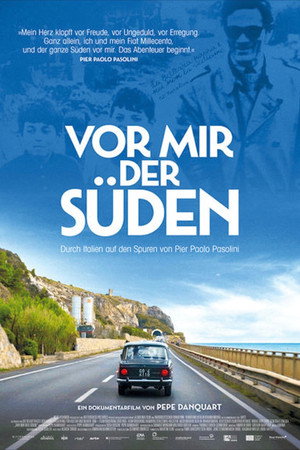
3,700 km of coastline, a Fiat 1100, and an old travel diary, those are the ingredients for Pepe Danquart’s documentary. Following the footsteps of the great Italian thinker Pier Paolo Pasolini, the filmmaker gains a deep insight into the social reality of present-day Italy. The country is massively affected by globalization, migration and the phenomenon of mass tourism, which, more than ever, is characterised by the same hedonistic conformity that Pasolini lamented more than fifty years ago. Ahead of me the South is a poetic contemporary document, a kaleidoscopic picture of the Italy of today.
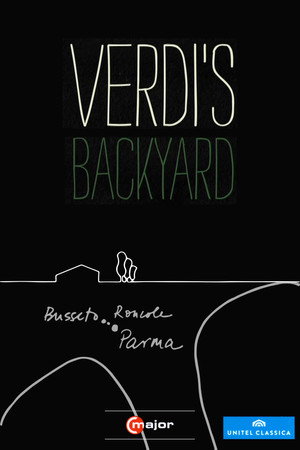
Discover Verdi’s magnificent ‘hometown’, the Parma region. From the small village of Le Roncole, near Parma, where Verdi was born, to the estate situated close to Parma, where Verdi always returned and chose to spend most of his life, despite the great triumphs he achieved in Milan, Venice, Naples and other major cities. We discover how Verdi ‘still lives on’ in the region and has even shaped the local landscape, from the daily life of a simple farmer to that of one of the world’s greatest opera stars, Leo Nucci, who is a regular guest at the Verdi Festival in Parma. From the 27-opera box set ‘Tutto Verdi’.
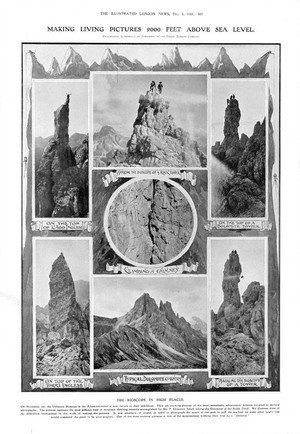
Frank Ormiston-Smith, the pioneer mountaineering photograher and filmmaker, filmed in 1906 the ascent to several towers in the Cinque Torri area in the Dolomites, acomppanied by Bortolo Barbaria, Baldessare Verzi and Damiano Dibona, three well-known Ampezzo mountain guides. Among others, the team ascended Torri Inglese, and placed the camera on top of some of the towers by pulling it with a rope. The film, produced by the Urban Trading Company, was presented at the Alhambra Theater in London in November 1906. Ormiston-Smith is considered the father of mountain cinema. In 1902 he filmed the first major mountain film shown widely in cinemas: "The Ascent of Mont Blanc". The success of his films encouraged the production of alpine films in which mountaineering feats were shown, and inspired other pioneer filmmakers.
Frederick Burlingham visits Vesuvius and climbs down into the crater accompanied by two Italian guides. Contains some nice actuality of Pompeii and the funicular railway leading to the summit of the volcano.
Released in June of 1921, produced by Frederick Burlingham.
1924, produced by Frederick Burlingham.
Travelogue produced by Burton Holmes. Released on October 19th, 1919.
Travelogue released on October 30th, 1916. Produced by Burton Holmes.
Travelogue released on October 16th, 1916. Produced by Burton Holmes.
Showing the peasants in their quaint costumes, which are only donned on Sundays and Festivals.
1906, cinematography by Frank Ormiston-Smith.
1907, cinematography by Frank Ormiston-Smith.
A visual essay by Michael Mackenzie exploring the giallo's relationship with the social upheavals of the 1960s and 70s.
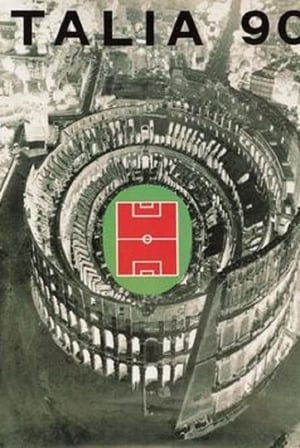
Italia 90 was another fascinating tournament, a melting pot of different styles, culture and technique. The biggest tournament to date, it saw the emergence of the African nations with the free-flowing Cameroon capturing everyone's hearts. The final was tight and not for the squeamish, but the well-drilled and better-disciplined Germans prevailed 1-0 winners to claim the crown for the third time.
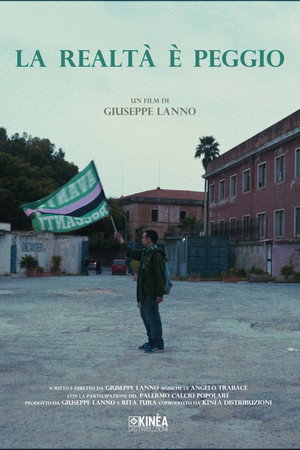
In Palermo (Italy), a group of supporters found a grassroots football club to oppose the commercial model of modern football and return the game to its community, while the daily lives of members, players, and volunteers intertwine through personal sacrifices, dreams, and resistance.
Excursion from the Catinaccio group, across the Alpe di Siusi, to the Sassolungo and to the Sella group. The Dolomites, less impressive in appearance and less elevated than the giants of the Alps, attract a particularly bold class of climbers: here we follow the footsteps of a group of them on a characteristic route of the region. In the group, there are some women. The film was produced in thirties by the Instituto Nazionale Luce during the Italian Fascist regime.
The ascent of the spectacular needle Guglia Rudatis (2.202 meters), in the Italian Dolomites by a group of rock climbers. A group of six men leave a wood hut and approach up to the foot of the needle. We see them climbing and progressing on the steep rock face and finally making an overhanging rappel to descend. The film was produced in 1937 by the Instituto Nazionale Luce during the Italian Fascist regime.
In September 1932, a party of climbers composed of Bruno Detassis, Gino Corrà and Nello Bianchini completed the first ascent of the Paganella direct route. After having reached the summit, the group is received with honors by the people who celebrate the feat. The movie also shows brief images of the inauguration of the 'Cesare Battisiti' refuge. The film, of great historical importance, was shot in 8mm by Aldo Pedrotti.
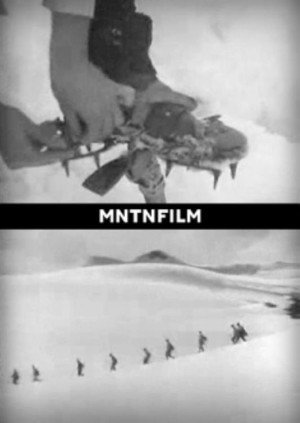
An alpine ascent around the snow-covered area of Monte Cevedale by a large group of mountaineers equipped with crampons and ice axes. The group departs from the old refuge 'Capanna Casati' and begin the climb through the glaciers. Finally, they camp on a rocky expanse. The film was produced in 1932 by the Instituto Nazionale Luce during the Italian Fascist regime.