A short mockumentary that explores the life of Monkey Man, a fish out of water who is forced to adapt to a new dark world.
In the not-so-distant future, a terrible water shortage and 20-year drought has led to a government ban on private toilets and a proliferation of paid public toilets, owned and operated by a single megalomaniac company: the Urine Good Company. If the poor don’t obey the strict laws prohibiting free urination, they’ll be sent to the dreaded and mysterious “Urinetown.” After too long under the heel of the malevolent Caldwell B. Cladwell, the poor stage a revolt, led by a brave young hero, fighting tooth and nail for the freedom to pee “wherever you like, whenever you like, for as long as you like, and with whomever you like.”
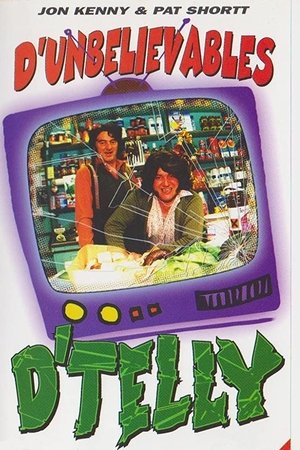
The antihero "Mr. Karl" tells a "young person", the viewer, his life story while he sits at work in the warehouse of a delicatessen. The narrator increasingly turns out to be an opportunistic follower from the petty-bourgeois milieu, who maneuvered his way through life in the changing course of Austrian history from the end of the First World War to the end of the occupation in the 1950s.
Kronos, hero of a distant galaxy, tangles with mad scientist Gulik over the fate of mankind.
Steve Martin's third NBC special serves as a salute to 1970s television commercials. Taking shots at everything from "Suzy Chapstick" to Palmolive to advertising agencies, this special showcased Martin's genius for physical comedy.
On the eve of her 29th birthday, an internet user discovers that 30-year-olds with minimal prospects are secretly being culled from society.
Count Axel is a comedy that takes place somewhere in the Nordic countries in 1783. It's a classic comedy about mixed identities, with strong elements of contemporary humour and satire.
After murdering his business partner Donald Whitney is haunted by his ghost. Ten years later a familiar priest gets stopped in the rain and seeks shelter in Whitney manor for the night.
Bennie, a clumsy criminal who's touchy about his weight, teams up with his adoptive father's biological (serial killer) son, his employees who in his absence turned his snack-bar into a quiche bakery, a suicidal manic-depressive woman and a Yugoslavian who keeps blowing things up unintended. They need to get 300000 Euro to get Bennies father a new liver.
A recently-deposed "Estrovian" monarch seeks shelter in New York City, where he becomes an accidental television celebrity. Later, he's wrongly accused of being a Communist and gets caught up in subsequent HUAC hearings.
A magician who has been turned into a raven turns to a former sorcerer for help.
Imagine what it would be like if black settlers arrived to settle a continent inhabited by white natives? In 1788, the first white settlers arrived in Botany Bay to begin the process of white colonisation of Australia. But in Babakiueria, the roles are reversed in a delightful and light-hearted look at colonisation of a different kind. This satirical examination of black-white relations in Australia first screened on ABC TV in 1986 to widespread acclaim with both critics and audiences alike. This is the story of the fictitious land of Babakiueria, where white people are the minority and must obey black laws. Aboriginal actors Michelle Torres and Bob Maza (Heartland) and supported by a number of familiar faces from the time, including Cecily Polson (E-Street) and Tony Barry, who starred in major ABC-TV hits such as I Can Jump Puddles and his Penguin award-winning Scales of Justice. Babakiueria was awarded the United Nations Media Peace Prize in 1987.
Radio personalities Larry Abbot and Vickie Pearle are stars of a mystery show. Since they announced their engagement, Larry has been plagued by speech problems and, seeking out an unconventional cure, he returns to his boyhood home, a mansion in the countryside, bringing Vickie along. Larry reunites with numerous family members, but discovers that there are sinister things afoot within the walls of the creepy estate.
Sir Guy Grand, the richest man in the world, adopts a homeless man, Youngman. Together, they set out to prove that anyone--and anything--can be bought.
Four comedic episodes framed within the story of a tyrannical Zen master and his two hapless disciples.
A parody of Johnny Carson anniversary shows made for the Showtime cable network.
Bertram Oliphant 'Bo' West wants to clear his unjustly smeared reputation, so he joins the Foreign Legion—with Simpson his manservant in tow. But the fort they get posted to is full of eccentric legionnaires, and there's trouble brewing with the locals too. Unbeknown to Bo, his lady love has followed him in disguise.
Henry VIII has just married Marie of Normandy, and is eager to consummate their marriage. Unfortunately for Henry, she is always eating garlic, and refuses to stop. Deciding to get rid of her in his usual manner, Henry has to find some way of doing it without provoking war with Marie's cousin, the King of France. Perhaps if she had an affair...
A scepter is stolen, and it's hunted for by various groups of international robbers and spies, for various reasons - in a parody of 007 movies.
Nikolai Gogol's The Inspector General is a satire play well-known around the world. In the period between the end of World War II and the 1960s, the play was adapted in Hong Kong cinema a total of six times. Director Huang Yu alone adapted it twice, as a Republic era story and a period comedy, respectively. The 1955 Republic era-set film is more faithful to its source material, following a spoiled rich brat who is mistaken as a government inspector in a small town and ends up being wined and dined by a corrupted local official. The film pokes fun at the ugliness of bureaucracy in old society, calling back to renowned Qing Dynasty novel Officialdom Unmasked while keeping the original play's artistic style.