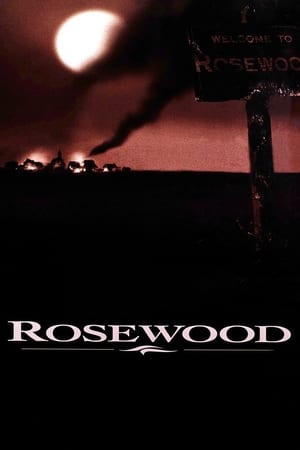
Robert Gould Shaw leads the US Civil War's first all-black volunteer company, fighting prejudices of both his own Union army and the Confederates.
Based on the true life experiences of poet Jimmy Santiago Baca, the film focuses on half-brothers Paco and Cruz, and their bi-racial cousin Miklo. It opens in 1972, as the three are members of an East L.A. gang known as the "Vatos Locos", and the story focuses on how a violent crime and the influence of narcotics alter their lives. Miklo is incarcerated and sent to San Quentin, where he makes a "home" for himself. Cruz becomes an exceptional artist, but a heroin addiction overcomes him with tragic results. Paco becomes a cop and an enemy to his "carnal", Miklo.
When Ashtray moves to South Central L.A. to live with his father (who appears to be the same age he is) and grandmother (who likes to talk tough and smoke reefer), he falls in with his gang-banging cousin Loc Dog, who along with the requisite pistols and Uzi carries a thermo-nuclear warhead for self-defense. Will Ashtray be able to keep living the straight life?
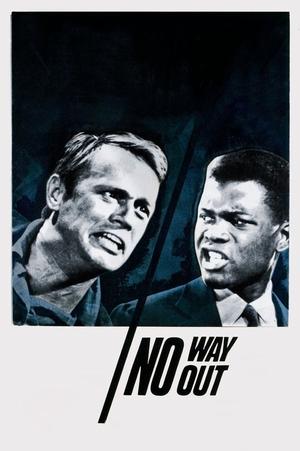
African-American Philadelphia police detective Virgil Tibbs is arrested on suspicion of murder by Bill Gillespie, the racist police chief of tiny Sparta, Mississippi. After Tibbs proves not only his own innocence but that of another man, he joins forces with Gillespie to track down the real killer. Their investigation takes them through every social level of the town, with Tibbs making enemies as well as unlikely friends as he hunts for the truth.
In post-Sept. 11 Los Angeles, tensions erupt when the lives of a Brentwood housewife, her district attorney husband, a Persian shopkeeper, two cops, a pair of carjackers and a Korean couple converge during a 36-hour period.
A young lawyer defends a black man accused of murdering two white men who raped his 10-year-old daughter, sparking a rebirth of the KKK.
Stephen Lawrence was a black London teenager murdered by white racists in 1993. His parents fought to have the crime properly investigated, culminating in a judicial enquiry into the event itself and also the inadequacies of the ensuing investigation by the London Metropolitan Police.
13 year old Lili fights to protect her dog Hagen, and is devastated when her father sets Hagen free on the streets. Still innocently believing love can conquer any difficulty, Lili sets out to save her dog. Failing in his desperate efforts to find his beloved owner, Hagen joins a canine revolt leading a revolution against their human abusers.
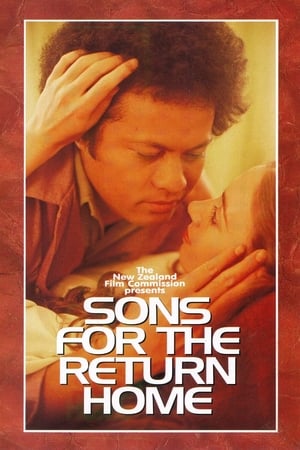
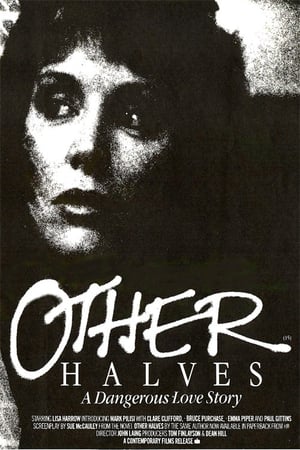
The love story of an abused English girl and a Chinese Buddhist in a time when London was a brutal and harsh place to live.
Salvatore "Sal" Fragione is the Italian owner of a pizzeria in Brooklyn. A neighborhood local, Buggin' Out, becomes upset when he sees that the pizzeria's Wall of Fame exhibits only Italian actors. Buggin' Out believes a pizzeria in a black neighborhood should showcase black actors, but Sal disagrees. The wall becomes a symbol of racism and hate to Buggin' Out and to other people in the neighborhood, and tensions rise.
Mexican beauty Camilla hopes to rise above her station by marrying a wealthy American. That is complicated by meeting Arturo Bandini, a first-generation Italian hoping to land a writing career and a blue-eyed blonde on his arm.
Venice, 1596. Bassanio begs his friend Antonio, a prosperous merchant, to lend him a large sum of money so that he can woo Portia, a very wealthy heiress; but Antonio has invested his fortune abroad, so they turn to Shylock, a Jewish moneylender, and ask him for a loan.
Uptight lawyer Peter Sanderson wants to dive back into dating after his divorce and has a hard time meeting the right women. He tries online dating and lucks out when he starts chatting with a fellow lawyer. The two agree to meet in the flesh, but the woman he meets — an escaped African-American convict named Charlene — is not what he expected. Peter is freaked out, but Charlene tries to convince him to take her case and prove her innocence. Along the way, she wreaks havoc on his middle-class life as he gets a lesson in learning to lighten up.
'Pleasantly plump' teenager Tracy Turnblad achieves her dream of becoming a regular on the Corny Collins Dance Show. Now a teen hero, she starts using her fame to speak out for the causes she believes in, most of all integration. In doing so, she earns the wrath of the show's former star, Amber Von Tussle, as well as Amber's manipulative, pro-segregation parents. The rivalry comes to a head as Amber and Tracy vie for the title of Miss Auto Show 1963.
A low-ranking thug is entrusted by his boss to dispose of a gun that killed corrupt cops, but things spiral out of control when the gun ends up in wrong hands.
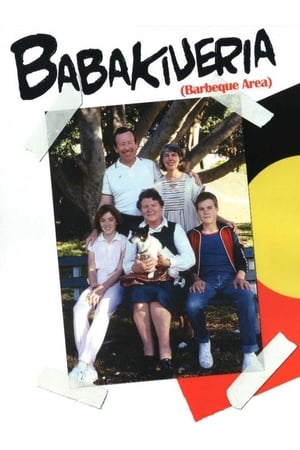
Georges Lajoie is a Parisian café owner. As every summer, Georges, his wife Ginette and grown-up son Léon go on holiday to Loulou's campsite, where they meet up with the Schumacher family (whose father is a bailiff) and the Colin family (who sells bras in the markets). This year, their peace is slightly disturbed by the proximity of a construction site where foreign workers are employed. Xenophobic comments are made. One evening at the ball, a fight breaks out between Lajoie, Albert Schumacher and two algerian immigrant workers...
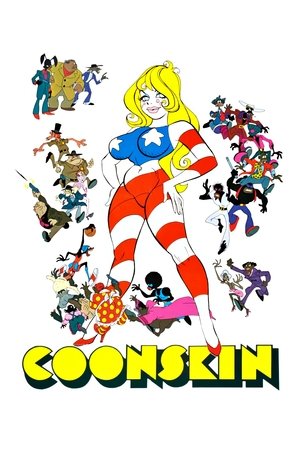
After saving a Black Panther from some racist cops, a black male prostitute goes on the run from "the man" with the help of the ghetto community and some disillusioned Hells Angels.
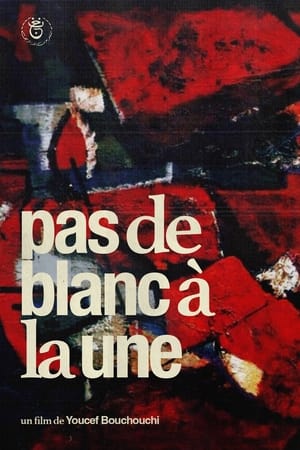
After the Battle of Algiers, France and its army exported, as true experts, anti-subversive methods to Latin America and the United States in the 1960s. After more than a year of investigation in Argentina , in Chile, Brazil, the United States and France, the director collected, sometimes under the cover of a hidden camera, recorded conversations, the exclusive testimonies of the main protagonists. From General Aussaresses to former Minister of the Armed Forces Pierre Messmer, including General Reynaldo Bignone (head of the military junta in Argentina from 1982 to 1984), General Albano Harguindéguy, General Manuel Contreras, and Generals John Johns and Carl Bernard, this investigation gives us a hidden reality of the country of Human Rights.
Based on the true story of the events that led to the death of Kenneth Chamberlain Sr., an elderly African American veteran with bipolar disorder, who was killed during a conflict with police officers who were dispatched to check on him.
Co-directed by Blackwood and Julien, the first full-length feature film by Sankofa Film and Video offers a radical and necessary interrogation into what constitutes 'post-colonial' identity at a time of political and social restlessness in Britain. Set within an isolated desert landscape contrasted with recognizable scenes of the intensity of family life, this vanguard work demonstrates the richness and variety of the black experience; it is a poetic and hard-hitting commentary on the complexities of race, gender and sexuality.