On a misty morning in the fall of 1985, a small group of Haida people blockaded a muddy dirt road on Lyell Island, demanding the government work with Indigenous people to find a way to protect the land and the future. In a riveting new feature documentary drawn from more than a hundred hours of archival footage and audio, award-winning director Christopher Auchter (Now Is the Time) recreates the critical moment when the Haida Nation’s resolute act of vision and conscience changed the world.
"The Pig and the Society," symbolizes the stark contrast between the excesses of wealth and the plight of those left behind. It invites viewers to reflect on their perceptions and prejudices, challenging them to see beyond the surface and understand the systemic issues perpetuating homelessness.
Co-curated by Jenni Olson and the late Black gay activist Karl Knapper, this entertaining showcase of vintage movie trailers traces the evolution of African American cinema through its most crucial period, 1952-1976. Filled with insights on race and social dynamics, this fascinating compendium of coming attractions explores an extensive range of stylistic approaches—Blaxploitation, Comedy, Music Bio, Plantation Drama and more—offering an outrageous joyride through motion picture history. Beyond mere camp, these marvelously condensed gems crystallize a range of African American identities and personalities, tracking the meteoric careers of Sidney Poitier, James Earl Jones, Billy Dee Williams, Richard Pryor, Pam Grier and others through their bold performances in movies both hugely popular and practically forgotten. Afro Promo provides a compact glimpse at the representation of African Americans through twenty-five dynamic years of American cinema history.
Homo Cinematographicus is a human species whose unit of measurement and point of reference is the cinema and its derivative, television. Filmed at the 1998 Cannes Film Festival, the film offers an unspecified number of statements, talking about memories and a thousand fragments of stories, titles and film scenes, the warp of a gigantic collective Chanson de geste.
Celebrating the splendor and grandeur of the great cinemas of the United States, built when movies were the acme of entertainment and the stories were larger than life, as were the venues designed to show them. The film also tracks the eventual decline of the palaces, through to today’s current preservation efforts. A tribute to America’s great art form and the great monuments created for audiences to enjoy them in.
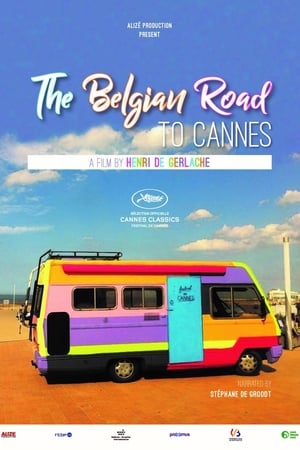
A cheerful road movie all about Belgian films at Cannes over the past 70 years. Filmmakers from the past converse with those from the present to paint the portrait of a cinema that is both diverse and free. An account of Belgium’s participation in the greatest film festival in the world.
In 1975, soon after the end of the Vietnam War, Hoa Thi Le and Hue Nguyen Che fled the country on a small boat. After nine days at sea, they docked in the Philippines, where they were utilized as background extras for “Apocalypse Now.”
Das deutsche Woodstock - Flower-Power in der Pfalz
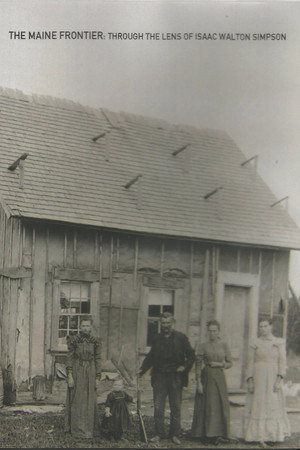
The Maine Frontier: Through The Lens of Isaac Walton Simpson, combines the scarcely seen turn-of-the-century photography of Isaac Simpson with both archived and current films, oral histories, and a compelling musical soundtrack performed live.
A documentary which covers Splatterfest ’90, the notorious all-night horror festival held at London’s legendary Scala Cinema.
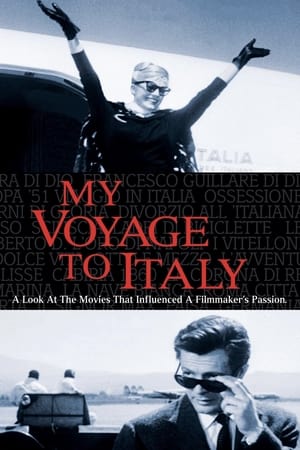
World-renowned director Martin Scorsese narrates this journey through his favorites in Italian cinema.
WINHANGANHA (Wiradjuri language: Remember, know, think) - is a lyrical journey of archival footage and sound, poetry and original composition. It is an examination of how archives and the legacies of collection affect First Nations people and wider Australia, told through the lens of acclaimed Wiradjuri artist, Jazz Money.
Film archivist and former director of the San Francisco Lesbian and Gay Film Festival Jenni Olson created this fast-paced and often funny, campy 75-minute film comprised entirely of spliced together movie trailers. Some of the segments have themes such as a breezy look back at John Travolta's career that includes trailers from such films as Saturday Night Fever, Staying Alive, Grease, Perfect, and Moment by Moment. Other trailers include Mae West in Sextette, the disco camper Thank God It's Friday, Raquel Welch in Kansas City Bomber, Pier Paolo Pasolini's The Gospel According to St. Matthew and the rarely seen Chastity, the serious acting debut of Cher.
In Park City, Utah a group of independent filmmakers attend a shoestring film festival and experience the oft-regular disillusionment of the low budget film world. However, they enter the orbit of the one man running the show and decide to come back the following year to help and change what was a beautiful disaster the year before.
Argentinean filmmakers talk about the Buenos Aires Rojo Sangre Film Festival and the history of genre cinema in Argentina.
X-ray images were invented in 1895, the same year in which the Lumière brothers presented their respective invention in what today is considered to be the first cinema screening. Thus, both cinema and radiography fall within the scopic regime inaugurated by modernity. The use of X-rays on two sculptures from the Bilbao Fine Arts Museum generates images that reveal certain elements of them that would otherwise be invisible to our eyes. These images, despite being generally created for technical or scientific purposes, seem to produce a certain form of 'photogénie': they lend the radiographed objects a new appearance that lies somewhere between the material and the ethereal, endowing them with a vaporous and spectral quality. It is not by chance that physics and phantasmagoria share the term 'spectrum' in their vocabulary.
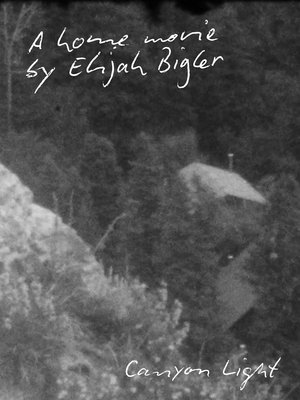
Phyllis Bigler has been going to the Spanish Peaks of Colorado since she was a child. Now in her 90s, she tells her stories.
A short documentary about a trailer weighing over 300 tons that carries material for the construction of a dam toward Tokyo.
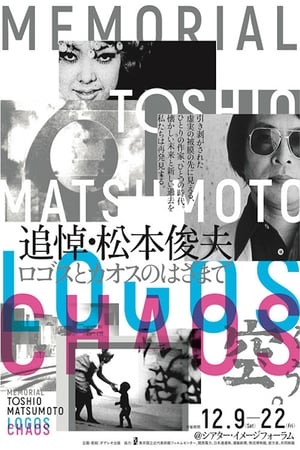
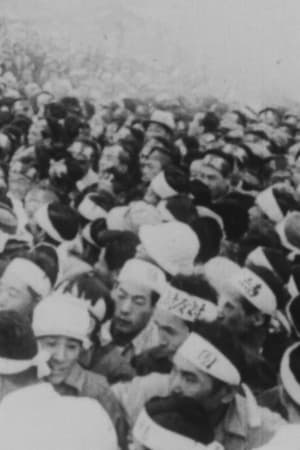
An early experimental film by Toshio Matsumoto. Produced as part of the student riots in Japan at the start of the 1960s, Matsumoto uses collage, archival footage, and impassioned narration to create an expressive, visceral criticism of the US-Japan Security Treaty.
An undocumented immigrant explores his and his family's immigration trauma while grasping hope through a voicemail.