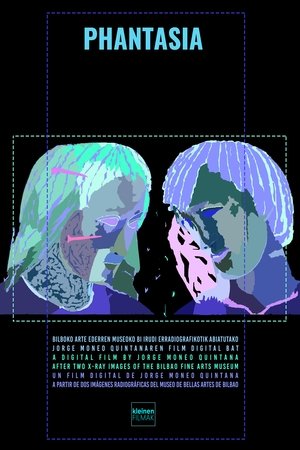
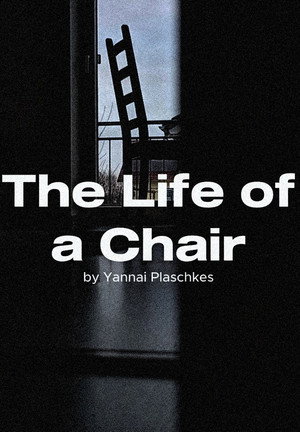
An elderly painter, who hasn't touched a paintbrush for quite a while, wanders around the city with a film camera. One day he sees two beautiful girls through a cafe window. A wonderful image, but it starts to slip away from him.
Volpina
An ant colony finds that the strange new food source they've discovered may be something more of a curse than a boon.
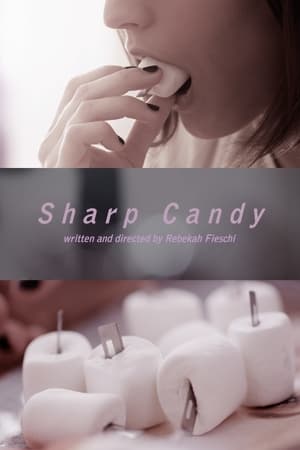
Lelaina was mellow, eating marshmallow.
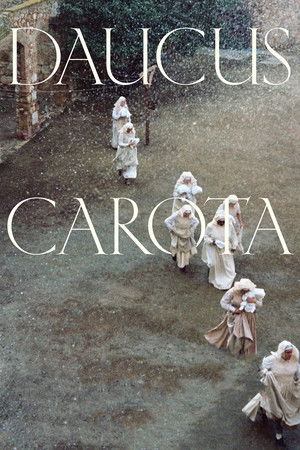
A community of women lives in an old convent that falls apart. They never talk and strive to keep everything clean. One day, Irene realizes for the first time that there is much more beyond the routine she and her sisters keep doing over and over. Irene, following nature’s signs, starts a journey of reconnection with her own impulses and body to finally find her own voice.
Fish Out of Water manages to unfurl its light-hearted tale of young man and the sea, without a word of dialogue. Avoiding the morning traffic jams, our man (Nick Dunbar) finds peace by rowing each day to work in the city. But when a seductive blonde unexpectedly enters the picture, he finds his morning boat ride heading in unexpected directions. Directed by Lala Rolls (Land of My Ancestors), Fish Out of Water was invited to play in the 2005 NZ Film Festival, plus another 10 overseas fests. Victoria Kelly composes the brass and banjo-inflected soundtrack.
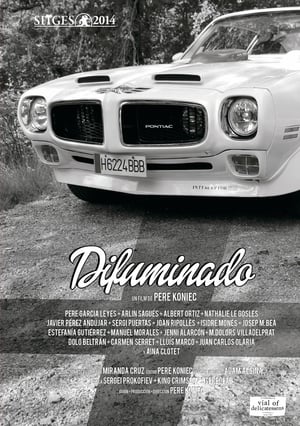
A mysterious old man and a dark past made up of classic cars, beautiful women and the excesses of his youth.
A young man named Phillip finds himself in a purgatory reality that's littered with clues of his past life. From the discovery of his own corpse to the mysterious connection with a woman scheduled for an abortion, Phillip slowly reveals this doomed fate by his own hands.
The story takes place in the landscapes of La Spezia, where urban and rural environments intertwine. Water plays a primary role as a form, alongside the circle (e.g., bicycle wheels, pizzas, clocks…), which sets the rhythm of the character’s life, dynamically accelerating until it becomes very fast. The overlapping forms invite the viewer into the cyclical rhythm of the short film, moving from the spinning bicycle wheel to the washing machine drum in the character’s bathroom, from a freshly tossed pizza to the delivery mailbox, and finally to a dead-end wall. Savana is a race against oneself and against others; it’s a matter of decision and unpredictability — it’s black or white.
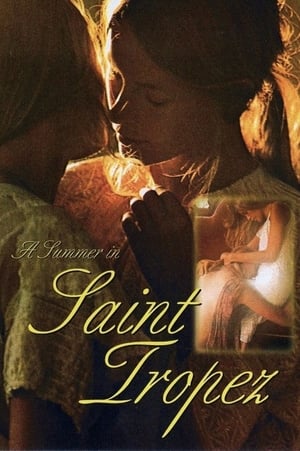
In an isolated country house close to the shore near Saint-Tropez, seven young women share a bedroom. Over two days, they wake, shower, breakfast, play dress up, bathe in the sea, picnic, ride bikes, pick flowers, have a pillow fight, run on the strand, practice ballet stretches, groom themselves and each other, and laugh. Anne returns a horse to Renaud; the next day, he's in a rowboat and meets her by the pier. By the film's end, all are celebrating with the lovers.
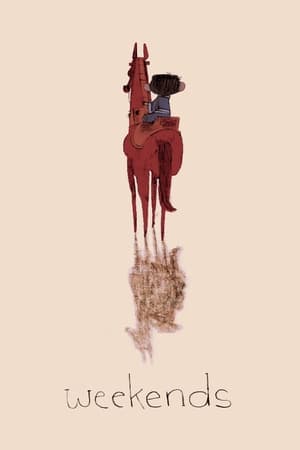
Set in 1980s Toronto, a young boy shuffles between the homes of his recently divorced parents.
X-ray images were invented in 1895, the same year in which the Lumière brothers presented their respective invention in what today is considered to be the first cinema screening. Thus, both cinema and radiography fall within the scopic regime inaugurated by modernity. The use of X-rays on two sculptures from the Bilbao Fine Arts Museum generates images that reveal certain elements of them that would otherwise be invisible to our eyes. These images, despite being generally created for technical or scientific purposes, seem to produce a certain form of 'photogénie': they lend the radiographed objects a new appearance that lies somewhere between the material and the ethereal, endowing them with a vaporous and spectral quality. It is not by chance that physics and phantasmagoria share the term 'spectrum' in their vocabulary.
A rhythmic film set to a drum beat with no dialogue that follows a downbeat jazz musician as he attempts to break out of his rut and achieve creative freedom.
A little cat witnesses the passing of his family.
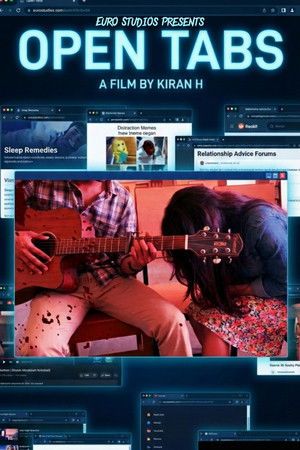
After a breakup, a sleepless young man begins closing the countless tabs open on his computer until only one memory remains.
A tormented father witnesses his young son die when caught in a gang's crossfire on Christmas Eve. While recovering from a wound that costs him his voice, he makes vengeance his life's mission and embarks on a punishing training regimen in order to avenge his son's death.
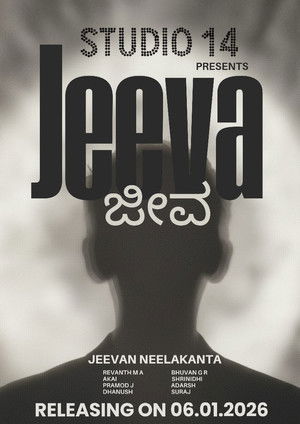
In a world where everyone is expected to be on point 24/7, life isn’t lived anymore — it’s performed. Always grinding. Always proving. Always “doing fine”. But the mind keeps score. And when it can’t take it anymore… the body hits pause. JEEVA is a social satire on today’s pressure culture — where being human is replaced by being perfect, and panic attacks are just the body’s way of saying: slow down. breathe. exist.
A young man living far from his beloved one wastes his existence absorbed in modern distractions until he loses contact with her.
Waiting for his wife to come home from an expedition in the freezing wasteland, a man loses his sanity in a subterranean nuclear bunker.
The bodies of women lying on the ground weave relationships around them, they breastfeed, they connect with the ground ... Carla Simón's first short, shot on 16 mm in the Californian forests. An experimental exercise that connects with the cinematographic avant-gardes of the early twentieth century.