A look behind the scenes of Christopher Nolan's film "Oppenheimer" about an American scientist and his role in the development of the atomic bomb.
1940, Kawamoto Akiko lives in Hiroshima with her father and mother, Genkichi and Shizuko, as well as her two younger brothers. Akiko loves playing her favourite piano. As the war situation worsens, she is busy helping out the war efforts. On the morning of August 6, 1945, she disobeys her father and heads into the centre of town for work. In Hiroshima 75 years later, her favourite piano remains, restored and playable following its survival of the atomic bombing
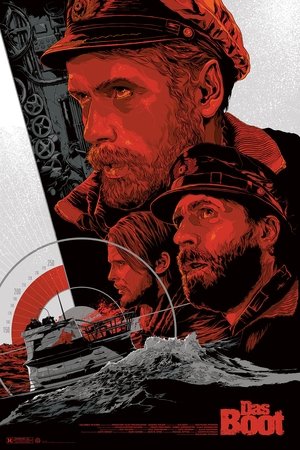
After executing a deserter from his own division, a lone Nazi soldier must search for his morals when he encounters two allied deserters, who wish to find a safe path home.
Hiroshima and Nagasaki: 75 Years Later is told entirely from the first-person perspective of leaders, physicists, soldiers and survivors.
Nagasaki, 1945. Three nursing students, Tanaka Sumi, Ohno Atsuko, and Iwanaga Misao, return home when school is closed due to air raids, and spend some peaceful time with family and friends. However, at 11:02 AM on August 9th, the atomic bomb is dropped, and their daily lives are instantly shattered. The city is reduced to ruins, and despite their inexperience, the nursing students rush to provide medical care to the injured. Faced with the cruel reality that more lives must be buried than can be saved, the women continue to question the value and meaning of life.
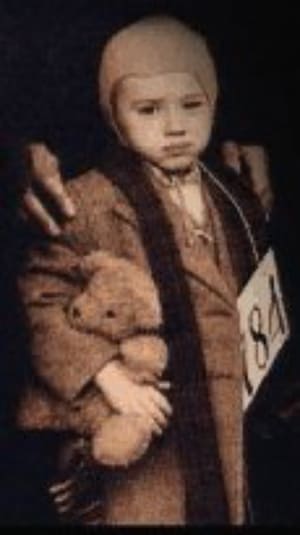
Jamie Graham, a privileged English boy, is living in Shanghai when the Japanese invade and force all foreigners into prison camps. Jamie is captured with an American sailor, who looks out for him while they are in the camp together. Even though he is separated from his parents and in a hostile environment, Jamie maintains his dignity and youthful spirit, providing a beacon of hope for the others held captive with him.
Set in German-occupied Norway, resistance fighter Knut Straud enlists the reluctant physicist Rolf Pedersen in an effort to destroy the German heavy water production plant in rural Telemark.
"Trinity and Beyond" is an unsettling yet visually fascinating documentary presenting the history of nuclear weapons development and testing between 1945-1963. Narrated by William Shatner and featuring an original score performed by the Moscow Symphony Orchestra, this award-winning documentary reveals previously unreleased and classified government footage from several countries.
What happened after Einstein fled Nazi Germany? Using archival footage and his own words, this docudrama dives into the mind of a tortured genius.
Chappy Sinclair is called to gather together a mixed Soviet/U.S. strike force that will perform a surgical strike on a massively defended nuclear missile site in the Middle East. Chappy finds that getting the Soviet and U.S. Pilots to cooperate is only the most minor of his problems as he discovers someone in the Pentagon is actively sabotaging his mission.
Assigned to oversee the development of the atomic bomb, Gen. Leslie Groves is a stern military man determined to have the project go according to plan. He selects J. Robert Oppenheimer as the key scientist on the top-secret operation, but the two men clash fiercely on a number of issues. Despite their frequent conflicts, Groves and Oppenheimer ultimately push ahead with two bomb designs — the bigger "Fat Man" and the more streamlined "Little Boy."
The documentary recounts the world's first nuclear attack and examines the alarming repercussions. Covering a three-week period from the Trinity test to the atomic bombing of Hiroshima, the program chronicles America's political gamble and the planning for the momentous event. Archival film, dramatizations, and special effects feature what occurred aboard the Enola Gay (the aircraft that dropped the bomb) and inside the exploding bomb.
In 150 years, twice marked by total destruction —a terrible earthquake in 1923 and incendiary bombings in 1945— followed by a spectacular rebirth, Tokyo, the old city of Edo, has become the largest and most futuristic capital in the world in a transformation process fueled by the exceptional resilience of its inhabitants, and nourished by a unique phenomenon of cultural hybridization.
Our two-hour film highlights the life and career of Dr. Schreiber with respect and clarity. Raemer, his wife Marge, and young daughter Paula would move to the high-desert of New Mexico where he and other brilliant minds would change the world forever.
"Three Tales" is a video music work by American composer Steve Reich and video artist Beryl Korot. It is set in three "Acts", each depicting a technological advance of the 20th century and its negative implications on humanity: the dirigible airship Hindenburg and its explosion; the Atom Bomb and its testing on Bikini Atoll; and Dolly the sheep, first successful genetic cloning of a mammal.
Steven Okazaki presents a deeply moving look at the painful legacy of the first -- and hopefully last -- uses of nuclear weapons in war. Featuring interviews with fourteen atomic bomb survivors - many who have never spoken publicly before - and four Americans intimately involved in the bombings, White Light/Black Rain provides a detailed exploration of the bombings and their aftermath.
Through interviews with Manhattan Project scientists and newly declassified archival footage, this documentary examines the life of physicist J. Robert Oppenheimer and his leadership of the Manhattan Project. The film traces the development and testing of the first atomic bomb and follows Oppenheimer’s later opposition to nuclear proliferation during the early years of the Cold War.
Tsutomu Yamaguchi is a hibakusha. A survivor of both atomic bomb blasts in 1945. First at Hiroshima, then again at Nagasaki. Now nearing 90, Yamaguchi finally speaks out. Breaking taboos of shame and sorrow, he responds to a call to fight for a world without nuclear weapons by telling his story, so that no one else will ever have to tell one like it again. Twice reconstructs Yamaguchi’s experiences in 1945 Japan, interviews him on the after-effects of exposure and documents the last five years of the late-blooming activist’s life.
Because of a technical defect an American bomber team mistakenly orders the destruction of Moscow. The President of the United States has but little time to prevent an atomic catastrophe from occurring.
The story of Operation Market Garden—a failed attempt by the allies in the latter stages of WWII to end the war quickly by securing three bridges in Holland allowing access over the Rhine into Germany. A combination of poor allied intelligence and the presence of two crack German panzer divisions meant that the final part of this operation (the bridge in Arnhem over the Rhine) was doomed to failure.