The autobiographical account of the tormented life of a witness of the century: Louisa Ighilahriz, activist and leading figure in Algerian independence. A student, she joined the independence struggle at the age of 20, joining the ranks of the FLN on the eve of the Battle of Algiers in late 1956 under the name Lila. She took part in the high school students' strike, then fled into the maquis when she was actively sought after. She was part of the French FLN support network of "suitcase carriers" during the Battle of Algiers. Seriously wounded alongside her network leader, Saïd Bakel, during an ambush in 1957, hospitalized and then imprisoned, she suffered numerous tortures in French prisons. She will be saved from certain death by an anonymous person, she will seek, for forty years, to find him just to show him her gratitude... Emblematic of the painful Franco-Algerian history, Louisa's story is poignant and imbued with humanism.
Juan Méndez Bernal leaves his house on the 9th of april of 1936 to fight in the imminent Spanish Civil War. 83 years later, his body is still one of the Grass Dwellers. The only thing that he leaves from those years on the front is a collection of 28 letters in his own writing.
A documentary about the atrocities committed against the Hmong people by the Laos government. Shot by Hmong people with cameras provided to them in 2006, this film provides a unique look into one of the worst, and silent, human rights tragedies of the 21st century.
In 2021, the border area between Poland and Belarus became a forbidden zone, three kilometers wide, where refugees found themselves brutally trapped. They had become the stakes in a political game: Belarus supposedly guaranteed free passage to the EU, but in Poland the refugees met with pushbacks, forcing them back across the border. Once in Belarus again, they were driven back towards Poland—a horrific stalemate in an inhospitable landscape of treacherous marshes.
In Russia, criticizing the war in Ukraine or Vladimir Putin’s regime has become a crime. Thousands of ordinary citizens are being arrested, tried, and imprisoned. They are called “Politzek”: political prisoners. Filmed clandestinely over the course of more than a year, Politzek gives a platform to those who, despite the fear, continue to speak out against Putin’s repressive Russia. Through the intersecting stories of a teenager sentenced to five years in prison for criticizing the government on social media, a young artist jailed for placing anti-war stickers, a human rights activist, and two theater directors facing Kafkaesque trials, the film unveils the machinery of state repression in Russia. With rare footage, broken yet unyielding voices, this is a story of silenced resistance.
This poetic film follows director Marialuisa's journey with Anita and Leticia, Central American women traveling with the Caravan of Mothers of Missing Migrants.
"Kartli" refers both to Georgia’s medieval kingdom and a Tbilisi sanatorium sheltering refugees from the 1990s war in Abkhazia, meant as temporary but lasting 30 years. The crumbling building became a recreated “country”, with a farm, gardens, terraces and rooms where old VHS tapes revive memories of a lost paradise. Through Tamuna, Irma, and others, the film explores exile, trauma, and shared resilience, showing that nothing stays the same inside Kartli.
After opening a chest of memories, a girl narrates events from chilean dictatorship and the murder of Nadia Fuentes Concha through the figure of bread, which is present in chilean everyday life.
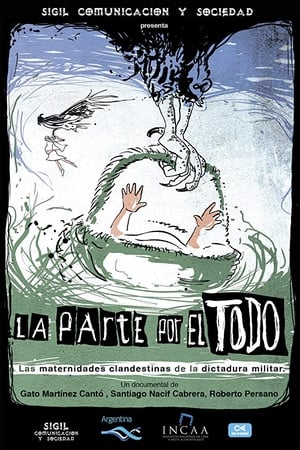
Through testimonies and images, the crude reality of human rights in Argentina in democracy is portrayed and the role of the hegemonic means of communication to make causes and protests invisible ...
The bleached palette and home-movie aesthetics of Super 8 footage provide the image track for this testimonial about an illegal abortion in Mexico City in the 1960s, delivered in voiceover by the filmmaker’s mother. In its account of this intimate and disorienting memory, Lesser Choices summons a time of profound uncertainty—a moment from an era without rights—and offers a warning to the present.
Cóndor
During the Nazi regime, there was widespread persecution of homosexual men, which started in 1871 with the Paragraph 175 of the German Penal Code. Thousands were murdered in concentration camps. This powerful and disturbing documentary, narrated by Rupert Everett, presents for the first time the largely untold testimonies of some of those who survived.
September 1st, 1939. Nazi Germany invades Poland. The campaign is fast, cruel and ruthless. In these circumstances, how is it that ordinary German soldiers suddenly became vicious killers, terrorizing the local population? Did everyone turn into something worse than wild animals? The true story of the first World War II offensive that marks in the history of infamy the beginning of a carnage and a historical tragedy.
Although experiencing a lifelong battle with pain and trauma, Jerod Draper lived an average, normal life in Southern Indiana. During high school, Jerod started to get off track after losing his best friend at the age of 14, and his first love at 15. To cope with the sudden loss at such a young age, Jerod started experimenting with drugs. After high school and through his younger-adult years, Jerod's substance abuse amplified. Throughout his 20s and 30s, Jerod continued to fight for sobriety while marrying and having a daughter. Following the divorce and not being able to see his daughter due to substance abuse, Jerod made a vow to stay clean. On October 4th, 2018 - Jerod was well over a year sober, yet fighting a familiar challenge, the severe depression and anxiety induced by weaning from drugs. During that evening, Jerod endures a fatal night of torture after being arrested for a routine traffic stop.
Survivor Abduweli flees a Chinese Uyghur internment camp to Norway. Now, heading to Germany to confront a past torturer, his daughter’s panic attack forces a choice: exposing Uyghur genocide for the world, or shielding his family from painful memories.
Mot vinden
Though both the historical and modern-day persecution of Armenians and other Christians is relatively uncovered in the mainstream media and not on the radar of many average Americans, it is a subject that has gotten far more attention in recent years.
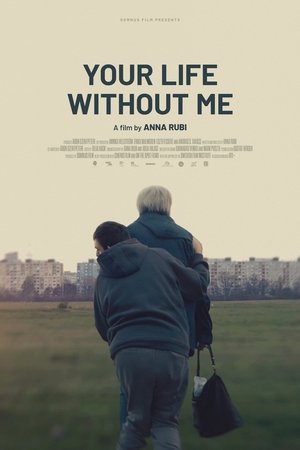
Magdi, a strong-willed, but lonely caregiver faces a daunting reality as she grows older: If she were to pass away, her disabled adult son, Feri would be left to the inhumane conditions of the Hungarian state care system, and would quickly follow her. Determined to secure a future for Feri, Magdi unites with a group of mothers who are in the same situation and they take legal action against the state. “Your Life Without Me” is a story of the strength and sacrifices of these women who find their own voice through the common fight and their community.
On the border of Surinam and French Guyana, indigenous Wayana territory is overrun by intruders. Illegal gold miners poison the river, missionaries repress indigenous identity, and even doctors with the best intentions leave marks that are often silently violent. The Wayana call these intruders Parasisi.
Gdańsk, Poland, September 1980. Lech Wałęsa and other Lenin shipyard workers found Solidarność (Solidarity), the first independent trade union behind the Iron Curtain. The long and hard battle to bring down communist dictatorship has begun.