Jejich den
Lanford Wilson's prize-winning drama about life in a played-out coal town in the Midwest. Against the background of a murder trial, the people recall their lives.
During the early 16th century, idealistic German monk Martin Luther, disgusted by the materialism in the church, begins the dialogue that will lead to the Protestant Reformation.
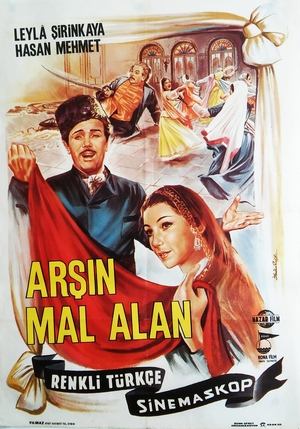
A very clever parrot lives in a Hindu palace, surrounded by many beautiful girls, but the parrot escapes, and is trapped far from the palace. One day, when its new owner is sleeping, the bird convinces a young boy to open the cage door. In return, it shows the boy a secret passage to get into the palace.
Aarne marries Martta because his mother tells him it is his duty as the eldest son to marry a wealthy girl. However, the attractive school teacher Ilona arrives in the village and causes complications when Aarne falls in love with her.
This musical reworking of Too Many Husbands (1940), features Grable as a top singer and dancer who's been widowed by WW II. She marries her late husband's songwriting partner, Gower Champion, but the new marriage is thrown for a loop when Lemmon, her first husband, turns up very much alive and eager to see Grable.
This omnibus release consists of three playlets filmed and aired during television's Golden Age, and starring some of the legends of film and television. The collection originally ran as a two-hour segment on December 14, 1959, on the anthology series The Play of the Week, broadcast locally in New York City via the independent radio station WNTA. Each "tale" in the anthology was adapted from a single tale by the inimitable Sholom Aleichem, regarded by many as the "Yiddish Mark Twain". Included are: "A Tale of Chelm" starring Zero Mostel and Nancy Walker in the story of a bookseller attempting to buy a goat; "Bontche Schweig" about a poor man (Jack Gilford) whose recent arrival in Heaven makes the angels cry; and "The High School" about a Jewish merchant (Morris Carnovsky) persuaded by his wife (Gertrude Berg) to let their son attend a particular high school despite the enforcement of quotas for Jewish students.
Valentina is fed up of her Down’s syndrome, convinced that it prevents her from making her dream true: becoming a trapeze artist. But a magical journey will reveal to her all that she is capable of doing.
The bible but with clowns.
Letters, Riddles and Writs is a one act opera for television by Michael Nyman broadcast in 1991.
After getting kicked out of college, Arlo decides to visit his friend Alice for Thanksgiving dinner. After dinner is over, Arlo volunteers to take the trash to the dump but finds it closed for the holiday, so he dumps the trash in the bottom of a ravine. This act of littering gets him arrested and sends him on a bizarre journey.
An all-girl rock band moves to Hollywood in the hope of achieving success, only to fall into a whirlpool of wickedness and decadence.
In 1940s France, a new teacher at a school for disruptive boys gives hope and inspiration.
When cocky military lawyer Lt. Daniel Kaffee and his co-counsel, Lt. Cmdr. JoAnne Galloway, are assigned to a murder case, they uncover a hazing ritual that could implicate high-ranking officials such as shady Col. Nathan Jessep.
The rise and inevitable fall of an amoral but naive young woman whose insouciant eroticism inspires lust and violence in those around her.
A year in the life of a turn-of-the-century middle class family, leading up to the opening of the 1904 St. Louis World's Fair.
A poverty-stricken woman raises her sons through many trials and tribulations. But no matter the struggles, always sticks to her own moral code.
In this East German teen musical, a group of girls are planning to take their summer vacation together on the Baltic coast. When a loud and obnoxious group of boys intrudes on their holiday, the girls are horrified to learn that the boys have the same vacations plans as them. The two groups quarrel with each other and compete over a number of things, but gradually an attraction starts to form.
In the beginning of the 19th century, Johannes Elias Alder is born in a small village in the Austrian mountains. While growing up he is considered strange by the other villagers and discovers his love of music, especially rebuilding and playing the organ at the village church. After experiencing an "acoustic wonder", his eye color changes and he can hear even the most subtle sounds.
A depiction of the conflict between King Henry VIII of England and his Lord Chancellor, Sir Thomas More, who refuses to swear the Oath of Supremacy declaring Henry Supreme Head of the Church in England.