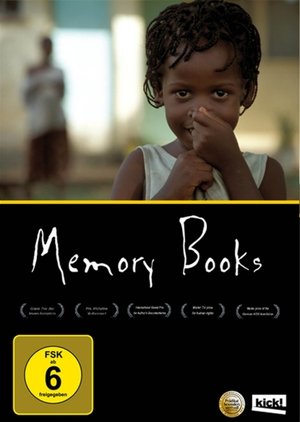
In Uganda, AIDS-infected mothers have begun writing what they call Memory Books for their children. Aware of the illness, it is a way for the family to come to terms with the inevitable death that it faces. Hopelessness and desperation are confronted through the collaborative effort of remembering and recording, a process that inspires unexpected strength and even solace in the face of death.
Inspiring celebrities and influential Latinos come together to "speak loudly" and share their stories of being Latinos in the U.S.
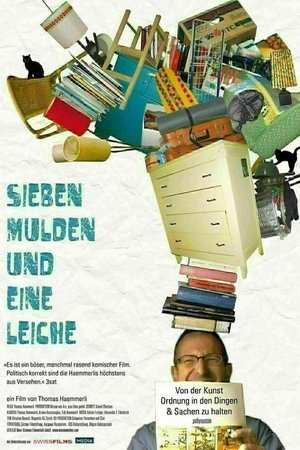
Thomas Haemmerli is about to celebrate his fortieth birthday when he learns of his mother's death. A further shock follows when he and his brother Erik discover her apartment, which is filthy and full to bursting with junk. It takes the brothers an entire month to clean out the place. Among the chaos, they find films going back to the 1930s, photos and other memorabilia.
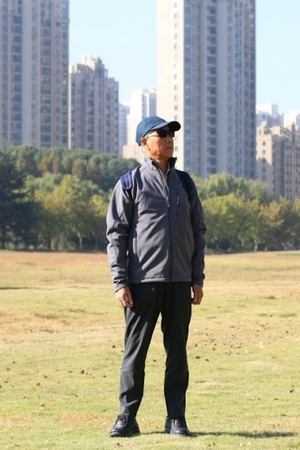
Mr. Lin is a happily retired man who spends his time keeping company with his toddling grandson, walking his dog, and playing golf with his in-laws. Recently, he has been obsessed with houses with river views. In Lin's city of demolitions and reconstructions, money-making investors buy and sell houses at unaffordable prices. Above the skyline of Taipei, will the boundaries between daydreams and reality ever blur?
A filmmaker revisits her childhood, interweaving 16mm vignettes and her old child services documents, uncovering the truth she couldn't voice as a child.
Serenade für Fanny
An experiment and a dialogue about recording, the act of filming and the colors available to whoever points the camera somewhere.
"A l likeness is a gift... it avoids... or confuses time if your prefer." said John Berger. Following this premise, 81.92 is a structuralist inquiry into the notion of presence and absence as it reveals archival radio broadcasts from former Montreal radio host Mike Wolkow. The former (the audible) is left invisible while the later (the visible) seeks to find the missing elements that trace the passage of this vocal presence. Past and present interplay in this piece that shifts between epochs, thus mimicking a radio signal that is being tuned in.
Um Documentário Brasileiro
In Our Mothers' Gardens celebrates the strength and resiliency of Black women and Black families through the complex, and often times humorous, relationship between mothers and daughters.
Twenty-five films from twenty-five European countries by twenty-five European directors.
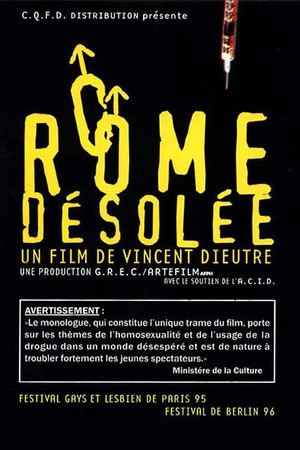
Chronicles of a male homosexual drug addict in 1980's in voice-over with long take scenes from Rome, television snippets of news of Gulf War and commercials.
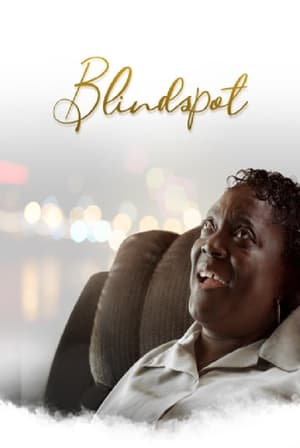
A brief glimpse through the life of Granny Lue. A woman of faith, fearlessness, and fierce energy, she never allowed her disability to determine her ability to live.
The film unfolds an atmospheric symphony of violence over Beirut, revealing the haunting fusion of incessant Israeli military flights and the hum of generators during blackouts. This 45-minute video essay plunges viewers into a chilling chronicle of daily life transformed by the weaponization of the air, where the terror of repeated incursions becomes a disconcertingly banal backdrop.
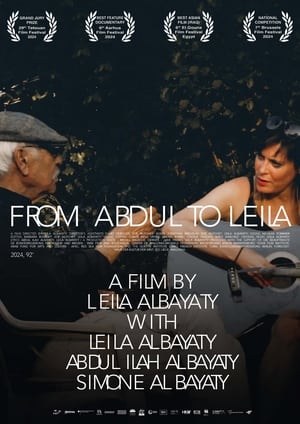
After losing part of her memory in an accident, Leila, a young French woman of Iraqi origin, reconstructs her story by reconnecting with her family and exploring her roots. Through music and cinema, she brings her exiled father's poems to lite, dis-covers the reality of the Middle East, and embarks on a personal quest to understand her identity and find her voice.
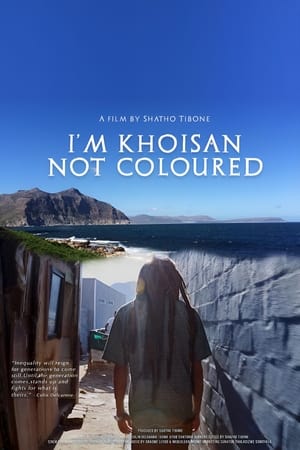
During his stay in Cape Town as a film student, Shatho Tibone was inspired by an initial casual trip he took to the scenic but informal settlement of Hangberg. This film focuses on the uncertainties and inhumane acts of police and state brutality faced by the predominantly Rastafarian, KhoiSan identifying community of Hangberg in Cape Town, South Africa. So, through the participatory collective effort of a few journalists, filmmaker and community leaders Shatho went on a 5 year journey to document the story of this community which has become an enigma in South African imagination,
Ancla
In the wake of one of the worst social experiments in the history of mankind, 'I'm not Black, I'm Coloured' is one of the first documentary films to look at the legacy of Apartheid from the viewpoint of the Cape Coloured. A people who in 1994, embraced the concept of Desmond Tutu's all encompassing 'rainbow nation', but soon thereafter realized that freedom, privilege, economic growth and equality would not include them. A people who for more than 350 years has been disregarded, ignored, belittled, and stripped of anything they can call their own enduring a complex psychological oppression and identity crisis unparalleled in South African history.
What's it like to "make a family" when you're not part of the traditional hetero couple? Can two best buddies living on the same floor become a family? Océan and his best friend Sophie-Marie Larrouy will question their friendship, their desire for children and their ability to commit to each other, going to meet people who have made families "differently" to draw inspiration from them and invent their own model.
A film about homes on both sides of an ocean.