One night in his near-empty tower block in contemporary London, Adam has a chance encounter with a mysterious neighbor, which punctures the rhythm of his everyday life.
A mother and her son have left the marital home. The mother entrusts her son Jacques to a friend for the day. This is an opportunity for the little boy to play with Julie. But Jacques has a secret: he loves playing with dolls.
A man searches for his childhood best friend, a Polish violin prodigy orphaned in the Holocaust, who vanished decades before on the night of his first public performance.
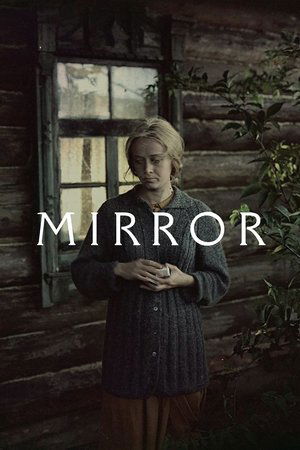
A dying man in his forties recalls his childhood, his mother, the war and personal moments that tell of and juxtapose pivotal moments in Soviet history with daily life.
After her mother's death, six-year-old Frida is sent to her uncle's family to live with them in the countryside. But Frida finds it hard to forget her mother and adapt to her new life.
Martha is unhappy with her life as it is at the moment, and among other issues, she has decided to give up her writing career. Along with that decision comes a need to get away from her husband and from her psychiatrist, with whom she has had more than just a doctor-patient relationship. As Martha travels through a deserted city landscape in a storm, the external world reflects something of her inner turmoil. Flashbacks are interspersed throughout the film to enhance the suspense of Martha's inner and outer journey.
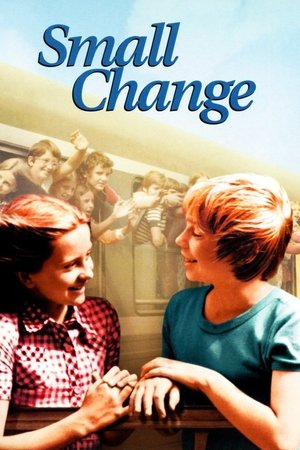
The lives of a motherless young man, who's just starting to find interest in women, and his physically abused, poverty stricken friend, are mixed with more or less innocent childhood experiences and challenges most their age experience.
The story follows Iris at three points in her life: childhood, adolescence, and adulthood. Divided into three chapters, the narrative adapts the tales of The Bremen Town Musicians, Little Red Riding Hood, and Cinderella to explore, at ages 10, 16, and 26 respectively, how the environment of each life stage influences her personality and perception of the world.
Depicts the lives of children of the coastal hills and pastures who work as shepherds from an early age to earn a living.
Auksė and her father Saulius arrive at her late grandfather’s house, where Auksė learns that Saulius intends to sell it. Guided by visions of the past Auksė tries to convince Saulius to reconsider the sale, but the cold relationship between them leads to a conflict where no one is completely right.
How do you become who you are? Through the slights one experiences, believes freelance journalist and author Dirk Gieselmann. One late evening, he is alone in his apartment. His camera is set up in front of him, with which he records himself. In doing so, he first introduces himself personally and announces that he will call three people. In the telephone calls that follow, he confronts his interlocutors with long-ago encounters, experienced ruthlessness and the accusation that they drove him out of the paradise of childhood. That evening, he wants to know what the reasons were for the slights and hopes to be able to make sense of them. He realizes that his childhood has finally come to an end and remembers the world of thoughts that surrounded him when he was a little boy. Then he receives an unexpected call from his family.
This kid has to move to a farm in his summer vacation and don't get to go to Norway Cup as he had planned for. Out on the country there is bad cellphone reception, cow smell and inbreed farmers as far as the eye can see. The family Volvo get stolen and the foreigners in the small town automatically gets blamed. From there is a chase to discover what truly happened...
Fifteen-year-old Klara is raped by a masked boy during Wet Monday. A year later, just before the first anniversary of the incident, she becomes paralyzed by a fear of water. Looking for support and understanding, Klara turns to her new, somewhat esoteric friend.
A tragic portrait of mother and child exploring grief through music and lyrical imagery.
A boy's careless childhood is interrupted when he finds out about his parents' decision to divorce.
Inal, Nia, Aska, Yanti, Attar, and Ondeng struggled to get education in a free school built by the teacher. Inal, who is blind and Ondeng, who has “backwardness”, have to go through winding journeys to and from school. Ondeng's ability to draw sketches makes him always "record" everything he is passionate about: his father's life as a fisherman and the fragile bridge that his friends always walk on. His goal: to build the bridge. When that fragile bridge collapsed while they were crossing, it didn't discourage them. Ondeng's thoughts that always remember his father and his fear of being abandoned by his father made Ondeng out of control and did not realize the dangers of taking his own boat to the sea.
When a substance abuse counsellor gets arrested for a DUI and returns to her hometown of Niagara Falls, she learns that her estranged father is dying of cancer and wants her to form a bond with her teenage half-sister that she's never met.
A romance is played in reverse, revealed through memories brought on by improvisational music.
In a war-torn country, young Danuta and her family play a dangerous game of hide-and-seek with soldiers. Amidst the chaos, Danuta finds comfort and hope in a sunflower, that connects her back with her loved ones.
The impressionistic story of a Texas family in the 1950s. The film follows the life journey of the eldest son, Jack, through the innocence of childhood to his disillusioned adult years as he tries to reconcile a complicated relationship with his father. Jack finds himself a lost soul in the modern world, seeking answers to the origins and meaning of life while questioning the existence of faith.