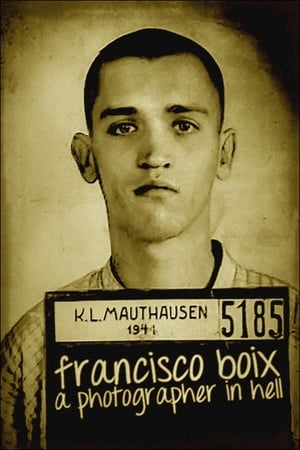
In 1939, just finished the Spanish Civil War, Spanish republican photographer Francesc Boix escapes from Spain; but is captured by the Nazis in 1940 and imprisoned in the Mauthausen concentration camp, in Austria, a year later. There, he works as a prisoner in the SS Photographic Service, hiding, between 1943 and 1945, around 20,000 negatives that later will be presented as evidence during several trials conducted against Nazi war criminals after World War II.
Les raisins du Reich
Nazi troops massacre 30,000 Jews over a three-day period in September 1941. Babyn Yar ravine in Kyiv, Ukraine.
Between June 1940 and March 1943, the 1,200 kilometer long demarcation line broke France in two. For almost three years she controlled the daily newspaper of 40 million French people. In the north the zone occupied by Hitler's soldiers, in the south the zone administered by Marshal Pétain's Vichy regime. This film lifts the veil in this theater on the shameful mistakes of the collaboration, but also on the most courageous and noble deeds. Archive images and film recordings at places where the border used to be crossed are alternated with interviews with the last witnesses of this time.
The untold story of a Royal "propagandist in pearls" whose wartime friendship with President Roosevelt became a vital catalyst to win back freedom for her tiny occupied country.
Pamäť ostáva
Povstaleckí letci
A film about non-Jews who saved Jews during the Holocaust.
Jonathan Stavleu explores, in a stream-of-consciousness video essay, the relationship people have with water and what happens when access to it is taken away. For this work, he examines anecdotal histories he has heard from Estonians, as well as stories from his own family history in the Netherlands, weaving them together into a journal-like narrative.
Les Espions du Général
Love & Sex under Nazi Occupation questions the burning mystery of intimate heterosexual and homosexual relations in times of war... and shows how being close to death reinforces the yearning for passion, for pleasure, for transgression, for desire as a last burst of freedom, as an ultimate call to life. Nearly two hundred thousands children are thought to be born of the union of French women with German soldiers. Women weren't the Germans' only conquests; indeed, occupied Paris swarms with all kinds of homosexuals—from Genet to Cocteau—who treated with the occupier. The fate of those women who were shaved at the end of the war for fraternizing with Germans is the punishment of a France that lied down and slept with the enemy.
The story of the post World War II Jewish refugee situation from liberation to the establishment of the modern state of Israel.
La maison de verre
In May 1943, Ernst Kaltenbrunner, the new head of the Reich Central Security Office, gave Hitler a report describing in detail the organization of the French Resistance. Indeed, during the Second World War, most of the Resistance networks had been infiltrated by traitors, the "V Man" (trusted men) in the service of the occupier. The Germans had established treason as a system and recruiting Frenchmen ready to inform on them was one of their priorities. It was these Frenchmen, whose number is estimated at between 20,000 and 30,000, who dealt terrible blows to the Resistance.
The true story of the massacre of a small Czech village by the Nazis is retold as if it happened in Wales.
The film is a search for Peter Gasparik's grandfather Stefan Truban, who was a resistance fighter and concealed the persecuted, defectors and Jews during World War II. Through private history we get to global history.
The film traces two families, one of which is Jewish, who preserved the images for decades but hadn’t brought them to light. 80 years after their creation, the son of the photographer finds the forgotten negatives and launches an investigation. With a team of researchers, archivists, and animators who use near-forensic precision to reconstruct locations and contexts, they trace the circumstances of those tragic days and the lives captured in each frame.
Frank mezi námi
he film is based on the testimonies of survivors of the Holocaust that were collected by The Visual Library Archive of USC Shoah Foundation. Director Sergey Bukovsky takes the viewer on a journey of discovery as he and several Ukrainian students absorb the testimony of Ukrainian people who escaped brutal execution and those who rescued friends and neighbors during the Holocaust. A collection of men and women share the details of their experiences, and we are afforded a glimpse of modern-day Ukraine: the ethnic stereotypes that continue to exist and the manner in which Post-Soviet society is dealing with the question of how to memorialize the sites where tens of thousands of Jewish families and others were executed and thrown into mass graves.
A documentary about the famous athlete and movie enthusiast who made Serbia's first sound film, Innocence Unprotected. The Nazi occupation of Belgrade prevented the film from gaining wider acclaim. Director Makavejev intersperses clips of the original film with interviews of surviving cast and crew members, as well as newsreel and archival footage.