Documentary about the Swedish submarine Ulven which was sunk by a mine in Swedish waters in 1943 killing all 33 crew members.
At the height of the cold war a struggle broke out between Governments from all over the world as to which position to take about the system of apartheid in South Africa. Leading the fight was Olof Palmes' Swedish Government, which covertly funneled over US$ 1 billion to the resistance movement. This money was given without the knowledge of either the Parliament or the Swedish populace. At the center of the net in South Africa was a Swedish diplomat called Birgitta Karlström Dorph. Meanwhile at the UN the Swedes with their Scandinavian counterparts attempted to win the argument for economic sanctions. This led to bitter arguments which saw Palme leading the fight against the Reagan and Thatcher administrations.
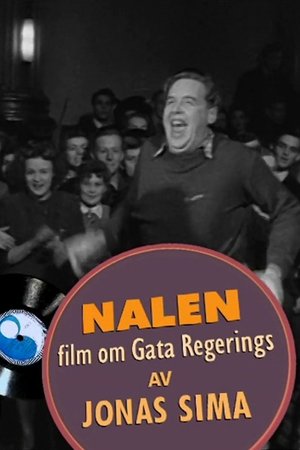
Documentary about legendary Swedish jazz club "Nalen" featuring interviews with old musicians and singers, and old clips from the place in its glory days
The coronation of King Håkon (Haakon VII) of Norway in 1905.
Based on play by famous swedish author/playwright August Strindberg adapted for swedish TV in 70's. It's about the real life assassination on swedish king Gustav III who was killed by a lieutenant Jacob Johan Anckarström who acted on behalf of a group conspirators.
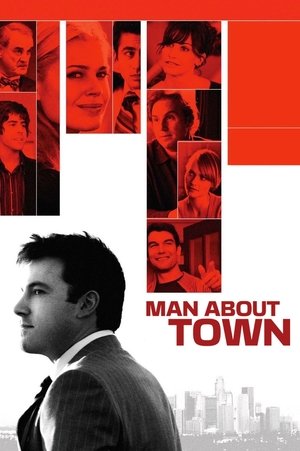
A top Hollywood talent agent finds his cushy existence threatened when he discovers that his wife is cheating on him and that his journal has been swiped by a reporter out to bring him down.
Stall-Erik och snapphanarna is a Swedish film project that began filming in 1996 with a preliminary premiere in 2025. Director, producer and lead actor is Anders Olofsson. Olofsson is entirely responsible for the financing of the project and the casting.
“Let us assume that Switzerland is truly a paradise. The music hereto was written long ago. We have merely forgotten it.” (Daniel Schmid) This is the material from which the most Swiss of all operas is made: the legendary Wilhelm Tell – a Swiss hero: straightforward, a primus inter pares of the indomitable freedom fighters, a good shot, surefire. A myth that becomes a poetic playground: nature in turmoil, the struggle for freedom and forbidden love. A legendary overture at a gallop with an iconic post horn motif – all this and much more in the thirty-seventh and last opera by Rossini.
Counter to the popular image of Erik XIV as the mad king Strindberg paints him as an intelligent but weak king, brought down by his insecurities.
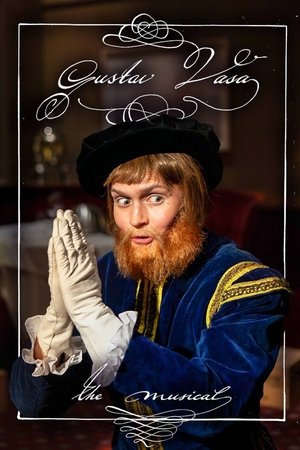
Gustav Vasa struggles to keep power while dealing with the Dacke War in his own country and his foreign debts.
Nils Dacke, leader of the revolt against Gustav Vasa, is torn between his anger over social injustice and royal oppression, and his doubt in the power of himself and weapons.
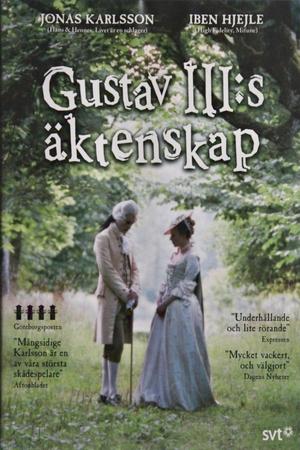
At 30 years old King Gustav III has a number of great projects behind him already, but his most demanding in front of him - to consummate his marriage and put an heir on the throne. With both determination and anxiety the king begins his amorous battle to secure succession.
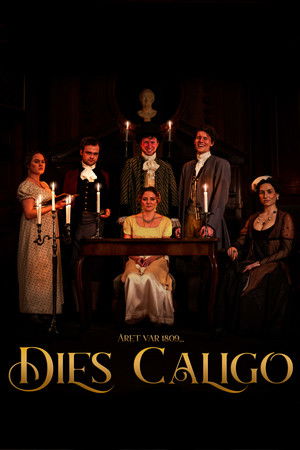
The film takes place in the Swedish capitol Stockholm during the year 1809. War has ravaged Europe continuously for the last seventeen years. The common citizens of Stockholm live in misery as poverty, violence and death dominate the shadowy alleys. A coup feels inevitable and the coming dissolvement of the nation is what's on everyone's lips. In a beautiful salon six nobles are hiding away from it all by partying and socializing. One night the hostess Charlotte reveals to her five guests that she will be forced to sign over her property to one of them, for fear of otherwise losing it to the rebelling antigustavians. A game begins in the candlelit salon. A game of covert intentions, manipulation and mind games as five nobles attempt to find out who of them is best suited to take over the beautfiul estate. Time passes as they're all constantly driven towards their own personal abysses. All meanwhile the sounds of gunshots and yelling echo from beyond the gilded window sills.
Based on Josef Julius Wecksell's play. The story is set during an era of political unrest in 1590s Sweden, which spills over the Baltic Sea to Finland, then ruled by Sweden. Daniel Hjort, the grim and lonesome assistant to the powerful Fleming family, finds himself caught up between the two opposing parties when Turku Castle is close to coming under siege. In the midst of this, he finds out the truth about the death of his father and sets out on a quest for revenge.
Follow Gustav Vasa on his journey from rebel to absolute monarch.
A Swedish woman prowls through her childhood memories after a Chinese plane crash.
To commemorate the 75th anniversary of D-Day, this special presents the key events of the Allied invasion of Nazi-held Europe and the subsequent battles that captured the control of the Normandy coast. Some of the last surviving veterans recall in detail the terror, patriotism and drama from the frontlines of war. This special also honors the diverse backgrounds of all who served.
Part two of Leni Riefenstahl's monumental examination of the 1938 Olympic Games, the cameras leave the main stadium and venture into the many halls and fields deployed for such sports as fencing, polo, cycling, and the modern pentathlon, which was won by American Glenn Morris.
An evocation, realistic and poetic at the same time, of Proust's work " in which he is locked up as in the room ". Halfway between the audiovisual adaptation and the portrait of the dandy and reclusive writer, all in black and white signed Claude Santelli, evoking the mystery, the intimate, and the fatality of existence.
Dr. Friedman states, "There is not a single person in the world who can make this pencil." He explains that the creation of even a simple object - like the "lead" pencil - requires the knowledge of many people, lumberjacks, steel manufacturers, miners, etc. These people may not speak the same language, they may not know or like one another, yet the market enables them to combine knowledge and effort to produce wealth.