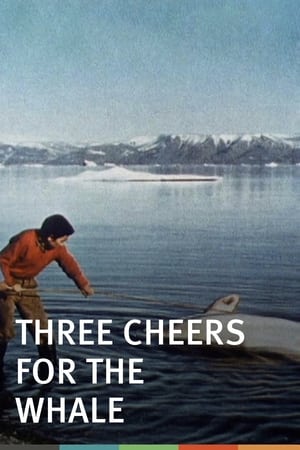
Co-directed by Chris Marker and Mario Ruspoli, Three Cheers for the Whale traces humanity’s complex relationship with whales—from reverence to exploitation—culminating in a stark depiction of industrial whaling. Combining archival imagery, commentary, and documentary footage, the film offers both a historical reflection and a call for ecological awareness.
Two biologists set out on an undertaking as colossal as their subjects—deciphering the complex communication of whales. Dr. Michelle Fournet and Dr. Ellen Garland journey to opposite hemispheres to uncover a culture eons older than our own.
"The Boy Of The Fish" follows Noon, a young boy living in a Syrian refugee camp, who finds solace and a sense of freedom in a whale-shaped doll he names "Bahr." Set against the challenging realities of camp life, Noon’s journey is both a story of resilience and a testament to the boundless imagination of childhood. Through vivid symbolism and a unique soundscape, the film explores themes of loss, hope, and the longing for freedom amidst confinement. Shot entirely on an iPhone due to restrictions in the conflict zone, the film combines raw authenticity with poetic depth to capture the emotional landscape of a young soul navigating adversity.
Around the Crozet Islands, here is the incredible odyssey of a family of Sperm Whales facing rapid changes in their environment. From the stormy surface to the eternal darkness of the abyss, several generations of these deep-sea divers encounter men and their "toys": harpoons of yesterday, and fishing lines of today. Once victim of whale hunting, now accused of stealing fish, a sperm whale shares its private life with us.
Jellyfish blooms are making headlines around the world. This is due to the damage they cause to tourism, fishing and our health. How can these creatures, which are over 98% water and have no shell, skeleton or brain, expand so rapidly? Although this is a normal stage in the life cycle of these gelatinous animals, we have to admit that blooms have become much more frequent and massive in recent decades. We're even witnessing jellyfish populations appearing in more and more regions where fish have been replaced by them, such as off the coast of Namibia, in the Black Sea, in the Sea of Japan and in certain areas of the Baltic Sea. What causes this? Why has the role of jellyfish in the ocean been underestimated, even though they outlived the dinosaurs? Are jellyfish on their way to dominating the oceans as they once did? What if they were to be the only ones left?
A biographical documentary about the Belgian free-diver Fred Buyle and his art of silent diving.
Oceanographer Sylvia Earle and a cast of marine scientists tell the story of the incredible work being done to protect our oceans fragile ecosystem.
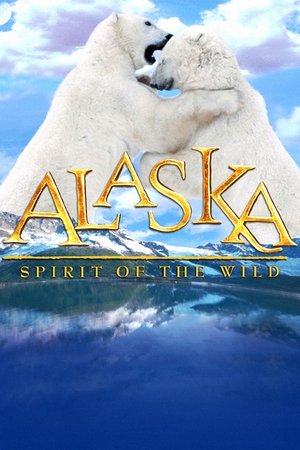
Alaska... Here, in this vast and spectacularly beautiful land teeming with abundant wildlife, discover the "Spirit of the Wild." Experience it in the explosive calving of glaciers, the celestial fires of the Aurora Borealis. Witness it in the thundering stampede of caribou, the beauty of the polar bear and the stealthful, deadly hunt of the wolf pack.
THE LONELIEST WHALE is a cinematic quest to find the “52 Hertz Whale,” which scientists believe has spent its entire life in solitude calling out at a frequency that is different from any other whale. As the film embarks on this engrossing journey, audiences will explore what this whale’s lonely plight can teach us — not just about our changing relationship to the oceans, but to each other. Executive Produced with Leonardo DiCaprio and Adrian Grenier.
Whales Without Walls is a short film that tells the story of our work to create North America’s first seaside sanctuary for whales being retired from marine entertainment parks.
Le retour des baleines à bosse
Weighing more than 15 tons, a sperm whale has a brain larger than any other animal on earth and is considered one of the more social whale species. Over the years, Patrick Dykstra has worked with the Massachusetts Institute of Technology to learn how whales communicate, how they perceive other creatures in the water, and how they behave in his immediate presence. With sensitivity and experience, he gets closer to whales than nearly anyone else, leading to once-in-a-lifetime experiences and personal bonds with specific whales.
Will Cubans be able to safeguard their heritage of pristine Nature and preserved ecological treasures under this new era, as they are facing the combined pressure of money and tourism? What policies can be implemented to maintain the island’s spectacular wilderness?
The endless expanses of the Indian Ocean are home to the last natural paradises: Remote atolls surrounded by coral reefs in crystal clear water. Whole regions of this ocean are still unexplored, many reefs are not marked on any map. The departure of the research vessel Agulhas II from the island of La Réunion marks the beginning of one of the greatest scientific adventures of our time. The expedition, initiated by Monaco Explorations with the support of the Prince Albert II of Monaco Foundation, lasted six weeks and led into the Western Indian Ocean along the Mascarene Plateau.
BORN TO BE FREE is a revelatory investigation by three intrepid free-diving journalists, Gaya, Tanya and Julia, into the global trade in wild sea mammals. Their journey takes us to the most remote corners of Russia and witnesses, for the very first time, the shocking treatment that whales, dolphins and walruses are subjected to and discovers the corruption at the heart of this cruel international business.
Thanks to sophisticated equipment, marine biologists have managed to capture unprecedented scenes of the intimate life of humpback whales off the Australian coast. A spectacular immersion in the intimate life of this mysterious species. Off the coast of the Kimberley in northwestern Australia is a major breeding ground for humpback whales. Thanks to sophisticated equipment, such as aerial cameras on board quadrotors or innovative night vision technologies, Curt and Micheline Jenner, whale researchers, capture unprecedented scenes revealing the behavior of cetaceans.
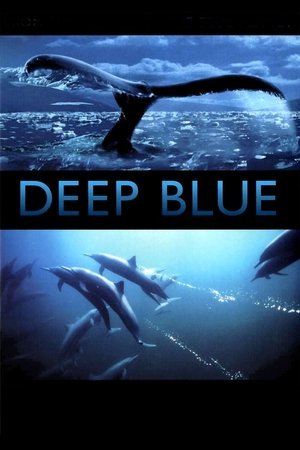
Deep Blue is a major documentary feature film shot by the BBC Natural History Unit. An epic cinematic rollercoaster ride for all ages, Deep Blue uses amazing footage to tell us the story of our oceans and the life they support.
RETURN follows the efforts of a family of former sea-turtle–egg poachers, now dedicated protectors, leading VIVEMAR — a community-based organization in Oaxaca, Mexico. Through their work, they safeguard one of the world’s most endangered sea turtle species during its nesting season along the Mexican coast.
A 3-part documentary granting a unique and privileged access into the magical world of whales and dolphins, uncovering the secrets of their intimate lives as never before. Episode 1: Giant Lives / Episode 2: Deep Thinkers / Episode 3: Voices of the Sea
Supported by the National Geographic Society, the world's eminent blue whale scientists embark on a revolutionary mission: They'll find, identify, and tag California blue whales, use the DNA samples to confirm the sex of individual whales, then rejoin the massive creatures' stunning migration when they collect at a chimera known as the Costa Rica Dome.