Strasbourg was home to one of three Reich Universities founded by the Nazis, known as a project close to Hitler's heart. The university, founded in 1941, is infamous for the human experiments performed on KZ prisoners by the professors of the medical faculty. What did its dean, Johannes Stein, grandfather of documentarian Kirsten Esch, know of these crimes?
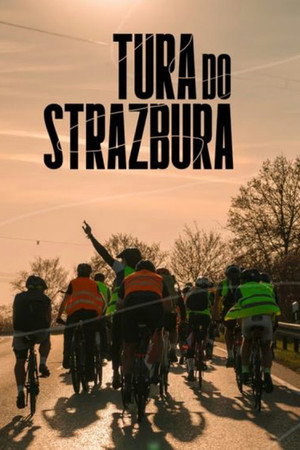
They started their 1400 km journey to the capital of Europe on bicycles from Novi Sad, Serbia. This trip, from a divided country that has been in a socio-political crisis for five months, since the tragedy at the Novi Sad railway station - they called it the trip of justice. Eighty students from Serbia cycled through 6 European countries and 15 large cities in 12 days. Festive welcomes, tears, song and laughter in the squares all over Europe. They were welcomed by the Serbian diaspora, but also by the leaders of the cities they passed through. They went to Strasbourg with the desire to be heard by Europe and the world and said "We are not driving to Europe to escape from Serbia. We are driving to bring it back."
TGV, 30 ans de vitesse
Charts the trials and tribulations of Ana, a free-spirited 26 year-old returning home to Strasbourg for the summer after living abroad for long enough to feel out of place everywhere.
Léo, a 22-year-old homeless sex worker searches for genuine love on the streets of Strasbourg.
In 1800, as Napoleon Bonaparte rises to power in France, a rivalry erupts between Armand and Gabriel, two lieutenants in the French Army, over a perceived insult. For over a decade, they engage in a series of duels amidst larger conflicts, including the failed French invasion of Russia in 1812, and shifts in the political and social systems of Europe.
Cerrone – Gare de Strasbourg – Ososphère 2026
After being imprisoned by the Assad regime in Syria, Hamid now works undercover as part of a secret group pursuing their leaders, including the guard he suspects was responsible for his torture.
An exploration into a possible link between various vaccinations and illness, injury, and death.
When we embrace flaws and mistakes, we create even more beauty. That’s what woodturner Bill Karow believes, and what drives him in his craft: to reshape people’s opinions about things they perceive as worthless, and to find joy in that pursuit.
Step into the explosive mind of KITT, a Melbourne-based artist with a unique outlook on life. Defying physics and viewable from space, his sprawling artworks will make you ask yourself, how big can you go?
Interviews with key military woman guerrilla leaders, and young girls and old women who took part baring arms or making artisanal bombs, against the regime of General Somoza.
An anthropological film of the people of Angola.
Histories of Hunger in Brazil is a documentary that sets a timeline of hunger in the country. From Colonial Brazil, where the seeds of social inequalities were planted, to the recent public policies that culminated with Brazil finally exiting UN official World Map of Hunger, we portray how the confrontation of this evil on the part of the society and of the government took place.
Five vignettes across America revealing the resilience of the immigrant fabric of our country amidst the Trump administration's current and proposed policies.
This animated short tackles the twin issues of urban planning and climate change. Set in the imaginary city of Colvert, the film highlights the fact that the way a community is shaped and organized is an important factor in determining its energy consumption, and thus the quantity of greenhouse gases it releases into the atmosphere.
Every February, four dozen athletes are invited to Alaska to undertake a journey which will challenge their bodies and minds, their wills to succeed, and their wills to live. The Iditarod Trail Invitational is the worlds longest, toughest and most remote ultra marathon, challenging competitors to journey 1000 miles across the Alaskan tundra on bike, foot, or ski. More people summit Everest in an afternoon than have made it from Anchorage to Nome on a bicycle. But this year twenty-six racers will attempt the full 1000 miles of the Iditarod Trail. The fastest time recorded is 12 days. The longest is more than 30. It’s the unknowns that bring these elite athletes here year after year in search of purpose and excitement, but it’s those same unknowns that make this one of the most dangerous races on Earth. How willing are you to lose your toes, or your hands, or someone you love. That’s the consequence of not being prepared on the Iditarod Trail.
Short from (1897)
Melbourne musician, Nic Tutone (who performs under the name Good Brother) reflects on the year after his younger brother, Tom, was diagnosed with the life-threatening illness Hodgkin’s Lymphoma. Nic took a road-trip alone to seek strength and stability in light of the diagnosis. On the trip, in need of an outlet, Nic decided to write an album. A year later Nic has started preparing for the first performance of the project. Together, Nic and Tom reflect on what the year has meant, and will mean, beyond the documentary’s ending.
Goya, tiempo y recuerdo de una época