Documentary footage from the making of "Le fabuleux destin d'Amélie Poulain"
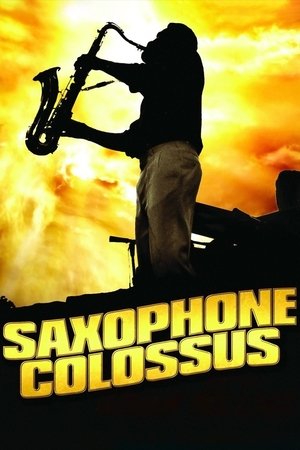
Tenor saxophone master Sonny Rollins has long been hailed as one of the most important artists in jazz history, and still, today, he is viewed as the greatest living jazz improviser. In 1986, filmmaker Robert Mugge produced Saxophone Colossus, a feature-length portrait of Rollins, named after one of his most celebrated albums.
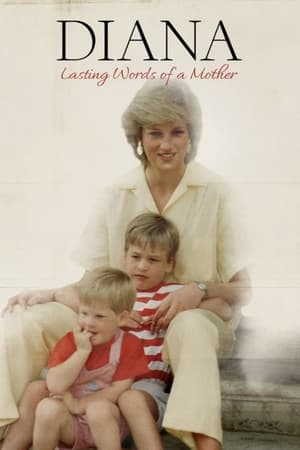
As a mother, Diana's energies were devoted to her boys, the most important part of her life, and she laid the foundations for them to grow into strong, resilient and kind young princes, instilling into them qualities that would help to shape a truly modern monarchy. In her actions, and in her words, Diana changed the workings of the British monarchy forever. Join us as we look back at her lasting legacy and her impact on those she loved the most.
STRATA INCOGNITA, is a trans-scalar and trans-temporal journey across the geographies that articulate soil as an agro-industrial infrastructure, but also as an ecosystem and a somatic archive of crimes, memories and myths.
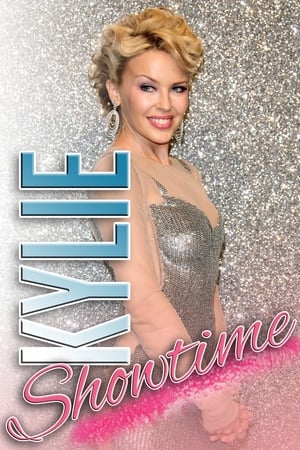
Kylie Minogue has been a household name for over the last three decades. The Australian bombshell has become a symbol for female independence. She is a true showbiz product and an incredibly successful woman. She is a true showbiz woman. Kylie has been at the top of the charts virtually since 1988 when she released the world wide phenomenon "The Loco-Motion". Join Kylie and discover her incredible journey. It is time for Showtime.
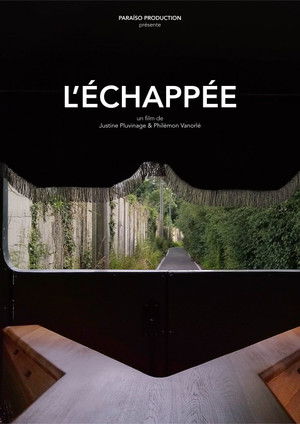
It is the story of an encounter, that of two men, that of a coffin meeting its hearse, of death inviting itself into life or perhaps of life inviting itself into death. This encounter follows an advert on Leboncoin: “Solid oak coffin, varnished. Excellent condition. Large size. Its particularitý is to have the place for the legs embedded. It is not padded inside. Does not fit in an oven, hearse or traditional vault. Difficulty to get through doors (…)”
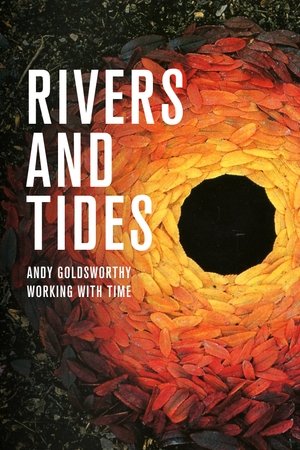
Portrait of Andy Goldsworthy, an artist whose specialty is ephemeral sculptures made from elements of nature.
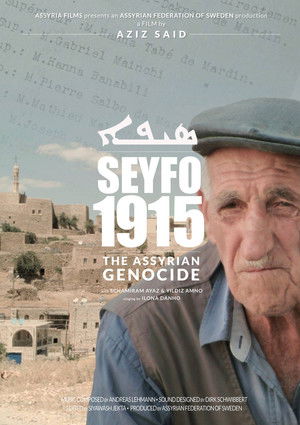
In the shadow of the First World War, the genocide of the Christian Assyrians took place almost unnoticed by the world public. This first systematic genocide of the 20th century was committed by the Young Turks (Ottoman Empire) and would not have been possible without the support of some Kurdish local rulers and their family clans. The Assyrians are the indigenous people of Mesopotamia and have lived in Mesopotamia for thousands of years. The film includes testimony from several European, Turkish and Assyrian historians, as well as genocide researchers, including Professor Taner Akcam, Dr. Gabriele Yonan and Professor David Gaunt. The film includes testimony from survivors of the genocide. Various journalists and publicists also have their say with well-researched information in this documentary. The Assyrians refer to the Genocide as "Seyfo" (ܣܝܦܐ), which translates as "sword".
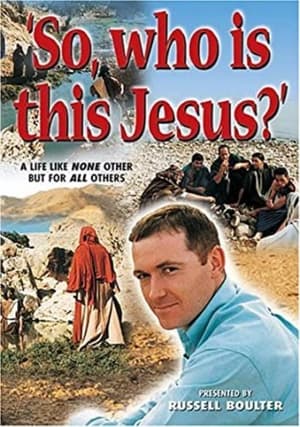
This program has been designed specifically to help people with no previous knowledge of Jesus to have a better understanding of who He is.
We often have ideas of religious life... either kneeling in a convent or out in the streets assisting the poor. While both of these scenes are essential to the life as a sister, Light of Love takes a deeper look into understanding the call... the "why" of religious life. By interviewing five sisters from five orders across the United States, the film places viewers face to face in intimate conversations with these amazing women. What does it mean to be called? What are the struggles of religious life? How have you seen God move through your ministry? These questions and others are addressed throughout the film. The film itself is very simple: 60 minutes designed for viewers to quiet their surroundings and enter into convent, the food pantry, the hospital, and the chapel. With minimal music and simple visuals, Light of Love gives viewers a look into the lives, suffering, and joys of religious life captured in a way like never before.
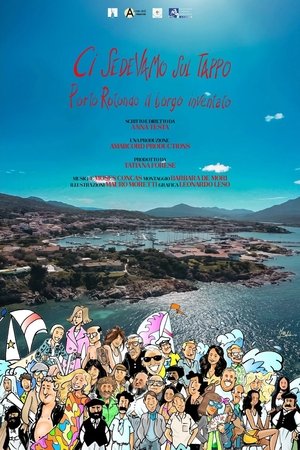
On the occasion of the sixtieth anniversary of the founding of Portorotondo (1964 – 2024), the documentary tells the story of this locality established by two Venetian brothers, Nicolò and Luigino Donà dalle Rose. Enamored with Poltu Ridundu, they transformed a perfectly round body of water into one of the most renowned tourist destinations in the world. Through interviews with illustrious figures such as writer Marcello Fois, Nicola Pietrangeli, Enrico Vanzina, and Carolina Rosi, the documentary explores the social, economic, and cultural revolution that completely transformed Gallura during the years of the economic and tourist boom.
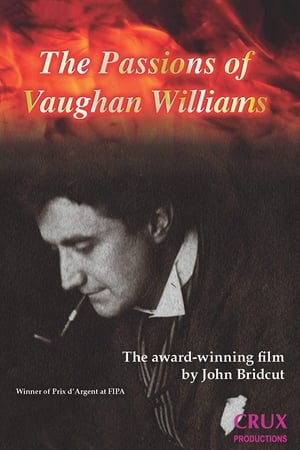
Fifty years after his death, this musical and psychological portrait of Ralph Vaughan Williams explores the passions that drove a giant of 20th-century English music.
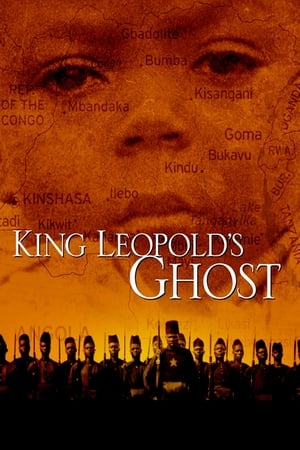
The modern history of the Congo, the heart of Africa, is a terrifying tale of appalling brutality: how the greedy and incredibly ruthless King Leopold II of Belgium (1935-1909) turned a vast country into his private estate (1885-1908) and how he plundered the land and raped the bodies and souls of its defenceless inhabitants, causing countless victims; and what exactly is the true impact of this often forgotten story of crime and horror today.
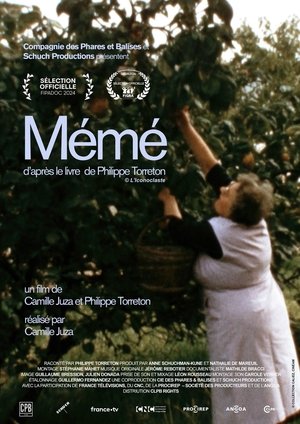
Adapted from famous French actor Philippe Torreton’s best-seller, GRANDMA is the portrait of the actor’s grandmother: a modest, unique but universal Norman peasant. Enriched with amateur films, nourished by major historical events, GRANDMA also tells the story of the end of a world, that of the countryside of our grandmothers, before the abyss of modernity.
A fascinating and intimate exploration of the daily lives and struggles of 7 LGBT families in 7 different European countries: The Netherlands, Spain, Italy, France, Greece, Switzerland and in Catalonia. Although separated by borders, they are all united in their struggle to have LGBT family rights recognized. The differences between countries are highlighted, from having full equality in some, to a total lack of rights in others: we are exploring those different laws and irregularities, realizing how the children of LGBT families are being made vulnerable across Europe.
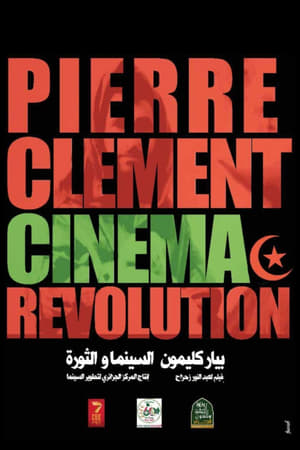
Pierre Clément, student and photographer of René Vauthier, first accompanied him to Tunisia to make a film on the country's independence in 1957. Destiny led him to Algeria and his presence in February 1958 at the Tunisian-Algerian border changed his life. . Forever. He took his camera and photographed the attacks on Sakia Sidi Youssef before committing himself body and soul to the Algerian cause. Shortly after, he directed the film “Algerian Refugees” before being arrested, tortured and imprisoned, while his third film, “The National Liberation Army in Almaki”, was not finished. Abdel Nour Zahzah, a director who commemorates Pierre Clément, the director who risked his life, the brother of the Algerian resistance, who disappeared in 2007.
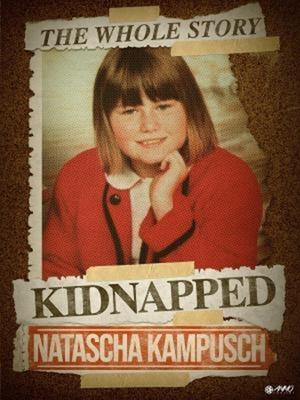
At the age of 10, Natascha Kampusch was kidnapped and held captive for eight years by a deranged man. In 2006, she managed to escape, and the world discovered an astonishingly articulate and intelligent young woman. Not only did Peter Reichard film 14 hours of conversations with Kampusch, but he was also the very first filmmaker to obtain exclusive access to the house where she was imprisoned. This is the most complete, explicit and revealing documentary in which Kampusch has participated.
Art Security Service
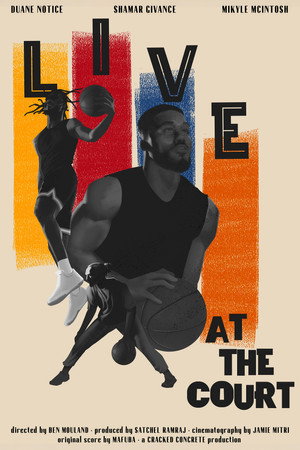
Three basketball players step onto the court, each with a rhythm of their own. As their movements are studied and reimagined, their game is then recontextualized into jazz, revealing the artistry within sport and the music hidden in motion.
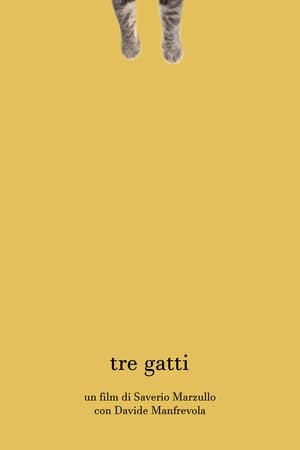
A man tells the story of his three cats.