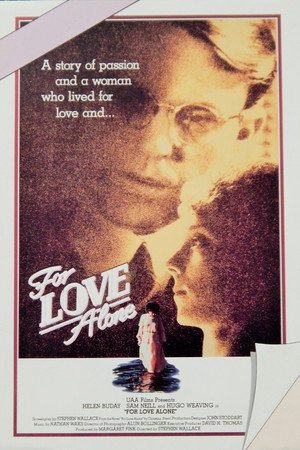
Teresa is a spirited young girl chafing under the oppressive attitudes of 1930s society, and her father in particular. She fancies her poverty-stricken Latin tutor Johnathan Crow, without realising he merely considers her a pleasant diversion and nothing more, and eventually follows him from Sydney to London. En route she meets the gentle banker James Quick. Whilst navigating her relationships in London, including with a political poet bound for the Spanish Civil War, she experiences a transformation in her understanding of love. Based upon Christina Stead's best-selling Australian novel.
Sojourning in Macau, Su Erning by chance helps Pan Meiniang resuscitate his younger brother and fends off the thug. In her admiration, Pan calls off the engagement arranged by her mother to exchange vows with Su despite having known him for only three days. To raise the money for the wedding, Su plans to sell his family yacht to the rich wife of his classmate Lu Zuhua in Hong Kong and promises to buy Pan a pearl necklace. The promiscuous Mrs Lu seduces Su on the yacht and then dumps him. 18 years later, Pan's daughter is getting married. Su prepares a wedding gift—a stolen pearl necklace—for the bride but is too ashamed to show himself.
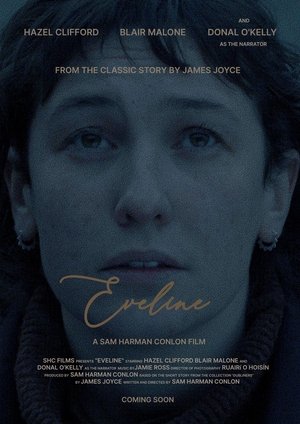
From James Joyce's "Dubliners" short story comes an adaptation that places Eveline's heartbreaking tale of paralysis, memory & escape in a contemporary Dublin. Eveline must make a life-altering decision to leave Ireland while navigating a city plagued by housing and cost-of-living crises, vanishing cultural spaces, and dereliction.
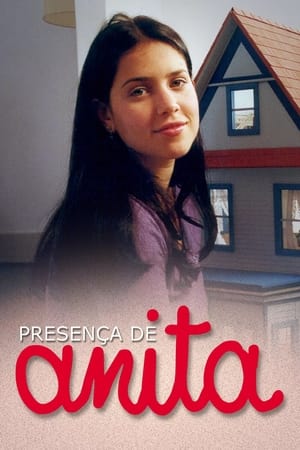
Adapted from the series aired in 2001. Looking for inspiration during the holidays, Nando sees Anita as the ideal character for his novel. She lives in a townhouse where a passionate crime happened in the past. Intense, Anita seduces Nando and awakens to
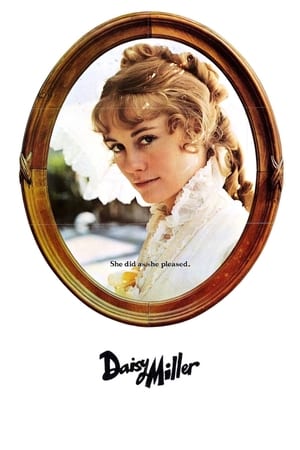
Despite mixed emotions, Frederick Winterbourne tries to figure out the bright and bubbly Daisy Miller, only to be helped and hindered by false judgments from their fellow friends.
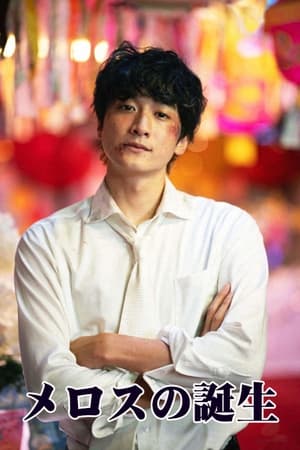
A new bold interpretation of the plot of the literary masterpiece "Running Melos", transferred to our days! A high-tension literary comedy from the popular actor Yuta Koseki and director Ryutaro Nakagawa!
An actress, three months post-partum, reads through fragments of the archive of Suzanne Césaire as she prepares to perform excerpts of the writer's work.
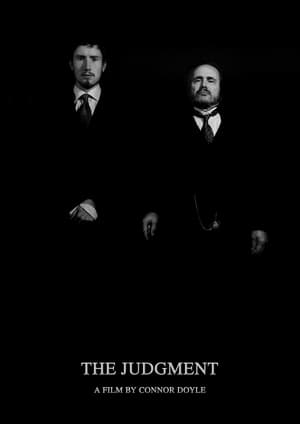
Adapted from the short story by Franz Kafka, The Judgment is a psychological drama exploring themes of alienation, memory, and the lines between fantasy and reality. The film follows Georg Bendemann, a young merchant living 1900s Prague, who is struggling to maintain balance in an ever changing world. As his situation deteriorates due to complicated familial relationships, we are compelled to question the very nature of what we are seeing.
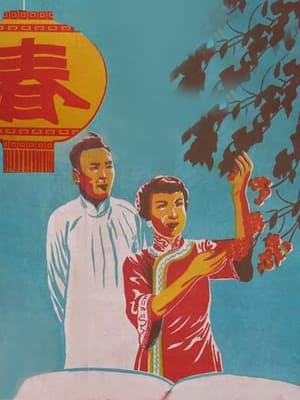
Ko Suk-ying is saddened over her arranged marriage as manipulated by her father Hak-ming. Ko Kok-sun's Cousin Chow Wai's spends the Mid-Autumn Festival before her marriage with the Kos. She has been in love with Sun. Sun finds out about her love for him when she is about to be married off, he is too weak to oppose to Wai's betrothal to another man. Sun's son, Hoi-sun, falls ill. Fearing the displeasure of his elders, Sun dares not consult a western doctor. Meanwhile, another dispute arises among members of the family over the ancestral land. When accused of being incompetent in his management, Sun takes the blame silently. Wai dies of grief while Hoi-sun becomes a victim of mistreatment. Sun is devastated at this double blow. Hak-ming instructs Sun to arrange for Ying's wedding. Knowing the kind of man Ying's fiancee is, Sun is reluctant. Not wanting to follow in Wai's footsteps, Ying fights for her own rights, and backed by an enlightened Sun, she leaves for a new start.
Ah Hing is made pregnant by her master Fan Chun-kit. Fan soon leaves for his studies overseas while Ah Hing suffers gross prosecution and is reduced to becoming a prostitute. In a momentary slip of a struggle, Ah Hing commits manslaughter. Now a qualified lawyer, Fan acquits Ah Hing of the charge, and intends to marry her to redeem his negligence in the past. Ah Hing, however, is determined to pursue an independent life.
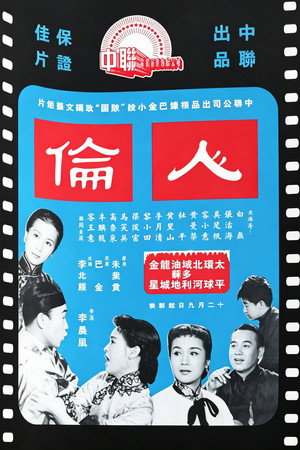
Lee Sun-fung is renowned for adapting literary classics for the silver screen. To commemorate the seventh anniversary of the Union Film Enterprise known for producing quality films and co-founded by Lee, Human Relationships is adapted from writer Ba Jin's novel into film. The Yiu family moves into a manor. Mrs Yiu, while frustrated by the way her step-son is spoiled by her husband and mother-in-law, develops a friendship with a kid (Michael Lai) who steals flowers from the mansion's garden. She later learns that he is the son of the place's former owner whose downfall at middle age is the result of being spoiled when young. Lai was only a child but gained a foothold among seasoned veterans like Cheung Wood-yau, Ng Cho-fan and Pak Yin.
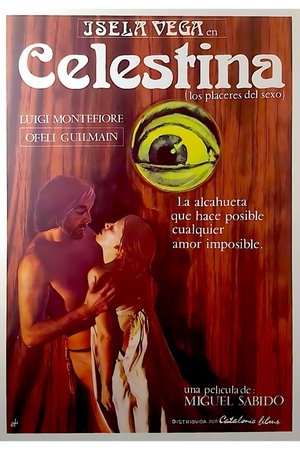
An adaptation of the tragicomedy "Calisto y Melibea", attributed to Fernando de Rojas.
An adaptation of the J.P. Sartre story "Le Mur". What goes on in his mind and what happens outside when he has left only few more hours left to live. The existential dilemmas of a prisoner condemned to death from a repressive regime for his participation in a resistance movement and his friendship with the leader of this resistance. When all seems lost and he has already given up the most unlikely coincidence changes the course of events and his life.
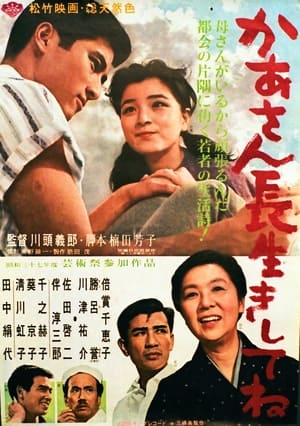
After finishing the course of junior high school, Kazuo comes up to Tokyo, leaving his mother alone in the unproductive northern district. He finds a job in a small laundry in downtown Tokyo and works hard till late at night. At a nearby restaurant a brother and sister are working, and Kazuo becomes friendly with the girl, Yoneko. Love blossoms between the two. However, Yoneko's brother objects to his sister marrying Kazuo.
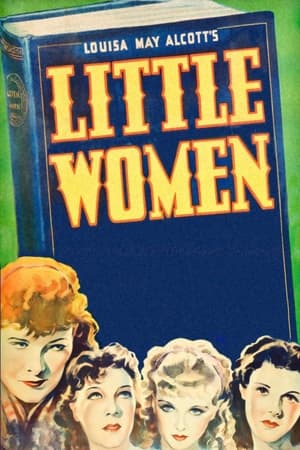
Four sisters come of age in America in the aftermath of the Civil War.
When accusations of misconduct unravel the career of her closest friend, the charming publisher Quin, Margot must decide whether loyalty, forgiveness or truth will define the end of their long, heady friendship.
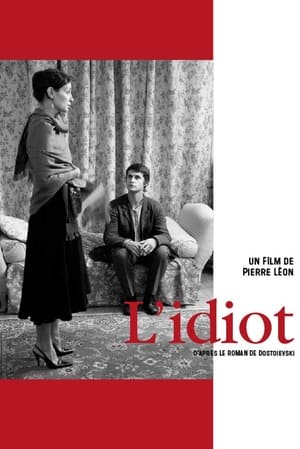
Nastassia Philippovna finds herself juggling the affections of four men over the course of a single evening. One is her benefactor, the bourgeois Totsky. Another is the opportunistic Ganya, whom Totsky has promised 75,000 rubles if he will marry Nastassia. Rogozhin offers Nastassia 100,000 rubles for her hand. And the “idiot,” Prince Myshkin, loves Nastassia madly and vows to “save” her.
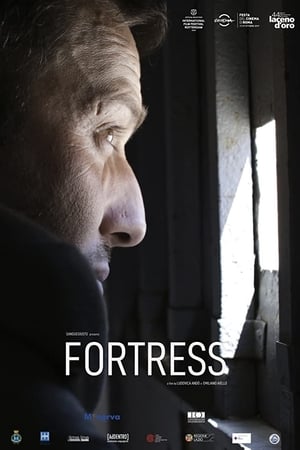
Filmed entirely inside Civitavecchia prison, with the inmates themselves as protagonists and co-authors, Fortezza is the reinterpretation of one of the most important novels of the 1900s: The Tartar Steppe by Dino Buzzati. Three soldiers arrive at a solitary military garrison which no longer serves any defensive function. Here, time is at a standstill and is marked by strict regulations, power dynamics, engrained idleness and habit. Waiting in vain for an enemy that will not arrive, the military officers are consumed by the need to give their stay meaning, and resist the attraction that this place holds for them.
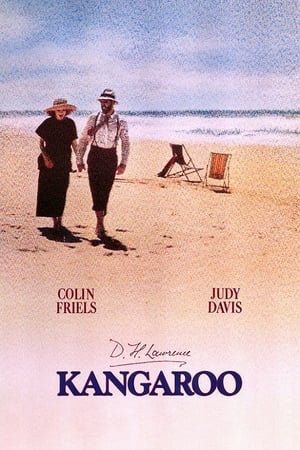
A mild-mannered English conscientious objector moves to what he feels will be the relative calm of Australia after World War I, but gets caught in the middle of violent battles between the rising trade unions and fascist groups.
A poor taxi driver offered a chance for a better financial future must weigh up the cost of walking away from what he most values. // In a world first omnibus collaboration between emerging Asian movie powerhouses, China, Korea and Australia, comes the classic adaptation of Loa She’s The Rickshaw Boy. Set in three locations, across three countries each thirty minute chapter tells the story of one man’s struggle for survival amidst the age of disruptive technology and explores the intimate relationship that has come to exist between man and machine and the evolution of that relationship.