Ypres, 1917. Two soldiers from opposing sides, one British and one German, confront one another after becoming trapped in a Belgian barn during World War I. With heavy resent and a language barrier dividing them, the two try to find common ground whilst biding their time.
A veteran wounded in the war, wakes up from a three-month coma and learns that his mother has passed away and that his daughter has been placed in a boarding school. Later, she tries to put her life in order so that she can have her child. The film, which tells about his struggle to get his daughter back, focuses more on the scars of war on human psychology and the struggle of people who have left the war to live than on the heavy battle scenes.
A Russian and a German sniper play a game of cat-and-mouse during the Battle of Stalingrad in WWII.
A commanding officer defends three scapegoats on trial for a failed offensive that occurred within the French Army in 1916.
Easy Company, the 2nd Battalion of the 506th Parachute Infantry Regiment of the 101st Airborne Division, fought their way through Europe, liberated concentration camps, and drank a victory toast in April 1945 at Hitler's hideout. Veterans from Easy Company, along with the families of three deceased others, recount their horrors and victories, bonds they made and the friends they lost.
In the center of the story are three main characters - Lieutenant Colonel Soshnikov, Captain Muravyov and Major Zakharov. Three ages, three different characters, three different destinies, which are destined to meet at the Khmeimim military base.
After their airplane crashes behind enemy lines, four soldiers must survive and try to find a way back to their battalion. However, when they come across a local peasant girl the horrors of war quickly become apparent.
1795, Holland. The French vanguard is pushing towards the north, through a strong blizzard, beyond the enemy lines. At the head of the cavalry, Major Lahure learns that a British fleet, seeking to escape to England, is trapped by the ice off the coast, and prepares one of the boldest ventures of its time.
“There was excitement in the air,” says Donga, now in his late twenties, describing his feelings when the uprising against Muammar Gaddafi’s rule broke out in 2011. He was 19, living in Misrata, and boldly went to film the fighting with a friend. A decade later, in a hotel in Istanbul, where he has been living since he was wounded in battle, he looks back on the past ten years through excerpts from his videos. And he reflects on how that period has affected him.
Amid the failing counteroffensive, a journalist follows a Ukrainian platoon on their mission to traverse one mile of heavily fortified forest and liberate a strategic village from Russian occupation. But the farther they advance through their destroyed homeland, the more they realize that this war may never end.
A young Dutch soldier deployed to suppress post-WWII independence efforts in the Netherlands’ colony of Indonesia finds himself torn between duty and conscience when he joins an increasingly ruthless commander’s elite squad.
A young man, William Hawthorne, gets drafted into a brutal war for the U.S. Once on the battlefield, William loses his squad after a deadly bombing and searches for salvation.
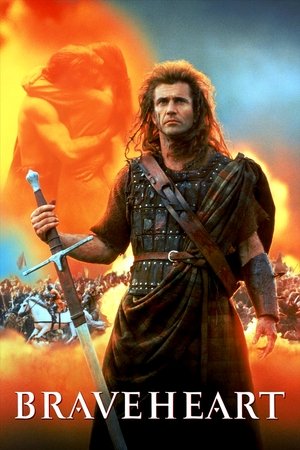
Enraged at the slaughter of Murron, his new bride and childhood love, Scottish warrior William Wallace slays a platoon of the local English lord's soldiers. This leads the village to revolt and, eventually, the entire country to rise up against English rule.
Using unpublished photos taken by Italian war photographer Enrico Sarsini, and the reconstruction of key events, this film examines the battle for a strategically-located church that was defended by Azerbaijani teenager Natig Gasimov. After his surrender and interrogation by Armenian forces, he was never heard of again. This film finds out what happened to Natig and who may be responsible. Filmed over a period of three years, filmmaker Karan Singh spoke to witnesses in Armenia, Azerbaijan, Italy and Russia in his search for the truth.
Mustafa Kemal had just begun his journey after proving himself in 1915 at the Gallipoli front. He would go on to face major battles on the eastern front against the Russians and later against the British in Syria, ultimately becoming the only Ottoman officer not to lose a battle during WW1. However, despite all his success, he would encounter an unexpected challenge upon his return to Istanbul.
La Guerre Dans le Haut Pays is a period piece set in the winter of 1797-98, during the six days leading up to the fall of Bern and the victory of Napoleon's army, when the Bern government is faced with mixed loyalties from its subjects. The population of the lower valley is divided, but the upper region remains loyal, since they have been given special autonomy and a favorable system of taxation. David, a postman, works between the two regions. His father, who is a hard-line conservative, does not approve of his relationship with Julie, who is from the lower part of the valley. Julie's father, on the other hand, is more open to the new ideas of liberation. As a result of his work, David is exposed to new ideas and becomes a believer in equality and justice.
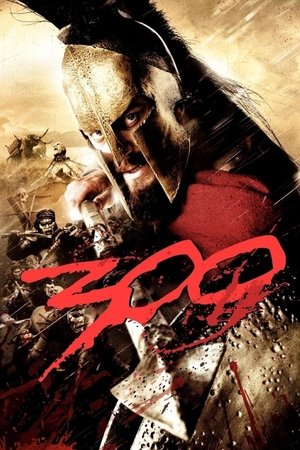
A story very loosely based the 480 B.C. Battle of Thermopylae, where the King of Sparta led his army against the advancing Persians.
Tomka is a boy who likes playing football with his friends. When the German army captures his town, the German soldiers establish their camp in the town stadium. Tomka with help from his friends and their parents organizes sabotage actions against the soldiers.
A young hare named Ferdinand is playing the harmonica before the battle. Soon the signal for attack will be given, and Ferdinand will face the terrible enemy on the battlefield.
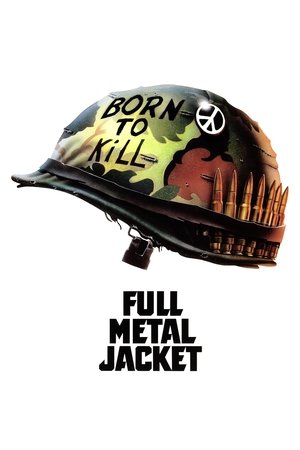
A pragmatic U.S. Marine observes the dehumanizing effects the U.S.-Vietnam War has on his fellow recruits from their brutal boot camp training to the bloody street fighting in Hue.