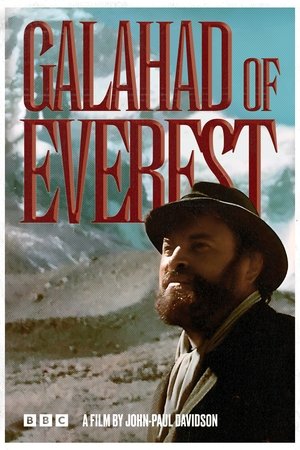
Brian Blessed plays George Mallory in this intrepid recreation of his ill fated 1924 climb to Everest. Meeting Sir Chris Bonington, Rheinhold Messnerhe learns of the pitfalls that await him before setting off for his epic struggle with the mountain. Against all odds he reaches 26000 feet on the North face of Everest, and is a changed man
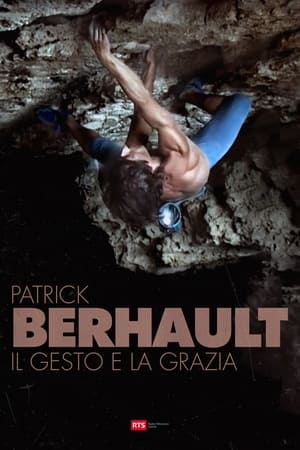
Patrick Berhault - Il Gesto e La Grazia
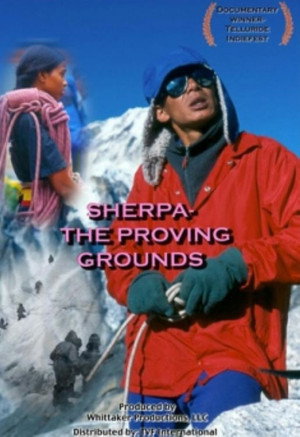
When Tenzing Norgay, a Sherpa, joined Edmund Hillary as the first men to summit Mount Everest in 1953, it alerted the world to the indispensable role of the Sherpas on any Himalayan expeditions. By 1954 the Himalayan Mountaineering Institute (HMI) was founded to marry the high-altitude strengths of the Sherpa with technical climbing skills. The HMI’s arduous training program has been developing mountaineers who play crucial roles in the success of Himalayan ascents. In 1967, HMI’s field director Nawang Gombu, a Sherpa and the first man to summit Everest twice, was charged with training women as well. In Sherpa: the Proving Grounds we follow a team of intrepid young women as they attack the grueling 28-day course.
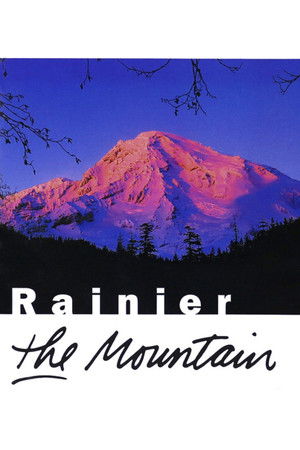
In this retrospective tribute, acclaimed filmmaker Jean Walkinshaw hails the 100th anniversary of Mount Rainier National Park in Washington by talking to those who know it best: the scientists, naturalists, mountain climbers and artists whose lives have been touched by the peak's far-reaching shadow. The result is a harmonious blend of archival material and high-definition footage celebrating an icon of the Pacific Northwest.
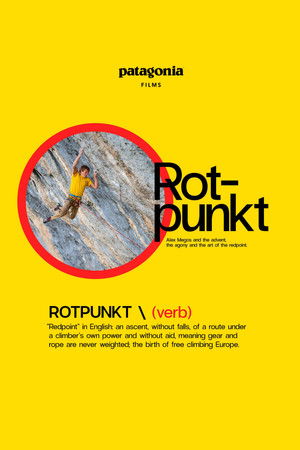
Rotpunkt documents the advent, the agony and the art of the redpoint through Alex Megos’s efforts to redefine the boundaries of the form. The film traces the redpoint—which transformed rock climbing from an engineering problem into a brilliant test of mental and physical strength—from its origins with a ragtag bunch of tights-wearing revolutionaries in rural Bavaria, to its golden era with Wolfgang Güllich, to its new ideal in the German phenom Megos as he battles to unlock new levels of human potential.
A scenic documentary record of a climb up to Mount Assiniboine, the 'American Matterhorn' in the Canadian Rockies.
Less than two years after his serious road accident, Eric Escoffier brought together the "Turbo" team (Frédéric Ancey, Michel Fauquet, Christine Janin and Stéphane Schaffter) with whom he will attempt to climb Everest without oxygen and without prior acclimatization in the Himalayas, the project being to complete the Paris-Everest-Paris loop in two weeks. It is also a medical experiment: the athletes spend a week at Mont Blanc, at the Vallot observatory between 4000 and 4800m, then a week in a hypobaric chamber in Grenoble. Doctors (Dr. Richalet, Herry and Bittel) perform tests throughout this training, which will learn about how the body acclimatizes to altitude and allow applications in the management of mountain-related illnesses . On September 2, 1989, they arrived at Everest base camp in China. They attempted the ascent via the North Col but could not carry out their project, prevented by bad weather.
Following in the footsteps of Frison Roche, 7 climbers explore the main Hoggar massifs in Algeria. Their main objective is the ascent of the Garet El Djenoun summit via the north ridge, a long climb symbolic of a certain difficulty and a significant commitment, due to its location in the desert. They also attempt the Diedre Agresti, a daring route from the 70s, opened in around ten days on artificial, and unequipped; it is a path that has never been repeated; the objective is to do it free and almost only on wedges, with difficulties up to 7b/c in a sometimes very delicate rock... Excerpts from the film shot in 1970 by Henri Agresti on this same route, allow us to compare the technical and material means of the time to those of today. They also discover the beauty of the Algerian desert, its silence, its rock paintings, the customs of the Tuaregs, etc... a fascinating journey.
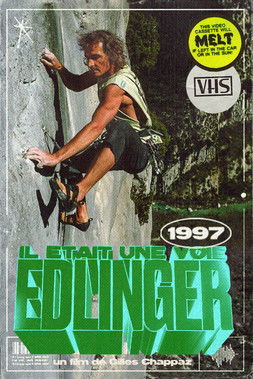
Fifteen years have passed since the spectacular images of Jean-Paul Janssen's "Life at Your Fingertips" introduced the general public to free climbing and its embodiment: Patrick Edlinger. We witnessed the birth of a sporting phenomenon that would leave a lasting mark on generations of climbers. But fifteen years later, in 1997, beyond the myth, where is Patrick Edlinger? Gilles Chappaz found him on some of the most beautiful walls of the Verdon Gorge and other cliffs during the filming of Maurice Rebeix's documentary "Roc'n Wall 97," where he shares his climbing practice and philosophy with the younger generation, including Liv Sansoz and Arnaud Petit.
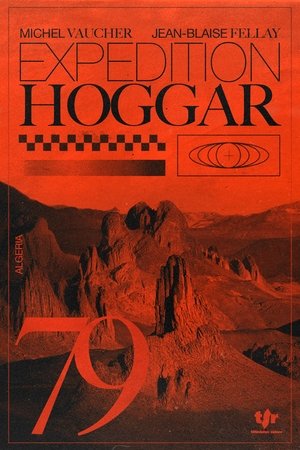
TSR documentary on the 1979 expedition to Algeria in the Atakor massif (Hoggar desert), organized by Geneva mountaineer Michel Vaucher and Jean-Blaise Fellay. The climbers make a dozen ascents including the famous summit of Adaouda (which means "finger" in Tamasheq, the Tuareg dialect), by several routes. Then a new route on the peaks of the southern Tezoulegs. They discover the volcanic geological characteristics of the Atakor massif and meet the nomadic inhabitants of the region, the Tuaregs, who are increasingly settling in the town of Tamanrasset.
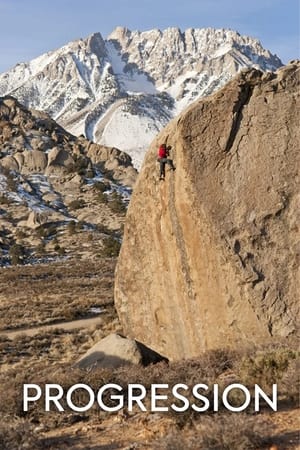
Behind every breakthrough in the progression of climbing, there's a true story of doubt and determination, perseverance in the face of failure. From boulders, to big walls, to competition podiums, the climbers at the top of the game share a commitment to do whatever it takes to achieve their vision.
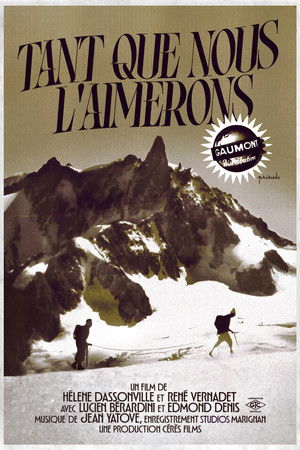
Lucien Berardini and Edmond Denis are two mountaineers who took part in the French expedition to Aconcagua (Andes Mountains) in 1954. Both suffered severe frostbite to their fingers and toes, and three years later, they set out to climb the Aiguille du Géant, a legendary route in the Mont Blanc massif. The camera closely follows the efforts of the roped party, an example of strength and self-sacrifice, until their victorious arrival at the summit.
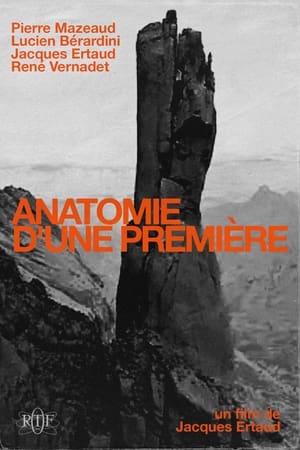
In February 1966, Pierre Mazeaud and Lucien Berardini traveled to the Atakor massif, in the Hoggar mountain range of the Sahara in southern Algeria. There, they attempted a challenging first ascent: the Takouba spur, one of the peaks adjacent to Garet El Djenoun, a legendary mountain in the Hoggar massif, first climbed by Roger Frison-Roche and Raymond Coche in 1935. The documentary, superbly filmed by Jacques Ertaud, won the Grand Prize at the Trento International Mountain Film Festival in 1966.
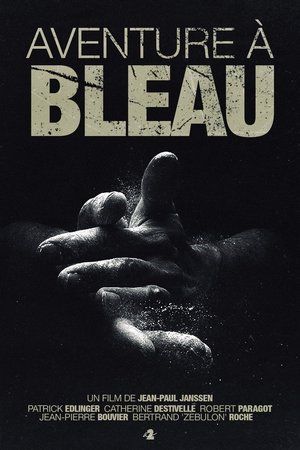
Adventure in Bleau is a documentary about bouldering that takes place in Fontainebleau. Directed by Jean-Paul Janssen in 1980 and produced by Antenne 2, it is part of the series "Les Carnets de l'Aventure" and broadcast on the same television channel. It features different generations of the finest free climbing artists of the time: Patrick Edlinger, Catherine Destivelle, Lucien Bérardini, Jean Pierre Bouvier, and Bertrand Roche 'Zébulon'.
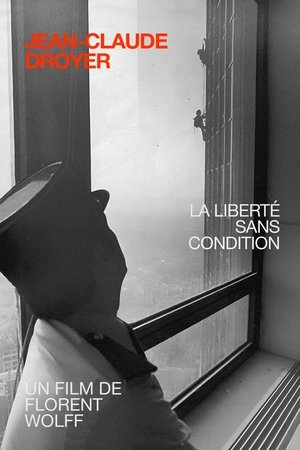
Portrait of Jean-Claude Droyer, a famous French climber and mountain guide. He is known for having participated in the rise of free climbing in France in the late 1970s. Trained at the climbing schools of Fontainebleau and Saussois, he distinguished himself in 1965 by solo climbing the Pentecôte route at Glandasse. He also made first ascents in the Verdon Gorges, winter ascents in the Prealps and the Mont Blanc massif, notably in 1971 the first solo ascent of the Directe Américaine on the west face of the Drus. The film was selected for the "Les Écrans Documentaires" festival in 2004.
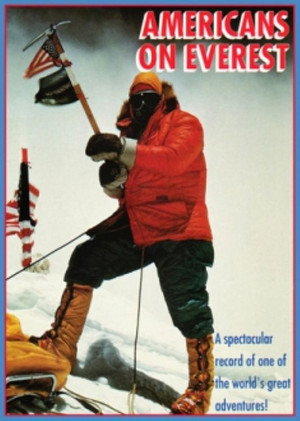
"In 1963, Swiss climber Norman Dyhrenfurth began 'a little war against a big mountain.' Leading 19 Americans, 32 Sherpas, and 909 porters carrying 27 tons of gear, Dyhrenfurth spearheaded the highly successful 1963 American Mount Everest Expedition for his adopted country. Jim Whittaker, accompanied by Nawang Gombu Sherpa made the first ascent by the Hillary-Tensing route. On May 22, Tom Hornbein and Willi Unsoeld made the first ascent by the unclimbed West Ridge. They descended by the South Col, making the first traverse of Everest. Orson Welles narrates the spectacular record, and the film includes the first ever filmed images from the summit."
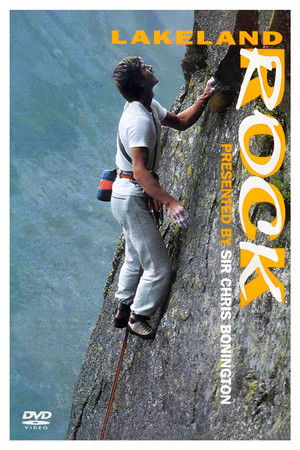
First broadcast on Channel 4 in 1985, Lakeland Rock is a classic of climbing. Presented by Sir Chris Bonington, this 1990 documentary comprises four films that retrace five iconic routes, each representing a major milestone in a sport that reflects the social transformations of Great Britain. From the 1940s, when working-class people began climbing mountains, to the 1980s, marked by technological advancements, the rise of female climbers, and the soaring difficulty of sport climbing with its near-Olympic levels of physical preparation. In three of the films, the climbers recreate their first ascents, with a tribute to their deceased climbing partners, Don Whillans and Bill Peascod. Also included is the first filmed ascent of "Incantations" on Gable Crag by Pete Whillance and Dave Armstrong, which, rated E6 6b, was considered at the time to be the most difficult route in the Lake District.
The Algerian Sahara is the most exceptional deserts. He densifies everything he hosts, men and nature, and invites you to pay attention to the world. Jean-Louis and Odette Bernezat were born at the foot of the Alps, but it was in the Sahara that they found their way, and devoted almost forty years to the discovery of this environment and have extraordinary knowledge to share. Director Maryse Bergonzat accompanies them, in a meha, in the Hoggar in Algeria, with their Tuareg friends. A privileged place to appreciate the desert, its landscapes, its inhabitants, its laws and its stories, in the company of exceptional guides.
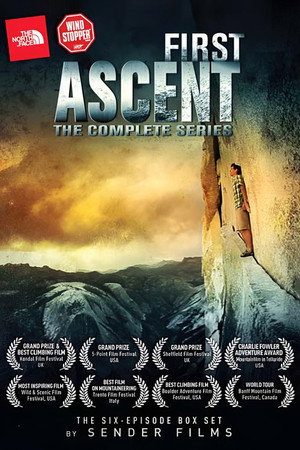
The classic film that inspired the National Geographic Series. Join a global quest with world-class climbers in pursuit of the ultimate goal: the first ascent. Featuring Dean Potter, Timmy O'Neill, Sonnie Trotter, and the amazing Didier Berthod on his quest for the first ascent of the Cobra Crack.
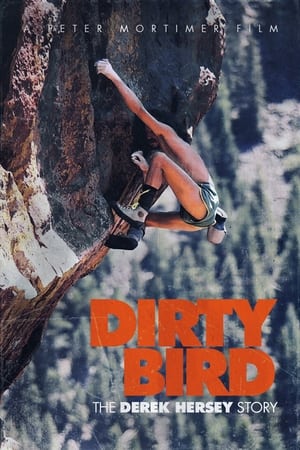
Dirty Bird, The Derek Hersey Story