Bear (10 minutes, 35 seconds) was Steve McQueen's first major film. Although not an overtly political work, for many viewers it raises sensitive issues about race, homoeroticism and violence. It depicts two naked men – one of whom is the artist – tussling and teasing one another in an encounter which shifts between tenderness and aggression. The film is silent but a series of stares, glances and winks between the protagonists creates an optical language of flirtation and threat.
A British engineer in India takes a simple native girl as his bride, an act which defies social strictures and leads to tragedy.
Peter Olsen, a young social outcast who lives alone on a rundown farm and raises vegetables for a living, finds his only consolation in liquor, though Dorcas Chatham, daughter of the general store owner, begs him to forego this indulgence. Returning from town, he finds a dog by the roadside, apparently injured by a car, and takes it home. Later, on a drunken spree, Peter is attacked by robbers, but the dog comes to his rescue and frightens the assailants away. Stirred by the unselfish devotion of his dog, Peter gradually regains his self-respect, and Dorcas falls in love with him and accepts his proposal, though she fears the dog. When Peter enters the dog in a show, another exhibitor proves to be its owner, and Peter is first parted from, then reunited with, "his" dog. Dorcas overcomes her fear and is united with Peter.
A nervous and unsettling young boy takes a mysterious old suitcase across London... to a twisted and surreal conclusion.
The Vampire is a surviving 1915 silent film drama directed by Alice Guy and starring Olga Petrova. It is one of Petrova's and Guy's few surviving silent films.
God and Satan wager on the soul of a learned and prayerful alchemist as part of their eternal war over Earth.
A girl in search of sailors lost in the Pacific.
A tramp cares for a boy after he's abandoned as a newborn by his mother. Later the mother has a change of heart and aches to be reunited with her son.
One out of three silent adaptations of the novella "Les quatre diables" written by Danish author Herman Bang. The most famous one, although unfortunately lost, is without any doubt F.W. Murnau's "4 Devils". This German version, by Danish director A.W. Sandberg, was done eight years prior to Murnau's American one, and was a big success at the time.
Marcia Kane, daughter of an American capitalist, is persuaded by her father to marry the expatriated Russian Grand Duke Sergei, and believing Wally, her real love, to be dead, she consents. Discovering after the ceremony that her father has tricked her, Marcia vows to be the duke's wife in name only, though she refuses Wally's proposal that she go away with him.
Fannie joins Johnny to perform a music-hall act which becomes a success, until two Broadway producers catch the act and offer Fannie a job on their latest show; however, they have no place for Johnny, so Fannie turns down the offer. (Film considered lost.)
Left penniless by her vengeful ex-husband, Madeline is forced to become a pickpocket to pay for a new wardrobe. One of her victims is a Mr. Finlay, who threatens to turn her over to the police -- until he hears Madeline's woeful tale of her cruel, possessive husband.
Anna Moore, a poor orphaned country girl, and her little brother, Tommy, live with hypocritical Squire Simpson, who conspires with his son to acquire the inheritance due the girl.
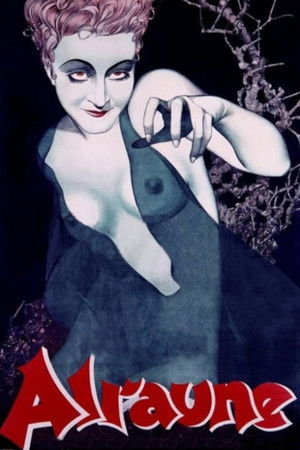
Hanns Heinz Ewers' grim science-fiction novel Alraune has already been filmed twice when this version was assembled in 1928. In another of his "mad doctor" roles, Paul Wegener plays Professor Brinken, sociopathic scientist who combines the genes of an executed murderer with those of a prostitute. The result is a beautiful young woman named Alraune (Brigitte Helm), who is incapable of feeling any real emotions -- least of all guilt or regret. Upon attaining adulthood, Alraune sets about to seduce and destroy every male who crosses her path. Ultimately, Professor Brinken is hoist on his own petard when he falls hopelessly in love with Alraune himself. Alraune was remade in 1930, with Brigitte Helm repeating her role, and again in 1951, with Hildegarde Knef as the "heroine" and Erich von Stroheim as her misguided mentor.
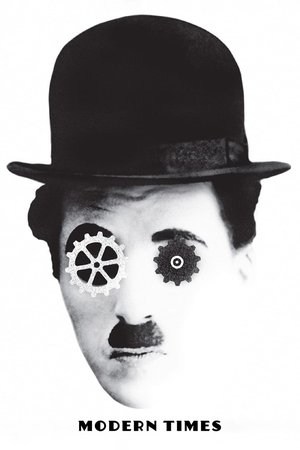
A bumbling tramp desires to build a home with a young woman, yet is thwarted time and time again by his lack of experience and habit of being in the wrong place at the wrong time...
Robin Hood is a 1912 film made by Eclair Studios when it and many other early film studios in America's first motion picture industry were based in Fort Lee, New Jersey at the beginning of the 20th century. The movie's costumes feature enormous versions of the familiar hats of Robin and his merry men, and uses the unusual effect of momentarily superimposing images different animals over each character to emphasize their good or evil qualities. The film was directed by Étienne Arnaud and Herbert Blaché, and written by Eustace Hale Ball. A restored copy of the 30-minute film exists and was exhibited in 2006 at the Museum of Modern Art in New York City.
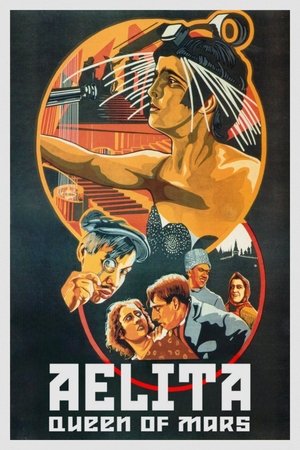
A young man travels to Mars in a rocket ship, where he leads a popular uprising against the ruling group with the support of Queen Aelita, who has fallen in love with him after watching him through a telescope.
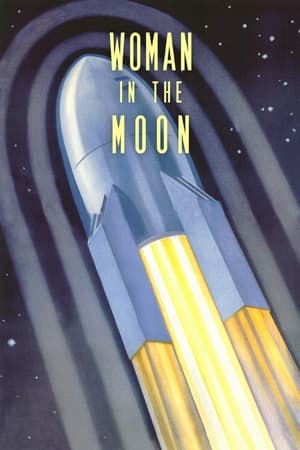
A scientist discovers that there's gold on the moon. He builds a rocket to fly there, but there's too much rivalry among the crew to have a successful expedition.
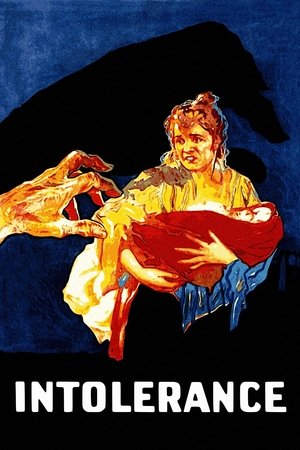
The story of a poor young woman, separated by prejudice from her husband and baby, is interwoven with tales of intolerance from throughout history.
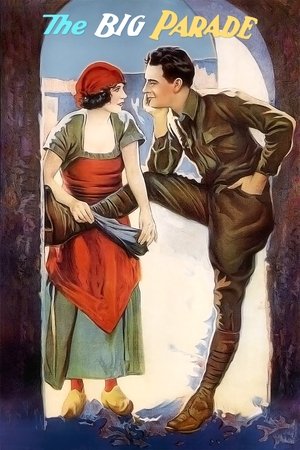
The story of an idle rich boy who joins the US Army's Rainbow Division and is sent to France to fight in World War I, becomes friends with two working class men, experiences the horrors of trench warfare, and finds love with a French girl.