We have all dreamed of going where no man has gone before but that time is here and now. We are on the very edge of a new era in humanity. Within our lifetime, mankind will not only be journeying to other planets, we will be inhabiting them. Our ultra-high technology robots are even now walking upon the surface of Mars, sending back information and preparing the ground for our arrival. This is not science fiction, we are living the future now.
At Arecibo Observatory in Puerto Rico, “Near Earth Asteroids: Dr. Anne Virkki” tells the story of Research Scientist Anne Virkki and her ongoing studies on asteroids and their threat to humanity. Originally from Finland, Anne Virkki shares her experience in education as well as her studies on asteroids, including her work hunting and tracking asteroids headed for Earth.
What if you could get behind the wheel and race through space? We scale down the Solar System to the continental United States and place the planets along the way to better appreciate the immense scale of the Universe. See space as never before, with Mars looming over the Freedom Tower and Jupiter towering above the Lincoln Memorial. Join former astronaut Chris Hadfield - a YouTube sensation for his performance of David Bowie’s “Space Oddity” aboard the International Space Station - and his interstellar hitchhikers Michio Kaku and astronomers Derrick Pitts and Laura Danly. It’s a joyride from coast to coast - and from the sun to Pluto.
Corra e Olhe o Céu
Archival material from the original NASA film footage – much of it seen for the first time – plus interviews with the surviving astronauts, including Jim Lovell, Dave Scott, John Young, Gene Cernan, Mike Collins, Buzz Aldrin, Alan Bean, Edgar Mitchell, Charlie Duke and Harrison Schmitt.
Twelve men who belong to one of the world's most exclusive fraternities -- people who've walked on the surface of the moon -- are paid homage in this documentary. Using newsreel footage, rare NASA photographs, and digitally animated re-creations, Magnificent Desolation: Walking on the Moon examines the Apollo missions between 1969 and 1972 which put astronauts on the moon.
This movie explores the saga of the telescope over 400 years - the historical development, the scientific importance, the technological breakthroughs, and also the people behind this ground-breaking invention, their triumphs and failures.
Comets pose one of the greatest threats to life on Earth - a threat that can only be countered if we find out more about them. In 2005, in an audacious bid to do just that, NASA scientists launched a space probe to collide with a comet in the emptiness of deep space. This film follows the amazing story of mission Deep Impact, from its inception through to the final nail-biting moments when the probe and comet Tempel 1 met head-on.
NASA's James Webb Space Telescope, from its conception to completion.
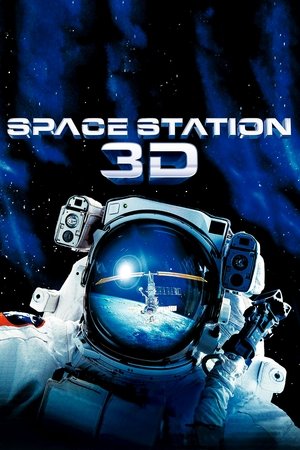
Some 220 miles above Earth lies the International Space Station, a one-of-a-kind outer space laboratory that 16 nations came together to build. Get a behind-the-scenes look at the making of this extraordinary structure in this spectacular IMAX film. Viewers will blast off from Florida's Kennedy Space Center and the Baikonur Cosmodrome in Russia for this incredible journey -- IMAX's first-ever space film. Tom Cruise narrates.
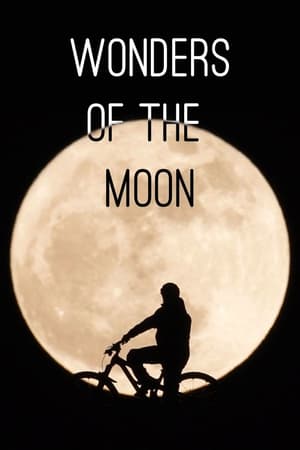
Documentary which uses the latest, most detailed imagery to reveal the monthly life cycle of the moon. From Wales to Wyoming, Hong Kong to Croydon, the programme finds out how the moon shapes life on Earth, as well as exploring its mysterious dark side and discovering how the moon's journey around Earth delivers one of nature's most awe-inspiring events - a total solar eclipse. And at the end of a remarkable year of lunar activity, we find out why so many supermoons have been lighting up the night sky.
For over three decades, NASA and an international team of scientists and engineers pushed the limits of technology, innovation, and perseverance to build and launch the James Webb Space Telescope, the most powerful space observatory ever created. Cosmic Dawn brings audiences behind the scenes with the Webb film crew, and never-before-heard testimonies revealing the real story of how this telescope overcame all odds.
The film features amazing scenes of places never before seen gathered by key space missions that culminated with groundbreaking discoveries in 2015. It features a spectacular flight though the great cliffs on comet 67P, a close look at the fascinating bright "lights" on Ceres, and the first ever close ups of dwarf binary planet Pluto/Charon and its moons.
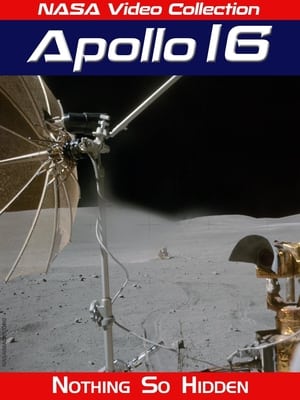
Apollo 16 mission from NASA footage.
A filmmaker returns to a house from his past where a great tragedy happened, in order to find a closure within the space that already feels too foreign.
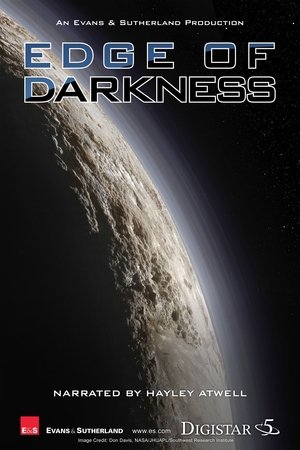
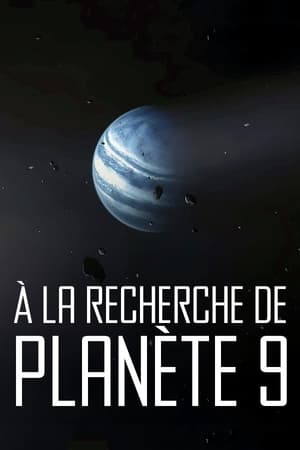
At the edge of our solar system supposedly lies an immense planet. Five to ten times the size of the Earth. Several international teams of scientists have been competing in a frantic race to detect it, in uncharted territories, far beyond Neptune. The recent discovery of several dwarf planets, with intriguing trajectories, have put astronomers on the trail of this mysterious planet. Why is this enigmatic planet so difficult to detect? What would a ninth planet teach us about our corner of the universe? Could it help us unlock some of the mysteries of our solar system?
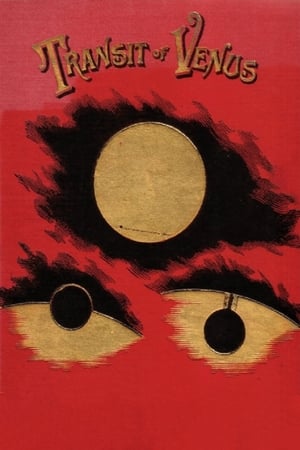
Photo sequence of the rare transit of Venus over the face of the Sun, one of the first chronophotographic sequences. In 1873, P.J.C. Janssen, or Pierre Jules César Janssen, invented the Photographic Revolver, which captured a series of images in a row. The device, automatic, produced images in a row without human intervention, being used to serve as photographic evidence of the passage of Venus before the Sun, in 1874.
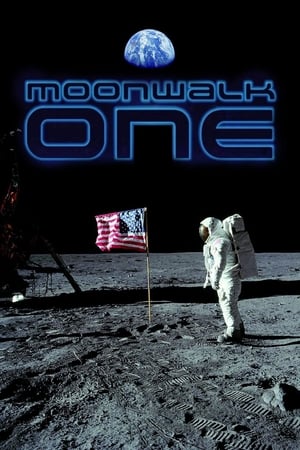
This documentary by Theo Kamecke from 1970 gives an in-depth and profound look at the Apollo 11 mission to the moon. NASA footage is interspersed with reactions to the mission around the world as the film captures the intensity as well of the philosophical significance of the event. Won special award at Cannes.
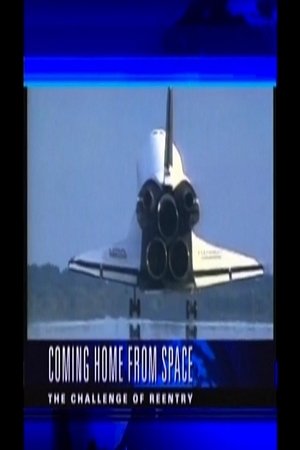
The complex engineering challenges that make re-entry into the earth's atmosphere so dangerous. Scientists have labored for years to bring a crew safely home in what is essentially a meteorite, wrapped in a cocoon of fire, hurtling towards earth six times faster than the fastest bullet. Scientific experts from NASA explain the significance of Columbia's events as they unfolded, offer insights into what may have caused them and how those key events contributed to the shuttle’s ultimate destruction.
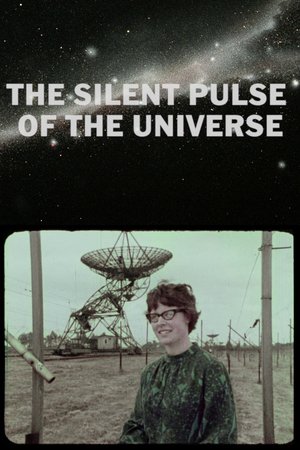
Part of the Almost Famous series. Jocelyn Bell was a graduate student at Cambridge in 1967 when she pushed through the skepticism from her superiors to make one of the greatest astrophysical discoveries of the twentieth century. While Jocelyn was belittled and sexually harassed by the media, the Nobel Prize was awarded to her professor and his boss.