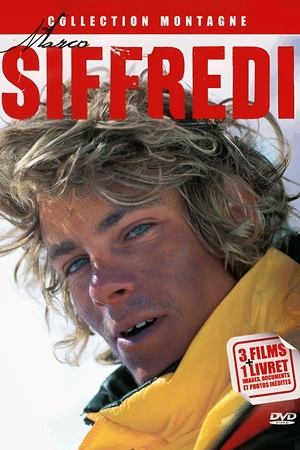
Avid for steep slopes, Marco Siffredi (1979-2002) obeys only one rule: not to fall. This gifted kid with hair sometimes blond peroxidized, green or blue clashed in his valley: Chamonix, mecca of mountaineering. His thing was to go up and down on a snowboard. . 90 minutes September 8, 2002, altitude 8848 meters, rare oxygen, his head already brushing the sky and his snowboard running, Marco Siffredi, 23, rushes from the summit of Everest in the Horbein corridor and its slopes at 50 degrees . A year earlier, he had already made the first descent of the mountain on a snowboard. But there remains another corridor… more direct. It's not a challenge, just a reason to be... However, that day, at the top of the roof of the world, his trace is lost...
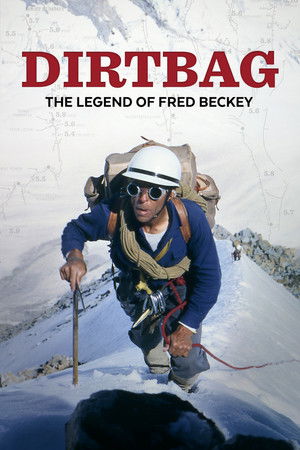
Fred Beckey is the legendary American "Dirtbag" mountaineer whose name is spoken in hushed tones around campfires. This rebel climber's pioneering ascents and lifestyle form an iconic legacy that continues to inspire generations.
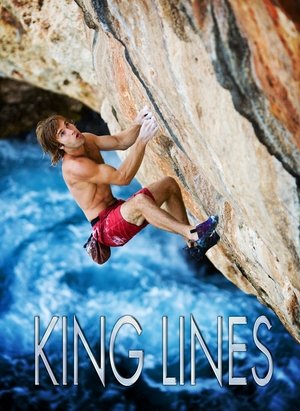
King Lines follows Chris Sharma on his search for the planet's greatest climbs. From South American fantasy boulders to the sweeping limestone walls of Europe, Sharma finds and climbs the hardest, most spectacular routes. Off the coast of Mallorca he discovers his most outrageous project yet, a 70 foot arch rising from the Mediterranean Sea...
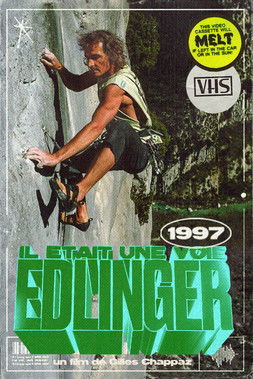
Fifteen years have passed since the spectacular images of Jean-Paul Janssen's "Life at Your Fingertips" introduced the general public to free climbing and its embodiment: Patrick Edlinger. We witnessed the birth of a sporting phenomenon that would leave a lasting mark on generations of climbers. But fifteen years later, in 1997, beyond the myth, where is Patrick Edlinger? Gilles Chappaz found him on some of the most beautiful walls of the Verdon Gorge and other cliffs during the filming of Maurice Rebeix's documentary "Roc'n Wall 97," where he shares his climbing practice and philosophy with the younger generation, including Liv Sansoz and Arnaud Petit.
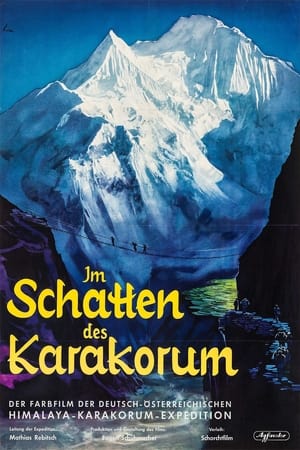
In 1954, a German-Austrian expedition led by Mathias Rebitsch set off for the difficult-to-access Karakoram Mountains, geographically north of the Himalayas. They come across the Hunza, a people who live in the valley of the same name and believe they are descended from the soldiers of Alexander the Great. The documentary conveys impressions of the poor life of the Hunza people, the harvest, a court hearing, festivals and the children's everyday school life. Finally, the expedition sets off again and sets up its main camp on the moraine ridge of a glacier, where they measure the glacier and the earth's magnetic field. Finally, some men from the research community set off for a sub-peak of Batura.
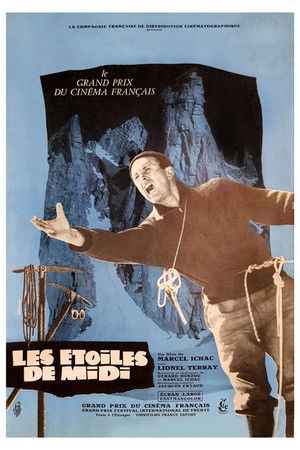
Les Etoiles de Midi is an engaging docudrama about some of the more spectacular exploits of French mountain climbers over the last several decades. In one re-enacted story, there is a wartime escape through the mountains, and in another, a daring rescue of a pair of climbers who had been missing. The actors themselves are adept at the sport of climbing, and they give the scenes an immediacy and real daring that brings the stories alive. A combination of their acrobatics and skill and the outstanding episodes in the history of French climbing creates a winning 78 minutes.
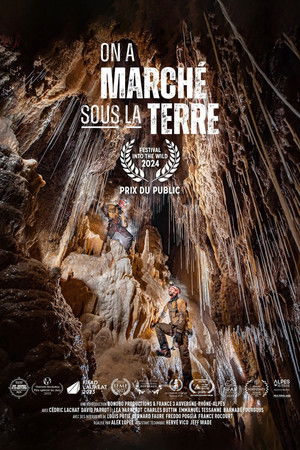
Since the dawn of time, humankind has felt the need to explore, whether through terrestrial, subterranean, underwater, or space exploration. This film follows the attempt to connect the Fromagère chasm with the legendary Berger chasm, located in the Vercors massif. The exploration is undertaken by Cédric Lachat, a former world climbing champion, and David Parrot, a highly motivated speleologist. From preparation to success or eventual abandonment, this adventure explores the various facets of speleology: sport, science, and heritage.
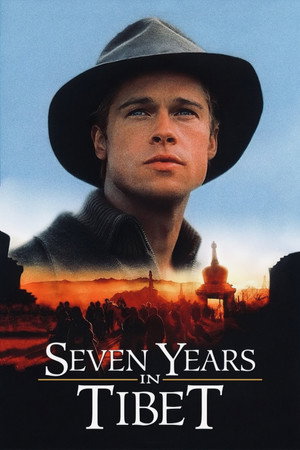
Austrian mountaineer Heinrich Harrer journeys to the Himalayas without his family to head an expedition in 1939. But when World War II breaks out, the arrogant Harrer falls into Allied forces' hands as a prisoner of war. He escapes with a fellow detainee and makes his way to Lhasa, Tibet, where he meets the 14-year-old Dalai Lama, whose friendship ultimately transforms his outlook on life.
27-year-old German alpinist Jost Kobusch wants to climb Everest, alone, without oxygen and in Winter, when the roof of the world is deserted.
A charismatic Indian-Nepali boy, lives a bohemian life in a remote Himalayan village. As he transitions from childhood to teenagehood, his poetic journey of perseverance echoes issues that span across ages and communities.
Zinal
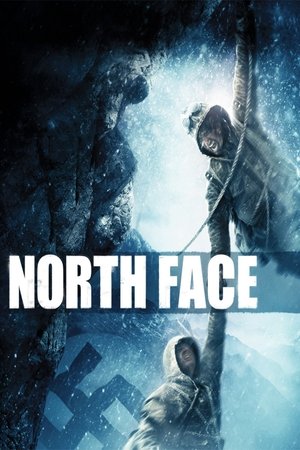
North Face tells the story of two German climbers Toni Kurz and Andreas Hinterstoisser and their attempt to scale the deadly North Face of the Eiger.
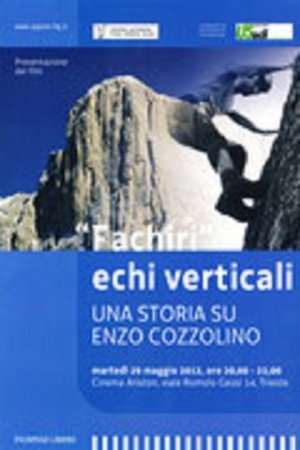
Fachiri Echi Verticali - Una Storia su Enzo Cozzolino
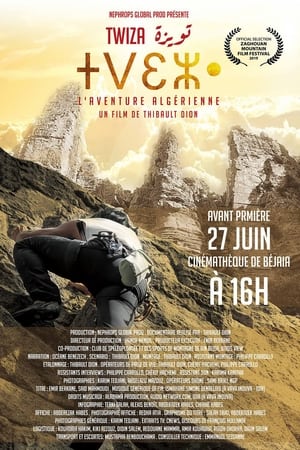
In Tamazight culture, "Twïza" symbolizes a gathering for sharing and mutual support. This is precisely what Thibault Dion's film explores – January 2019 – as five French climbers land at Constantine airport. While they initially thought they would simply be opening climbing routes in eastern Algeria, this group of climbers from Grenoble discovers much more. Their initial apprehension about exploring this isolated region, coupled with the warm welcome, good humor, and rich culture, transforms their journey into an unexpected human adventure. Fabulous landscapes, thrilling experiences, unforgettable moments, smiles – beyond borders, in the land of friendship and hospitality... Algeria.
After reading the book "Guide to Hoggar Climbing," guide Pierre Agresti and his wife Isabelle Agresti set off into the Hoggar massif in the Algerian Sahara and tackled the west face of Garet El Djenoun. After a first attempt in 1967, they successfully reached the summit in 1970 and, with an old camera, made a film that remained unused for 25 years. In 1996, they decided to bring the past back to life through the ascent and encounters with the Tuaregs in the rock salt mines of Amadror. The film was shown in competition at the Trento Film Festival in 1997.
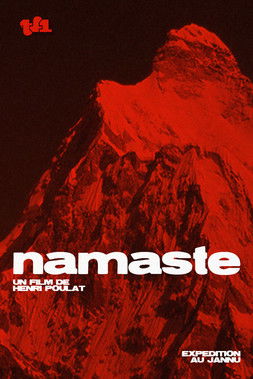
On April 29, 1983, three French alpinists reached the summit of Jannu, having climbed its 7,710 meters via the very steep southwest spur. The success of Luc Jourjon, Jean-Noël Roche, and Roger Fillon echoed that of the 1962 national expedition, which had been celebrated by Lionel Terray alongside the leading climbers of the time, Desmaison, Paragot, Magnone… But in 1983, the goal was no longer simply to wave a French flag on a virgin summit. The focus was already on a more "alpine" style, and there was even the idea of descending from the top… by air!
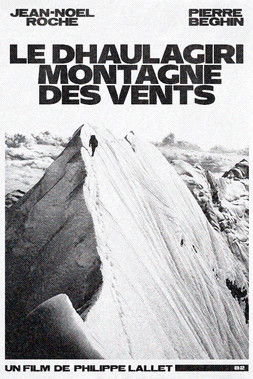
In October 1984, Pierre Béghin, an engineer from Grenoble, and Jean-Noël Roche, a high-mountain guide, completed the Himalayan ascent of Dhaulagiri (8,172 m). The expedition's context: seven people crossed Nepal to Muri, collected accounts from trekkers—including that of the author Robert Rieffel—and attended Sherpa prayers at base camp. Then, the two of them embarked on a rocky and snowy route without supplemental oxygen. At over 5,000 meters, on the mountain of winds, Jean-Noël Roche made a paragliding flight. The climbers brought back footage with their Super 8 camera from 6,500 meters, but only photographs have been able to confirm their presence on the summit ridge of the seventh highest peak in the world.
Less than two years after his serious road accident, Eric Escoffier brought together the "Turbo" team (Frédéric Ancey, Michel Fauquet, Christine Janin and Stéphane Schaffter) with whom he will attempt to climb Everest without oxygen and without prior acclimatization in the Himalayas, the project being to complete the Paris-Everest-Paris loop in two weeks. It is also a medical experiment: the athletes spend a week at Mont Blanc, at the Vallot observatory between 4000 and 4800m, then a week in a hypobaric chamber in Grenoble. Doctors (Dr. Richalet, Herry and Bittel) perform tests throughout this training, which will learn about how the body acclimatizes to altitude and allow applications in the management of mountain-related illnesses . On September 2, 1989, they arrived at Everest base camp in China. They attempted the ascent via the North Col but could not carry out their project, prevented by bad weather.
Filmed chronicle by mountain filmmaker Mario Fantin, of the 1964-1965 expedition of the Italian mountaineer Guido Monzino to the summits of Hoggar in the Algerian Sahara with the ascents of Garet el Djenoun, Tizouyag Nord, Saouinan and Iharen. The mountain ranges of the Hoggar desert turn out to be more complex and interesting than most mountaineers suspected at the time.
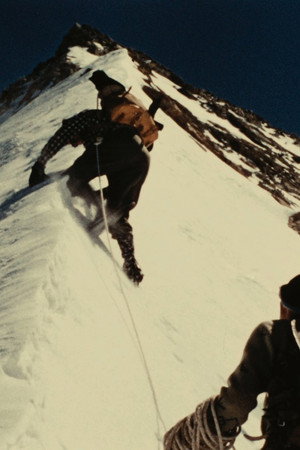
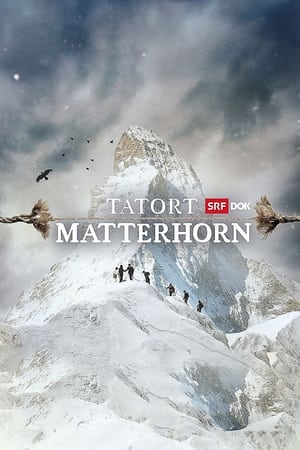
The first ascent of the Matterhorn was made on July 14, 1865 by Edward Whymper, Francis Douglas, Charles Hudson, Douglas Hadow, Michel Croz and two guides from Zermatt, Peter Taugwalder father and son. Douglas, Hudson, Hadow and Croz are killed on the descent after Hadow slips and drags the other three men down the north face. Whymper and the two Taugwalders, who survive, are later accused of having cut the rope that connected them to the rest of the group so as not to be dragged into the fall, but the ensuing investigation finds no evidence of their guilt and they are acquitted. The Matterhorn is the last great peak in the Alps to be conquered and its ascent marks the end of the golden age of mountaineering. One hundred and fifty years later, a team undertakes the same expedition in order to unravel the mystery.