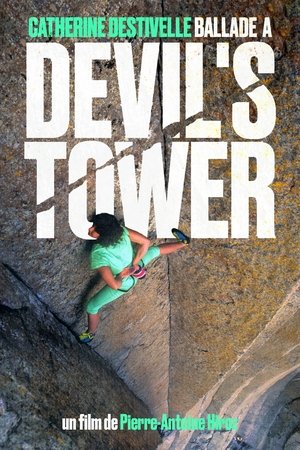
At the peak of her career as a rock climber, Catherine Destivelle goes to the United States to get away from the competitions and to recharge batteries. There, Destivelle travels by car through Utah and Wyoming to make spectacular free solo ascents in Indian Creek, where she soloes 'Supercrack' (5.10d), in Dead Horse Point State Park, and on the iconic Devil's Tower, where she climbs unroped the second half of the classic 130-foot route 'El Matador' (5.10d).
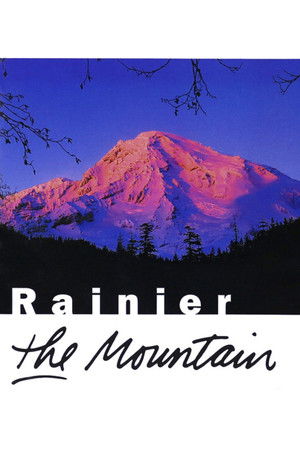
In this retrospective tribute, acclaimed filmmaker Jean Walkinshaw hails the 100th anniversary of Mount Rainier National Park in Washington by talking to those who know it best: the scientists, naturalists, mountain climbers and artists whose lives have been touched by the peak's far-reaching shadow. The result is a harmonious blend of archival material and high-definition footage celebrating an icon of the Pacific Northwest.
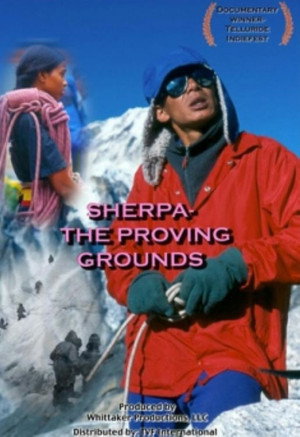
When Tenzing Norgay, a Sherpa, joined Edmund Hillary as the first men to summit Mount Everest in 1953, it alerted the world to the indispensable role of the Sherpas on any Himalayan expeditions. By 1954 the Himalayan Mountaineering Institute (HMI) was founded to marry the high-altitude strengths of the Sherpa with technical climbing skills. The HMI’s arduous training program has been developing mountaineers who play crucial roles in the success of Himalayan ascents. In 1967, HMI’s field director Nawang Gombu, a Sherpa and the first man to summit Everest twice, was charged with training women as well. In Sherpa: the Proving Grounds we follow a team of intrepid young women as they attack the grueling 28-day course.
In The Call of the Mountain (L’appel de la montagne) a couple are childhood sweethearts who are separated, she marries a rich man and he becomes an alpine guide. The woman’s husband dies, and she returns home to Switzerland, her wealth and beauty drawing interest from a foreign rake, rogue, and roué named Billinsky. He talks her into a mountain ascension that meets with disaster when some of the climbers fall to their deaths. Her loyal friend the alpine guide rescues his sweetheart, and saves her again.
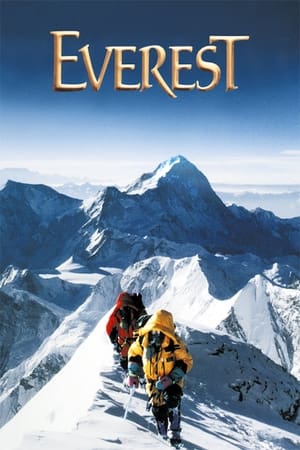
An international team of climbers ascends Mt. Everest in the spring of 1996. The film depicts their lengthy preparations for the climb, their trek to the summit, and their successful return to Base Camp. It also shows many of the challenges the group faced, including avalanches, lack of oxygen, treacherous ice walls, and a deadly blizzard.
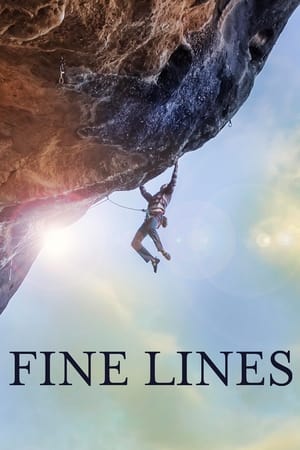
For nearly three years, director Dina Khreino interviewed world-class mountain climbing athletes, listening to what compels them to leave behind families, friends, and everyday comforts to risk everything for a fleeting glimpse into the unknown. What she found was a tribe, a diverse group of professional adventurers and amateur philosophers forged by the ultimate test of body, mind, and spirit. In the face of shifting winds, sheer granite cliffs, and impossible odds, they climb. Each for their own reason, but every one connected by the vertical world. In this rarefied air, these athletes are fundamentally changed, not just as climbers, but as human beings.
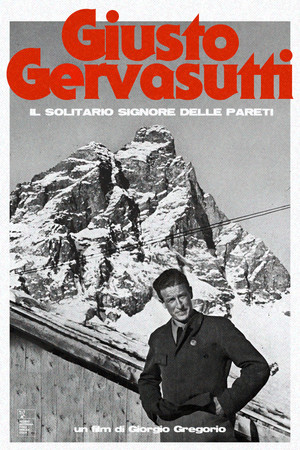
Giusto Gervasutti (1909-1946) was an Italian mountaineer, considered by many to be the best mountaineer of his generation and one of the greatest of the post-war era. He achieved his first feats in 1930 and revolutionized mountaineering in the Western Alps by repeating and opening routes of extreme difficulty that are still considered absolute routes today: the east face of the Grandes Jorasses (with his friend Boccalatte), the northeast spur of the Aiguille Noire de Peuterey, the north face of the Grandes Jorasses, the Gervasutti route on the Gugliermina, the east face of Mont Blanc du Tacul (where he died in 1946), among an incredible list of climbs. The film, made to mark the centenary of Giusto Gervasutti's birth, portrays a solitary and tormented mountaineer, endowed with an impeccable moral sense, an advocate of light and ethical mountaineering, always in search of an unattainable happiness.
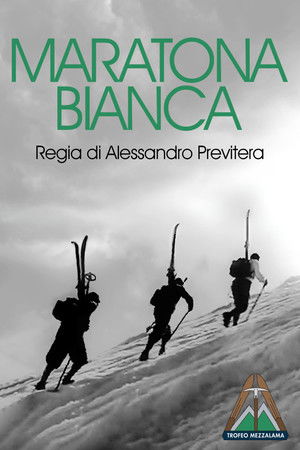
Documentary on one of the first editions of the Trofeo Mezzalama, the highest ski mountaineering race in Europe, at more than 4,200 meters above sea level, which takes place on the glaciers of Monte Rosa, from Breuil to Gressoney-La-Trinité, crossing the summits of Castor (4,199 meters) and Nez du Liskamm (4,100 meters). The film recounts the last hours of feverish preparation before the start, the teams preparing for the race linked in ropes, then follows the stages of the competition by following the groups of skiers from a plane. Created in 1933, the Trofeo Mezzalama was contested until 1938, before falling into oblivion during the war. A second version was organized from 1970 to 1973. A third biannual version has been organized since 1997.
In the late 1970s and early 1980s, Jill Lawrence and Gill Price, members of the women's climbing club Pinnacle Club, made the first female ascents of difficult routes, laying the foundations for what would develop in the 1980s. In 1984, in the Lake District, Gill Price and Jill Lawrence were filmed climbing Empire E3 6a at Raven Crag, Thirlmere, for a Channel 4 program, Lakeland Rock, with Chris Bonington, broadcast on Channel 4 on 25 May 1985. This event marked a turning point in British women's climbing, as few, if any, women appeared on television climbing difficult sport routes.
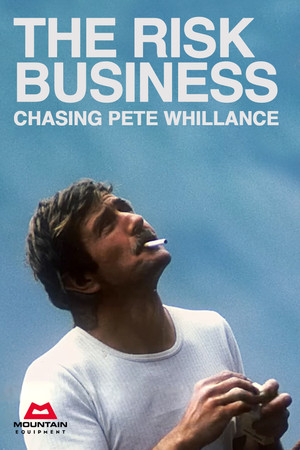
Filmmaker Dom Bush explores a personal relationship with risk by telling the story of one of his climbing idols, Pete Whillance. Pete is an understated pioneer of bold face climbing and established some of the hardest traditional routes in Britain throughout the late 1970's and 1980's. He is also one of the most prolific new routers in British climbing history, with around 1400 rock climbs to his name, established over six decades. Pete continues to climb and establish new routes at the age of 76.
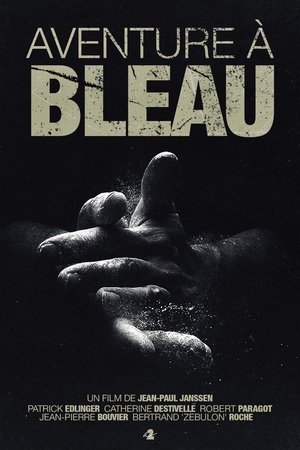
Adventure in Bleau is a documentary about bouldering that takes place in Fontainebleau. Directed by Jean-Paul Janssen in 1980 and produced by Antenne 2, it is part of the series "Les Carnets de l'Aventure" and broadcast on the same television channel. It features different generations of the finest free climbing artists of the time: Patrick Edlinger, Catherine Destivelle, Lucien Bérardini, Jean Pierre Bouvier, and Bertrand Roche 'Zébulon'.
Brad and Barbara Washburn were filmed by National Geographic and RKO Pictures on their ascent of Mount McKinley in Alaska. The film is a pictorial record of the first scientific conquest of Mount McKinley, filmed with the cooperation of the Boston Museum of Science. The short is part of the RKO's 'This is America' documentary series.
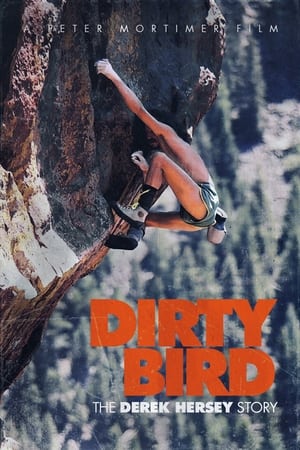
Dirty Bird, The Derek Hersey Story
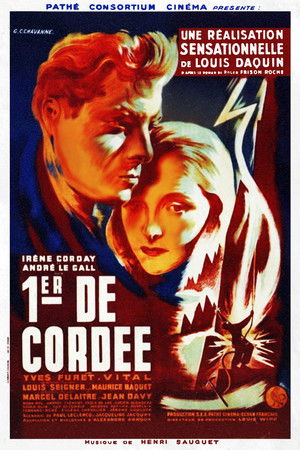
A screen adaptation of the well-known novel by Roger Frison-Roche about the harsh lives of mountain guides and their families in the French Alps, near Chamonix and the French/Swiss/Italian borders... Like his father, Zian Servettaz is a dedicated mountain man. His Italian-born wife Bianca does not adjust well to his mountain village in France, and to the ever life-threatening dangers presented by his mountain guiding and climbing. She briefly returns to Italy and to her family. However, after Zian's insistence and trip to Italy, she returns to mountain life in the French Alps. Once back there, events will unfold, changing their lives as well as those of other mountain people forever.
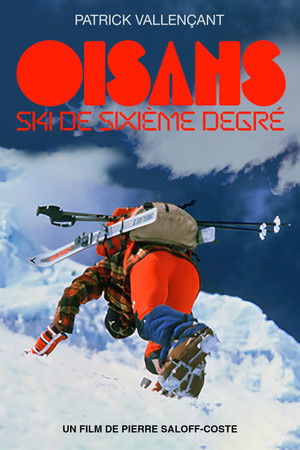
In 1975, Patrick Vallençant skied in some very challenging couloirs in the Oisans region: the north couloir of the Col du Diable, the north couloir of the Coup de Sabre, the couloir of the Pic sans Nom, the Barre Noire couloir in the Écrins massif, and the Gravelotte couloir on the Meije. He was accompanied by Jean-Marc Boivin, P. Guillet, P. Perrier, Gérard Pétrignet, Jacques Ramouillet, Pierre Saloff-Coste, and Joseph Spagnolo. In the second part of the trip, Vallençant completed a circuit of the Meije in three mixed-mountain ascents and, above the avalanche debris, skied off-piste through the steep couloirs and glaciers of the Oisans. He then climbed the routes to the summit of the Meije alone, following the stages of a high-mountain itinerary from the Refuge de l'Aigle.
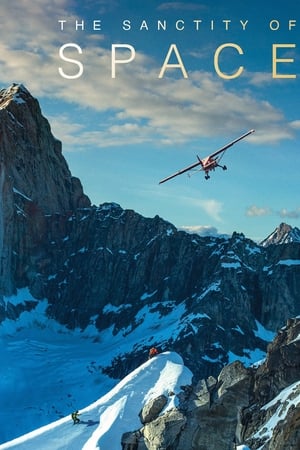
Seventy-five years after Brad Washburn, one of the greatest aerial mountain photographers of all time, first shot Alaska’s Denali Mountain from the open door of an airplane, climbing buddies Renan Ozturk, Freddie Wilkinson, and Zack Smith look at some of his mountain photographs and have this crazy idea. Rather than go up, their dream is to go sideways across the range’s most foreboding peaks, the Moose’s Tooth massif. It’s a fresh new way to explore the same landscape Washburn first discovered. As the group endures rough conditions, disintegrating ropes, and constant rockfall, their desire to be the first to complete the audacious line grows into an obsession. But friendships begin to fray when Renan suffers a near-fatal brain injury, forcing all three partners to decide what’s most important to them.
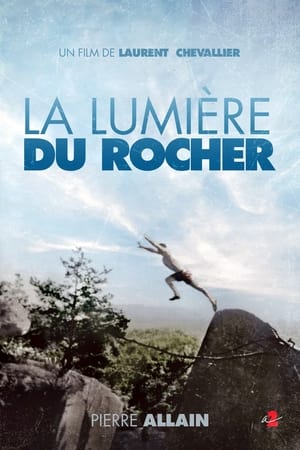
La Lumière du Rocher
The Algerian Sahara is the most exceptional deserts. He densifies everything he hosts, men and nature, and invites you to pay attention to the world. Jean-Louis and Odette Bernezat were born at the foot of the Alps, but it was in the Sahara that they found their way, and devoted almost forty years to the discovery of this environment and have extraordinary knowledge to share. Director Maryse Bergonzat accompanies them, in a meha, in the Hoggar in Algeria, with their Tuareg friends. A privileged place to appreciate the desert, its landscapes, its inhabitants, its laws and its stories, in the company of exceptional guides.
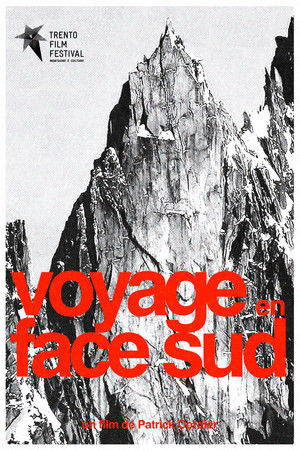
Voyage en face sud (Journey to the South Face) is a mountaineering documentary by Patrick Cordier and Jacques Ramouillet that shows the first solo ascent of the south face of the Aiguille du Fou in 1976 by Patrick Cordier himself. The climb was filmed by Jacques Ramouillet from a nearby ridge. Pierre Torlasco was tasked with belaying Jacques Ramouillet while he filmed. For this filmed ascent, Patrick Cordier opted for the dress code of his time—white clothing, bell-bottom trousers, and a headband—rather than the traditional mountaineering attire. The film was presented at the Trento Film Festival in 1977 and at the Gala de la Montagne (Mountain Gala) at the Salle Pleyel in Paris.
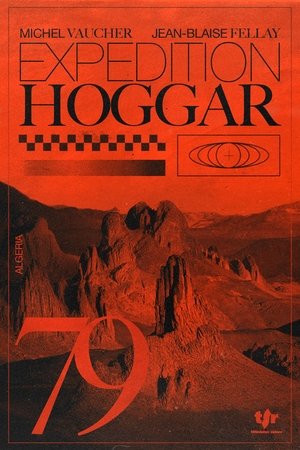
TSR documentary on the 1979 expedition to Algeria in the Atakor massif (Hoggar desert), organized by Geneva mountaineer Michel Vaucher and Jean-Blaise Fellay. The climbers make a dozen ascents including the famous summit of Adaouda (which means "finger" in Tamasheq, the Tuareg dialect), by several routes. Then a new route on the peaks of the southern Tezoulegs. They discover the volcanic geological characteristics of the Atakor massif and meet the nomadic inhabitants of the region, the Tuaregs, who are increasingly settling in the town of Tamanrasset.