In turn of the century London, a magical nanny employs music and adventure to help two neglected children become closer to their father.
The water fairy Rusalka falls in love with an earthly prince. In vain, Father Aquarius warns her. Her sincere feelings are met with human treachery...
Ageing misfit Sir Morosus lives alone in an old-style apartment in Charlottenburg in Berlin. He is wealthy, but also lonely and a bit grumpy. Then his nephew Henry moves in with him and his life takes a turn for the better. Director Jan Philipp Gloger homes in on two of the most pressing problems of the day: loneliness and the housing shortage. The Staatskapelle Berlin is conducted by Christian Thielemann.
Franco Zeffirelli's magnificient staging of Puccini's final opera - a fairy tale set in a mythical China - is one of the most popular in the Met repertory. In this Live in HD production, Maria Guleghina takes on the title role and Marcello Giordani is Calaf, the unknown prince. Marina Poplavskaya and Samuel Ramey co-star, and Andris Nelsons conducts in his Met debut.
a film opera; music by: Gaetano Donizetti (Philharmonic Orchestra of Rome) Directed by Giuseppe Zedda.
Experience the story of seamstress Esther who begins writing to a mysterious suitor laboring on the Panama Canal. Featuring a libretto by Pulitzer Prize winner Lynn Nottage, this powerful opera is directed by Tony winner Bartlett Sher.
From the Styriarte Festival in Graz Austria, the acclaimed mezzo-soprano Cecilia Bartoli and Maestro Nikolaus Harnoncourt with his orchestra Concentus Musicu Wien, present a concert on Haydn arias and Symphony No.92, the "Oxford". The singing virtuosity of "Scena di Berenice" is sublime as is the performance of The "Oxford" Symphony from the ensemble renown for its specialty in early music and playing on period instruments. A unique concert.
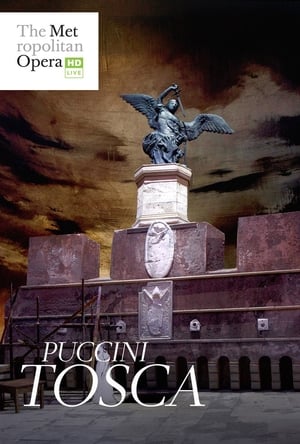
Non-musical account of Puccini's opera: Tosca and Cavaradossi are in love, but the tyrant Scarpia desires Tosca and oppresses Cavaradossi who is fighting for freedom.
Wolfgang Amadeus Mozart's Magic Flute is undoubtedly one of the most multi-layered, profound, complicated, and therefore also most difficult to stage works in the entire opera repertoire. In terms of genre, it can only be understood if it is seen as a mixture of four things: a philosophically profound drama of ideas with countless encryptions, a naïve fairy tale, a bawdy comedy, and a crude Punch and Judy show. It is based on the intersection of the traditions of Baroque magic opera, Italian buffa, and Viennese Singspiel, where all manner of wonders are conceivable and permissible. Peter Ustinov's production appeals to all those who love a primarily fairy-tale-like interpretation; the atmosphere is traditional and conventional. An outstanding ensemble of singers has been assembled.
Boris Godunov
Benjamin Britten’s opera of the Henry James novel. An inexperienced governess is sent to a country house to care for two children, whom she is gradually convinced have been corrupted by the ghosts of a previous manservant and governess…
Prince Abesalom runs into an orphaned Eteri while hunting, falls for her and brings the woman to his palace as his fiancé. The Prince’s aid Murman loses his self-control at Eteri’s beauty and gives her a spelled necklace as a wedding gift. Eteri contracts a mysterious disease that only Murman is capable to heal.
Car Men is a collaboration between the renowned choreographer Jíri Kylían and filmmaker Boris Paval Conen. Based on the opera 'CARMEN' by Georges Bizet they shot a hilarious and poetic short film in the destroyed landscape of a Czech brown coal mine. The actors in this film are older dancers from Kylían's troupe (around 50 years old) and the main prop is a 'TATRA 87', a famous car from 1937.
It's hard to imagine confirmed Straussians not wanting this starry Metropolitan Opera performance of Elektra. Strauss and his librettist, Hugo von Hofmannstahl, transformed Sophocles' take on Homer's tale into a harrowing opera noir. Elektra lives for one reason, to kill her mother, Klytämnestra, and her stepfather, Aegisth, the murderers of her father, Agamemnon. In contrast to Elektra's vengeful obsession, her sister Chrysothemis desires to get on with life. When their long-missing brother, Orestes, returns to do the deed, Elektra celebrates with a dance of death and, her sole purpose in life fulfilled, dies. Strauss joined the hermetic plot to music of the utmost opulence, violent and yearning by turns, evoking the cardinal principles of Greek tragedy - pity and terror.
A seventeen year old travels from London to the Austrian Alps to attend the legendary Mozart boarding school. There, he discovers a centuries-old forgotten passageway into the fantastic world of Mozart's "The Magic Flute".
Dimash Kudaibergen - ARNAU Tour in New York
Ernst Krenek's theatrical piece Karl V. consisting completely of twelve-tone series should have premiered at the Vienna State Opera. The political situation in the Vienna of 1933 and the fact that Krenek was despised by the Nazis because of this Jazz opera Jonny spielt auf, prevented the première. It only took place five years later in Prague, however Krenek had already emigrated to the USA. Karl V was the last emperor to hold to the idea of a Christian empire in which the sun never set, although its downfall was always inevitable, for numerous reasons. For the second production of Karl V. in the Nationaltheater, Carlus Padrissa in particular seeks out political power systems that are highly topical, and so very precisely analyses the treatment in the theatrical piece. At the core of the intellectually and linguistically highly qualified libretto, written by the composer himself, Karl V. reflects on his life and makes his confession to a young monk below Titian's La Gloria.
Who loves whom in Così fan tutte, Mozart’s and Da Ponte’s cruelly comic reflection on desire, fidelity and betrayal? Or have the confusions to which the main characters subject one another ensured that in spite of the heartfelt love duets and superficially fleetfooted comedy nothing will work any longer and that a sense of emotional erosion has replaced true feelings? Così fan tutte is a timeless work full of questions that affect us all. The Academy Award-winning director Michael Haneke once said that he was merely being precise and did not want to distort reality. In only his second opera production after Don Giovanni in 2006, he presents what ARTE described as a “disillusioned vision of love in an ice-cold, realistic interpretation”.
This is a good video of "Figaro", but there are a couple of better ones available. The Bohm and the Pappano are better still due to the female members of the casts. The reason for buying this one is the "Figaro", Bryn Terfel. No one can top him today in that role. John Eliot Gardiner also stands out. Many of us have voiced their opinion that If the Metropolitan Opera would release it's 1998 version, that would be the one to get.
All the throbbing eroticism—and ultimate heartbreak—of Puccini’s youthful score is unleashed by James Levine and his top-flight cast. Plácido Domingo is Des Grieux, the handsome, headstrong young aristocrat who falls head over heels for the enticing, impetuous Manon Lescaut (Renata Scotto). Manon returns his love, but her obsession with luxury ruins them both. Gian Carlo Menotti’s opulent production, with sets and costumes by Desmond Heeley, superbly captures the colorful world of 18th century France.