Don Whillans and Joe Brown climbing Cemetery Gates (E1) on Dinas Cromlech in the Llanberis Pass. They made the first ascent 32 years before. They were good friends since they met in 1951. Tragically this was Don's last major climb as he died a few months later. Don Whillans, was a leading climber of his generation. Whillans climbed the Bonatti Pillar of the Dru and made the first ascent, along with Chris Bonington, Jan Długosz and Ian Clough of the Central Pillar of Freney on Mount Blanc. In 1962, with Chris Bonington, Whillans made the first ascent of the Central Tower of Paine, Patagonia. Later, with Dougal Haston, he made the first ascent of the south face of Annapurna. Whillans was known for his humour, safety and heavy drinking.
Portrait of British mountaineer Joe Brown, who demonstrates his climbing technique and discusses his philosophy of climbing. The film was shot in and around Llanberis, where he lived, and on the cliffs of South Stack Lighthouse in Anglesey. Brown is regarded as the outstanding pioneering English rock climber of the 1950s and early 1960s. He established an unprecedented number of classic new routes in Snowdonia and the Peak District that were at the leading edge of the hardest grades. He made the first ascent of Kangchenjunga in 1955 and and other big achievements in the Alps and Himalayas.
Climber Philippe Ribière was born in Martinique. Abandoned and subsequently adopted by a large family in France, Ribière underwent numerous surgeries to improve the functionality of his limbs. Yet today, he is the first sponsored climber with a disability, an elite athlete, and the founder of the "Handi-Grimpe" association. Returning to Martinique with the ambition of climbing the famous Diamond Rock—an uninhabited island located two kilometers off the coast, whose shape inspired its name—holds deep symbolic significance for him.
A film documenting the British expedition attempting to climb the remote peak of Torre Egger in Patagonia in 1974 by Don Whillans, Martin Boysen, Paul 'Tut' Braithwaite, Eric Jones, Mick Coffey, and Keith Lewis. They didn't succeed on Torre Egger and changed direction in the last days of the trip and climbed the Innominata Needle (also known as Aguja Rafael Juarez). The documentary is part of the series 'Pushing the limits', a series of 10 programs by Leo Dickinson documenting sporting adventures which often test the limits of human endurance.
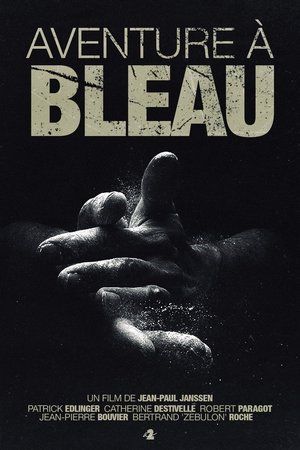
Vertical Opera is a documentary film directed by Jean-Paul Janssen, with climbers Patrick Edlinger and Jean-Paul Lemercier in the Gorges du Verdon. The film opens with a training sequence of Patrick Edlinger then he links the routes with Jean-Paul Lemercier "L'Ange en décongelation" (7a), in which he falls voluntarily to demonstrate the usefulness of the rope, then "Le Septième Saut" (7b+). Finally, the final scene, an anthology, consists of a close-up of Edlinger who climbs free solo and barefoot the route "Débiloff", still in the Verdon, above hundreds of meters of void, all to lyrical music. It is "Wie Furchtsam Wankten Meine Schritte", the aria for alto voice from Johann Sebastian Bach's cantata BWV 33, music not unrelated to the subject of the documentary: "How faltering and fearful my steps were".
Movie about David Lama climbing the Patagonian mountain Cerro Torre for the first time free, a mountain that has been dubbed the most difficult to climb in the world.
Eric Escoffier, la Fureur de Vivre
At the Limit is a documentary about extreme climbing. In this sports documentary, Pepe Danquart shows brothers Thomas and Alexander Huber climbing in Patagonia and on the granite rock "El Capitan" in Yosemite Valley (USA). A key part of the film is their attempt at a speed ascent of the 1,000-meter-high route "The Nose," in which the two athletes aim to break the then speed record of 2:48:30 hours, set by Hans Florine and Yuji Hirayama in September 2002.
Patrick Berhault - Il Gesto e La Grazia
The first ascent of the Matterhorn was made on July 14, 1865 by Edward Whymper, Francis Douglas, Charles Hudson, Douglas Hadow, Michel Croz and two guides from Zermatt, Peter Taugwalder father and son. Douglas, Hudson, Hadow and Croz are killed on the descent after Hadow slips and drags the other three men down the north face. Whymper and the two Taugwalders, who survive, are later accused of having cut the rope that connected them to the rest of the group so as not to be dragged into the fall, but the ensuing investigation finds no evidence of their guilt and they are acquitted. The Matterhorn is the last great peak in the Alps to be conquered and its ascent marks the end of the golden age of mountaineering. One hundred and fifty years later, a team undertakes the same expedition in order to unravel the mystery.
“Roche” from father to son… Bertrand Roche, nicknamed Zébulon, the spring-loaded character from The Magic Roundabout, comes from his inability to stay still. At 11, he reached the summit of Mont Blanc, which he has since climbed more than fifteen times. At 12, he took up paragliding and, in the United States, climbed the famous Nose face of El Capitan in Yosemite with his father, Jean-Noël Roche, known as Pap’s, a renowned Himalayan mountaineer and paraglider. He was filmed during this journey by Philippe Lallet and became the central figure in the documentary film Pap’s and Zébulon, as well as in the book written by Jean-Noël Roche and Claude Roche: Pap’s and Zébulon, or, The Extraordinary Adventures of a 12-Year-Old Mountaineer.
Rotpunkt documents the advent, the agony and the art of the redpoint through Alex Megos’s efforts to redefine the boundaries of the form. The film traces the redpoint—which transformed rock climbing from an engineering problem into a brilliant test of mental and physical strength—from its origins with a ragtag bunch of tights-wearing revolutionaries in rural Bavaria, to its golden era with Wolfgang Güllich, to its new ideal in the German phenom Megos as he battles to unlock new levels of human potential.
Fifteen years have passed since the spectacular images of Jean-Paul Janssen's "Life at Your Fingertips" introduced the general public to free climbing and its embodiment: Patrick Edlinger. We witnessed the birth of a sporting phenomenon that would leave a lasting mark on generations of climbers. But fifteen years later, in 1997, beyond the myth, where is Patrick Edlinger? Gilles Chappaz found him on some of the most beautiful walls of the Verdon Gorge and other cliffs during the filming of Maurice Rebeix's documentary "Roc'n Wall 97," where he shares his climbing practice and philosophy with the younger generation, including Liv Sansoz and Arnaud Petit.
Zero to Level follows Aldo Mazzocchis motor-free journey from the Indian Ocean to Kilimanjaros summit. Through kayaking, biking, mountaineering, and paragliding, Aldo tackles water, earth, fire, and air challenges. Accompanied by photographer Ottavio Tomasini, he conquers 190 km of paddling, 500 km of biking, and an ascent on foot, culminating in a paragliding triumph from 5,000 meters.
A story of chopped fingers, fun, friendship and the First Ascent of Kunyang Chhish East (7,400m). Following the rules of true alpine style Hansjörg Auer, Matthias Auer and Simon Anthamatten embark on an adventure for the summit and for survival on Kunyang Chhish East.
Two of Britain’s top free climbers decide to take on one of Yosemite’s most awesome lumps of granite: the thousand vertical metres of El Capitan – via it’s hardest line – with no experience of big walling whatsoever. Fired up on a diet of bagels, the climbers, Rich and Neil, set off to do battle with the dizzying exposure and raking crack lines of this historic face. The ensuing agony is captured in this spectacularly shot film, that exudes passion and humour and takes a refreshingly honest look at living 6 days in the vertical world.
Alex Txikon, internationally renowned mountaineer, is launching a new winter expedition in 2021 to Manaslu (Nepal). It is the first non-polluting ascent, powered by solar panels. With this sustainable system, which reduces the energy footprint in accordance with the Paris Agreements, the EKI Foundation is beginning its work of solidarity. Alex is going to learn about the work developed by the Foundation in Sierra Leone, where they provide solar energy systems that enable energy autonomy in schools and hospitals. Txikon proposes to replicate this idea in a very special school in the Diamer Valley in Pakistan, the Günter Mountain School, uniting two different but at the same time equal cultures.
A diary of the Monzino expedition on the west coast of Greenland, carried out in July-August 1961. It included Guido and Franco Monzino (cousin of the manufacturer, who died in a car accident a month after the expedition), Mario Fantin, Jean Biche and the other guides of Valtournanche Pession, Antoine and Leonardo Carrel, Cerrutelli, Sartelli and Cap. Barberis, commander of the 'yacht'. It reaches the 74th parallel by plane and then travels along the coast of the island by boat. At a certain point the itinerary of the expedition underwent a forced change because the Italians had heard by radio of a mountaineering disaster affecting a group of Belgian climbers. They change course and in a generous race of human solidarity bring help to the victims.
In October 1984, Pierre Béghin, an engineer from Grenoble, and Jean-Noël Roche, a high-mountain guide, completed the Himalayan ascent of Dhaulagiri (8,172 m). The expedition's context: seven people crossed Nepal to Muri, collected accounts from trekkers—including that of the author Robert Rieffel—and attended Sherpa prayers at base camp. Then, the two of them embarked on a rocky and snowy route without supplemental oxygen. At over 5,000 meters, on the mountain of winds, Jean-Noël Roche made a paragliding flight. The climbers brought back footage with their Super 8 camera from 6,500 meters, but only photographs have been able to confirm their presence on the summit ridge of the seventh highest peak in the world.
An adventure of extreme skiing in the Mont Blanc area