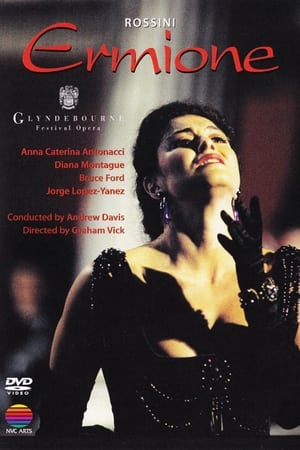
Recorded at the Glyndebourne Festival Opera in 1995, this acclaimed presentation of composer Gioachino Rossini's epic opus ERMIONE is based on Jean Racine's play "Andromache." Set in Troy after the city fell to the Greeks, the production recounts the rancorous battle between widow Andromache and Helen of Troy's green-eyed daughter, Ermione for the love of Pyrrhus
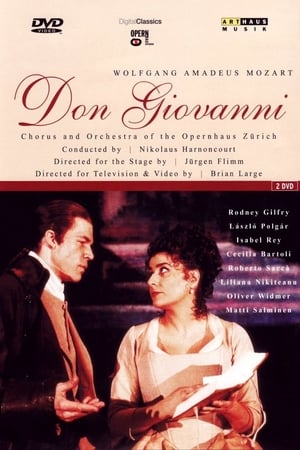
Live 2001 production from the Zurich Opera House of the classic Mozart/Da Ponte opera, with Nikolaus Harnoncourt conducting and directed for television and video by Brian Large.
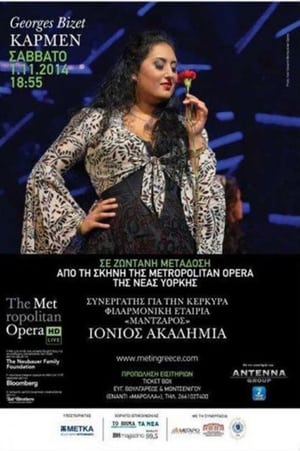
Georgian mezzo-soprano Anita Rachvelishvili gives a dynamic performance as Bizet’s iconic gypsy, the woman who lives by her own rules. Aleksandrs Antonenko is Don José, the soldier who falls under her spell, and Ildar Abdrazakov plays Escamillo, the swaggering bullfighter who takes Carmen away from Don José—an action that seals Carmen’s tragic fate. Anita Hartig is Micaëla, and Pablo Heras-Casado conducts Richard Eyre’s hit production, set in 1930s Spain.
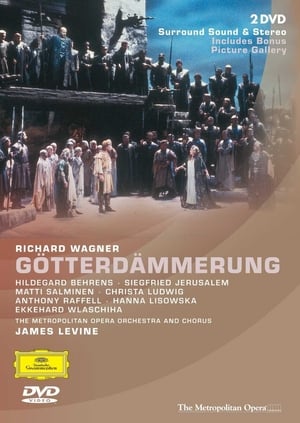
The stupendous climax to Wagner’s four-part Ring cycle is brilliantly realized by the Otto Schenk/Günther Schneider-Siemssen production and byJames Levine’s monumental conducting. The Met orchestra, chorus, and an all-star cast make this Götterdämmerung one that truly rises to the occasion. Hildegard Behrens’s Brünnhilde must be experienced to be believed, as does Matti Salminen’s richly sung, domineering Hagen. At the center of the drama is Siegfried Jerusalem as Siegfried, who does not realize he has been drawn into a plot of betrayal until it is too late. Christa Ludwig is magnetic as Waltraute and Ekkehard Wlaschiha is a compelling Alberich.
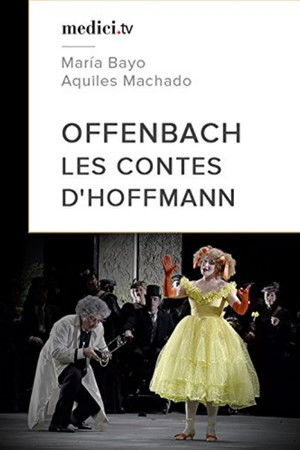
Giancarlo Del Monaco's passionate and intelligent production of Jacques Offenbach's magnum opus creates a climactic kaleidoscope of deep and convincing emotions. A highly credible incarnation of the pitiable Kleinzach he sings about, Aquiles Machado is the poet who loses his romantic idealism, his reflection and finally his soul to a 'trio of charming enchantresses'.
Iconic songstress Barbra Streisand culminates her 13-city tour in Miami with dazzling ballads, Broadway standards and stories from behind the scenes.
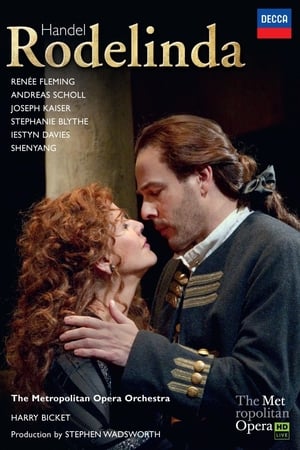
Renée Fleming stars in the title role of one of Handel’s greatest dramas, seen in Stephen Wadsworth’s 2004 Met premiere production. Rodelinda is faced with an impossible dilemma: With her husband Bertarido believed dead, she either has to marry the despised Grimoaldo (the elegant Joseph Kaiser), who has usurped her husband’s throne, or see him murder her son. But Bertarido (leading countertenor Andreas Scholl) is alive and eventually reclaims both throne and wife—and makes peace with his enemies. Stephanie Blythe is marvelous as Eduige, Bertarido’s sister, who is betrothed to Grimoaldo but turns against him. Baroque authority Harry Bicket conducts.
“Let us assume that Switzerland is truly a paradise. The music hereto was written long ago. We have merely forgotten it.” (Daniel Schmid) This is the material from which the most Swiss of all operas is made: the legendary Wilhelm Tell – a Swiss hero: straightforward, a primus inter pares of the indomitable freedom fighters, a good shot, surefire. A myth that becomes a poetic playground: nature in turmoil, the struggle for freedom and forbidden love. A legendary overture at a gallop with an iconic post horn motif – all this and much more in the thirty-seventh and last opera by Rossini.
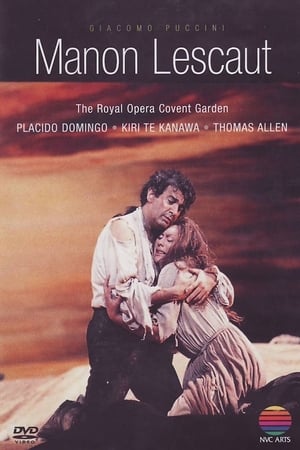
"Manon", wrote Puccini to his publisher Giulio Ricordi in 1889, "is a heroine I believe in and therefore she cannot fail to win the heart of the public." This turned out to be a truly prophetic statement since none of Puccinis other world successes were received on their first nights as rapturously as Manon Lescaut. The popularity of Puccinis great masterpiece has never waned and the highly acclaimed Götz Friedrich production at Covent Garden was hailed as an operatic milestone. Two of the worlds leading stars--Kiri Te Kanawa and Placido Domingo--head a strong cast conducted by the brilliant Italian conductor Giuseppe Sinopoli.
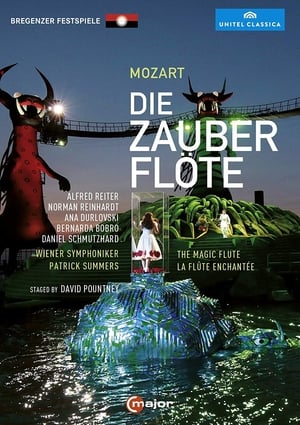
What begins like a fairy-tale turns into a whimsical fantasy halfway between magic farce and Masonic mysticism: The Magic Flute links a love story with the great questions of the Enlightenment, juxtaposes bird-catcher charm with queenly vengeance, and bewitches the listener with music that mixes cheerful melodies, lovers’ arias, showstopping coloraturas and mysterious chorales. W. A. Mozart’s opera premiered in 1791 and is one of the most often performed operas in the world. The production on the Bregenz Festival lake stage impresses the audience with a fantastic setting framed by three dog-dragons, each of them more than twenty meters in height. “David Pountney finds stunning answers to the everlasting questions surrounding ‘The Magic Flute’.” (Tagesspiegel) “The ‘play on the lake’ in Bregenz takes the audience into a fantasy world.” (Salzburger Nachrichten)
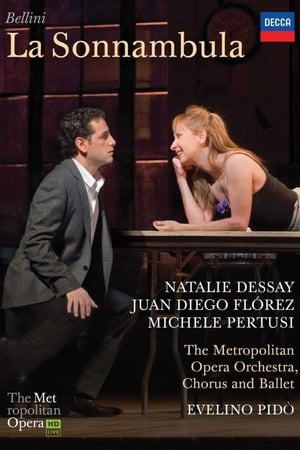
Just as a young woman is about to marry her sweetheart, she is discovered—by the entire village, to say nothing of her fiancé—asleep in the bedroom of a stranger. It takes the young man two acts to figure out that sleepwalking is to blame, and everything ends happily. Natalie Dessay as Amina and Juan Diego Flórez as Elvino deliver bel canto magic and vocal fireworks in Mary Zimmerman’s 2009 production. The Tony award-winning director transfers Bellini’s bucolic tale to a rehearsal room in contemporary New York, where an opera company rehearses La Sonnambula—and where the singers are truly in love with each other.
Il tabarro is a tale of jealousy and murder between Michele, his young wife Giorgetta and her lover Luigi, set aboard a barge on the Seine. Suor Angelica tells the story of the nun Angelica’s familial loss, sacrifice and suicide. Gianni Schicchi is an opera full of trickery, greed and romance as a family dispute breaks out over a missing will. The Olivier-nominated Royal Opera production featuring a trio of one-act Puccini operas was first performed together on the same bill at Covent Garden in September 2011, and was acclaimed by the Telegraph as "an operatic treat... three hours of gorgeous music that allows big voices to let emotion rip" and by the Evening Standard as "a triumphant vindication of the social awareness and dramatic power of Puccini's triptych". The trio of operas offers a panorama of emotions, with the dark and foreboding Il tabarro and comic Gianni Schicchi bookending a heart-wrenching Suor Angelica.
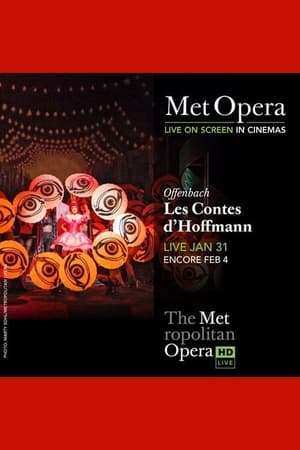
New tenor star Vittorio Grigolo takes on the title role in Offenbach’s fantastical opera, giving a tour-de-force performance as the tortured poet unlucky in love. He is joined by a trio of leading ladies: Erin Morley sings the mechanical doll Olympia, Hibla Gerzmava is the fragile Antonia, and Christine Rice sings Giulietta, the Venetian courtesan. Bartlett Sher’s colorful production, seen here in its second Live in HD presentation, also stars Thomas Hampson as the sinister Four Villains and Kate Lindsey as Niklausse, Hoffmann’s friend and muse. Yves Abel conducts.
Tim Albery's Olivier-nominated production for The Royal Opera delves deep into the psychology of Wagner's cursed wanderer and his beloved Senta, detailing the monomania and uncompromising idealism that finally drives them apart. Michael Levine's elemental single set is dominated by a rolling metal hull that represents the Dutchman's phantom ship, the poverty of Senta's home and the treacherous sea.
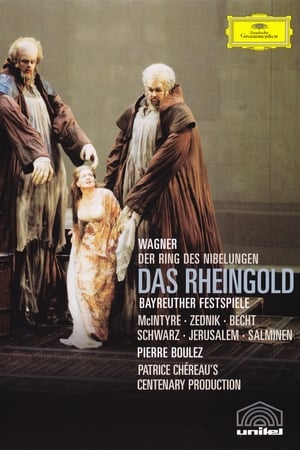
This is a beautifully conducted and thoughtfully staged performance of the first opera (the prologue) in Wagner's Ring Cycle. As soon as the clouds of mist have dissipated, while the daring, long-held opening chord is still reverberating, the screen clears to show not only the River Rhine and the three maidens (dressed like prostitutes in this production) assigned to guard the gold hidden there. It also shows an enormous dam (not mentioned in Wagner's text). This is the underwater base of a hydroelectric plant, and its presence tells us two things immediately: that this production takes the story out of the vaguely medieval fantasy world in which Wagner had placed it, and that a basic theme of the four-opera cycle would be power. Alberich, the Nibelung, is willing to renounce the love of women, after stealing the gold from the Rhine, to become the ruler of the world. Another basic theme is greed.
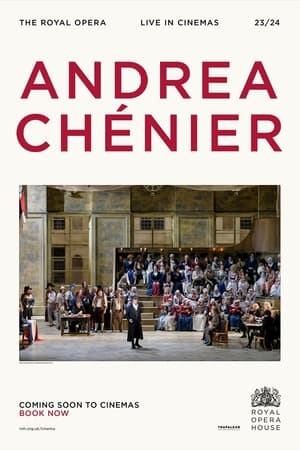
At a glittering party in 18th-century Paris, the poet Andréa Chenier delivers an impassioned denunciation of Louis XVI. Five years later, the Revolution has given way to the Terror, transforming the power balance between Chénier, his beloved Maddalena, and Gérard, the man who could destroy him...
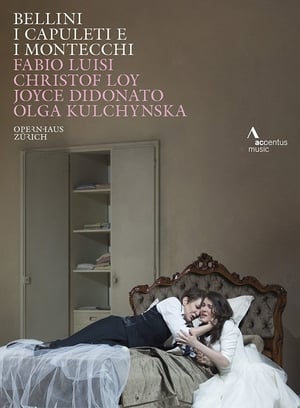
The story of Romeo and Juliet, who pay for their passion with their lives, has been interpreted in the widest variety of literary and musical genres ever since the Renaissance. Vincenzo Bellini's much too rarely staged Romeo and Juliet opera, I Capuleti e i Montecchi, is far removed from Shakespeare's version: rather than telling the story of a tenderly burgeoning love, the piece is an account of the last 24 hours in the two young people's lives. The underlying mood of the piece is thus one of melancholy - which then develops into a catastrophic maelstrom. The première of the thrilling Zurich production of this bel canto gem, directed by Christof Loy and conducted by Fabio Luisi, was enthusiastically received by critics and audiences alike. The two protagonists also met with acclaim: experience world star Joyce DiDonato in the trouser role of Romeo, with the young Ukrainia soprano Olga Kulchynska at her side as Giulietta.
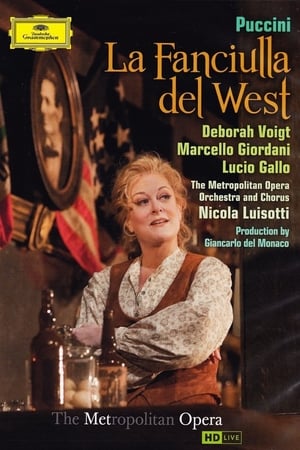
Puccini: La Fanciulla del West
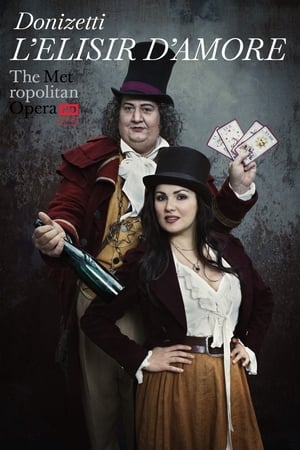
Anna Netrebko as the beautiful and wealthy Adina leads the cast in Barlett Sher’s production of Donizetti’s charming comedy, first seen on Opening Night of the Met’s 2012–13 season. Matthew Polenzani is Nemorino, the poor but good-hearted country boy who wins her love—with the help of the magic “elixir” sold by the quack Dulcamara, played by Ambrogio Maestri. Mariusz Kwiecien is the swaggering Sergeant Belcore and Maurizio Benini conducts.
The Marriage of Figaro is a continuation of the plot of The Barber of Seville several years later, and recounts a single "day of madness" in the palace of the Count Almaviva near Seville, Spain. Rosina is now the Countess; Dr. Bartolo is seeking revenge against Figaro for thwarting his plans to marry Rosina himself; and Count Almaviva has degenerated from the romantic youth of Barber into a scheming, bullying, skirt-chasing baritone. This follows the Count trying to obtain favours from Susanna, Figaro's bride to be, under the nose of the Countess.