The Confederation of Haitian Workers (CTH) invited an Industrial Workers of the World (IWW) delegation to Haiti to learn about their fight against "le plan neoliberal" and recruit help in the form of material aid and solidarity. The delegation was in Haiti from April 24 to May 25, 2008, two weeks after the country erupted in mass protest at burgeoning food prices. This video shares the stories and experiences.
Part-fiction documentary into the New Silk Road. AAA Cargo traces the anticipation of infrastructure and trade on a planetary scale, following its distribution networks which are expanding across vast regions between China and Europe. Here, government efforts to speed up the movement of trade collide with more-than-human choreographies of sand, people and goods.
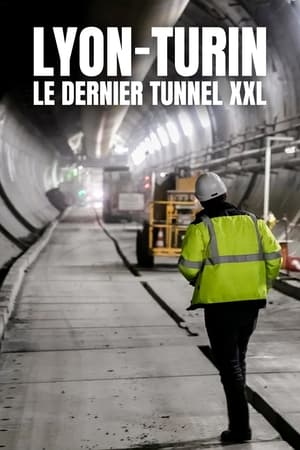
Lyon-Turin : Le Dernier Tunnel XXL
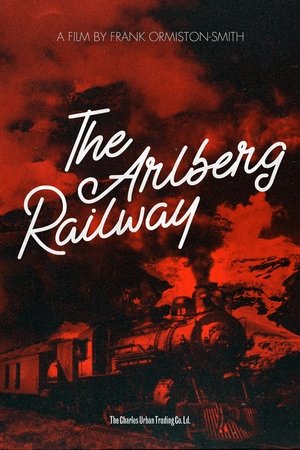
1906, produced by Charles Urban, cinematography by Frank Ormiston-Smith.
A visit to Peterlee, Co. Durham.
Can you imagine a water market? A market where owners of water stock would buy and sell, while others would profit on its price without needing it? What would life be like if all of the planet’s water resources, superficial or subterranean, the waters of rivers, lakes and glaciers, belonged to the private sector? ‘Life For Sale’ examines the biggest water market in the world, set up in Chile.
Following a winding 96 km route, the Vouga line emerged in 1908 with the promise of boosting the region's economic development. 100 years later, the "Vale das Voltas Line" has lost most of its former magic. Currently, it is the last Brazilian narrow-gauge railway line. We embark on a journey from the past to the present, where, little by little, the Vouguinha is being reborn. Driven by tourism, steam power, and the strengthening of the train's role in sustainable mobility, what will be the next stop?
INERCIA
The History of American Railroads: The Era of Diesel examines the golden age of America’s passenger railroads, traveling across the United States on legendary trains of the East, South, and West. Featuring routes such as the New York Central, Pennsylvania, B&O, Nashville, Chattanooga & St. Louis, Atlantic Coast Line, Rio Grande, Santa Fe, and Union Pacific, the documentary also explores the difficult transition years of the 1960s and 1970s as America’s great passenger trains made their final journeys.
When the first railroads were built some two hundred years ago, they brought about a revolutionary change for mankind, linking cities and countryside, driving the industrial revolution and irrevocably changing the landscape: a history of the railroad from its beginnings to the present day.
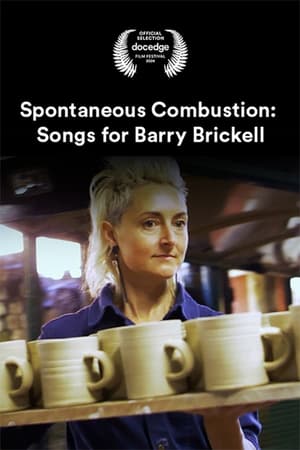
Spontaneous Combustion embraces the holistic vision of one of Aotearoa New Zealand’s most provocative artists and thinkers: the unity of the natural environment and the human imagination, the energy, rhythm and textures of the physical world expressed in clay, words, and music. The film celebrates the legacy of Barry Brickell (1935-2016) and the realisation of his extraordinary dream, Driving Creek Railway: a productive pottery with numerous kilns, a bush railway, a native bird and bush sanctuary and a lively creative hub drawing artists from around the globe.
TGV Paris-Bordeaux, la ligne de tous les records
Illustrates the reconstruction and electrification of the main railway line between Manchester and Sheffield. Showing the plan for the modernisation and re-equipping of British Railways. This film was produced for televising by the BBC during the evening that the plan was debated in parliament.
A light and somewhat satirical look at the problems and pleasures of Continental holiday travel. A passenger on the Hook Continental Express from Liverpool St. imagines the possible destinations of his fellow passengers.
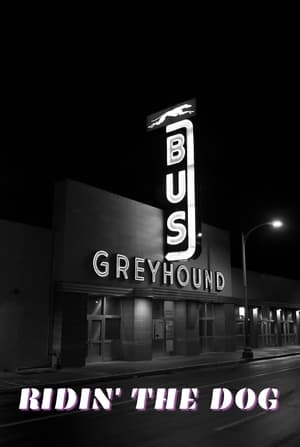
The world-famous Greyhound bus is almost as old as the Wild West. It is a symbol of North America, of progress, and of nostalgia. Reporter Studs Terkel travelled 2,000 miles across the United States by Greyhound. From Seattle to Chicago, he observes his fellow-passengers. He meets a number of travelers who appear to be very interesting people: a Native American boxer on his way to his birthplace in Montana, a bar owner who was a bank robber in a former 'career', a 99 year old woman who is still running a busy hotel, and, of course, a pedigree cowboy. The spectator of this film listens to their personal stories, watches the beautiful scenery, and is treated to famous feature film fragments in which the Greyhound bus plays a part. Seven states and two time zones later, he is back in his cinema seat.
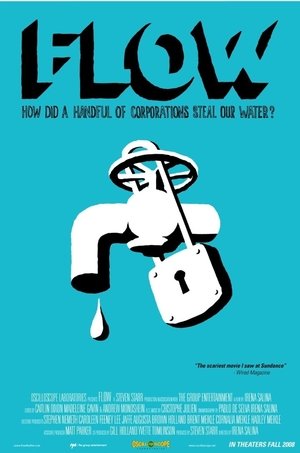
From both local and global perspectives, this documentary examines the harsh realities behind the mounting water crisis. Learn how politics, pollution and human rights are intertwined in this important issue that affects every being on Earth. With water drying up around the world and the future of human lives at stake, the film urges a call to arms before more of our most precious natural resource evaporates.
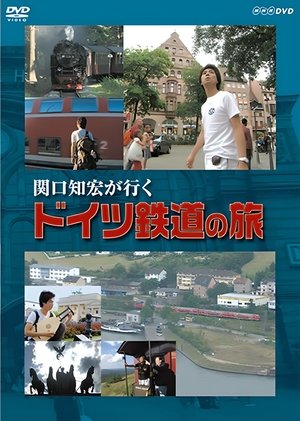
関口知宏が行く ドイツ鉄道の旅
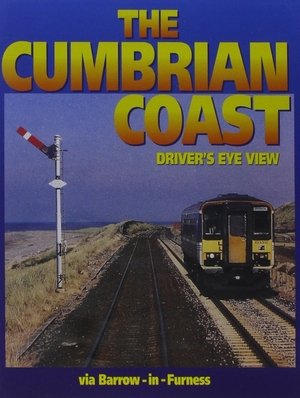
One of the least well-known areas of Britain, we travel to the Cumbrian Coast by means of two different trains. Firstly, we board a North West Regional Railways Express (class 156) which traverses the former Furness Railway via Grange-over-Sands and Ulvertston to Barrow-in-Furness. There we change to a class 153 for the most scenic section of the route along the coast from Bootle to Maryport, filmed in what can only be described as 100% perfect weather - not a cloud in the sky! Apparently you only get one day a year like that along the coast and we were there! As signalling expert David Allen says in his script; "this line is a mecca for semaphore signalling enthusiasts". Filmed in 1997.
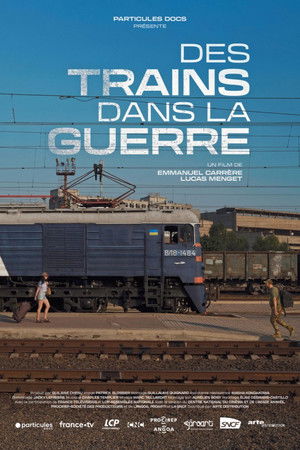
Des trains dans la guerre
Moscow, January 1996. Boris Yeltsin gets ready to run for a second mandate of the presidency of the young Russian Federation. Polls are in the single digits. A painful economic transition, war in Chechnya, and the rise of criminal groups have left the majority of Russians dissatisfied with Yeltsin… and willing to vote for the communist leader Gennady Zyuganov. Yet six months later, Yeltsin won the election with nearly 54% of the vote. How did that happen?