Nice looking Travelogue takes us to the Northeast corner of Wyoming as we visit Yellowstone National Park.
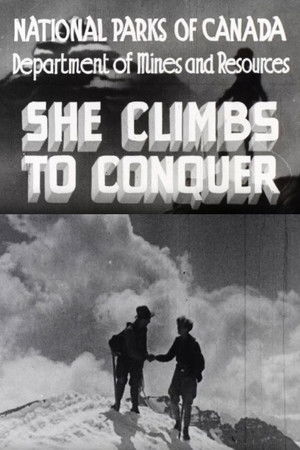
"She Climbs to Conquer" shot by W.J. Oliver, was a noteworthy film which gained well merited acclaim. Made in 1933 it pictured the climb of Georgia Engelhard, a professional mountain climber, from Abbot's Pass to the peak of Mount Victoria.
A scenic documentary record of a climb up to Mount Assiniboine, the 'American Matterhorn' in the Canadian Rockies.
A documentary about identity and the right to Covid-19 vaccination for Quilombolas. We arrived at the Morro Alto quilombo exactly one year after the administration of the first dose of the Covid-19 vaccine was completed for the quilombola population. The vaccine arrives in the territory based on the count of available doses and the "number of arms" of people belonging to the quilombola community. Quilombola territoriality demonstrates that numbers and headcounts are not enough for the recognition of Quilombolas, whose identity encompasses kinship ties sustained by ancestry, affection, solidarity, and the connections between land and people, which structure and strengthen the sense of belonging and permanence in the territory. Therefore, these are arms that speak of bonds, histories, memory, identity, and the struggle for recognition, making up the doses that reach the descendants of the Morro Alto quilombola community.
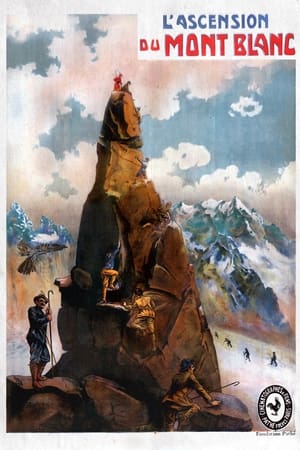
Joseph Vallot and his team of guides and porters climb Mont Blanc in 1906. Their ascent will take three days. They spent their nights at the Grands Mulets refuge and the Grand Plateau refuge. This is the very first successfully filmed ascent. Joseph Vallot (1854-1925), rich heir of Lodève in Occitania. He devotes part of his fortune to the observation of the Alps, sometimes opposing the scientific community. He built an observatory, still standing today.
1906, produced by Charles Urban, cinematography by Frank Ormiston-Smith.
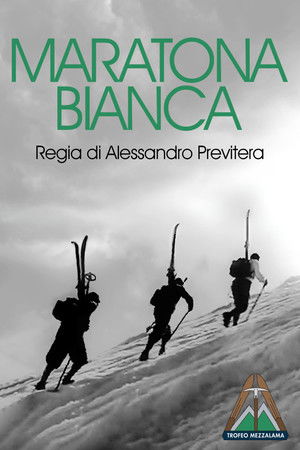
Documentary on one of the first editions of the Trofeo Mezzalama, the highest ski mountaineering race in Europe, at more than 4,200 meters above sea level, which takes place on the glaciers of Monte Rosa, from Breuil to Gressoney-La-Trinité, crossing the summits of Castor (4,199 meters) and Nez du Liskamm (4,100 meters). The film recounts the last hours of feverish preparation before the start, the teams preparing for the race linked in ropes, then follows the stages of the competition by following the groups of skiers from a plane. Created in 1933, the Trofeo Mezzalama was contested until 1938, before falling into oblivion during the war. A second version was organized from 1970 to 1973. A third biannual version has been organized since 1997.
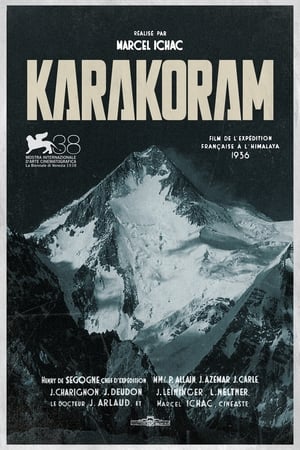
Account of the first French expedition to the Himalayas, which attempted to climb the hidden peak (Gasherbrum I) in 1936, from the preparations for the trip to the end of the ascent. After a long approach walk through quasi-desert regions, then on a huge glacier, the caravan of 700 porters arrives at the foot of Hidden Peak. The expedition was led by Henry de Ségogne, with Jean Charignon, Pierre Allain, Raymond Leininger, Jean Carle, Jean Deudon, Louis Neltner, Jacques Azémar, doctor Jeand Arlaud and director Marcel Ichac. Weather conditions, logistical problems and a strike among Sherpas forced the team to retire at 6900m on the south face. The film received the Silver Lion at the Venice Film Festival in 1938.
A travelogue set in the jungles of Borneo.
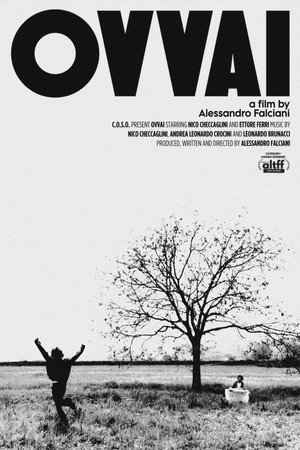
OVVAI
On September 28th, 1903, the Urban Mountaineering Expedition, headed by Frank Ormiston-Smith, left Zermatt to attempt the conquest of the Matterhorn. On the 29th, the conquest was completed by the filming of the panorama from the actual summit of the mountain. The film consists of 20 scenes and illustrates the whole ascent from Zermatt through the Hornli Ridge. A copy of the film was found in Zermatt in 1953 and was was erroneously attributed to Frederick Burlingham and dated 1901. Since then, the film has been widely publicized as the first mountain film under the title of 'Cervin 1901', but this is incorrect. Ormiston previously had made 'Alpine series' (1901), 'The ascent of Mont Blanc' (1902), 'Climbing the Great Schreckhorn' (1902) and 'Ascent of the Jungfrau' (1903). The pictures and descriptions of the Charles Urban Trading 1903 film catalogue show without any doubt that 'Ascent of the Matterhorn' and 'Cervin 1901' are the same film.
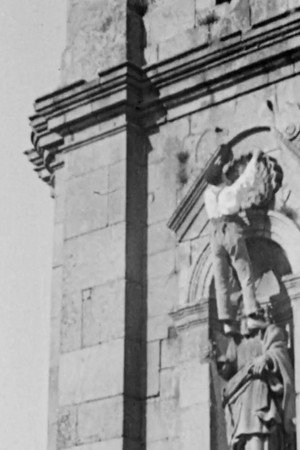
Escalada à Torre dos Clérigos
A group of men shows the 'before and after' physical effects of a journey upon the Mount Aspiring area. Mount Aspiring (9,960 ft.), known as the Matterhorn of New Zealand, together with Mount French, mark the end of the Otago and Westland regions. The movie does not show scenes of the climbing itself, but collects the testimonies of the members of the group, led by Jack Aitken. The other members are Bill Young, Stewert J. Macdonald, Victor Bowden, and Roland Ellis.
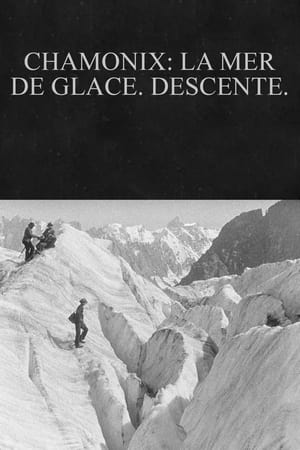
Four roped men descend through the seracs of the Mer de Glace. One of them falls and has to be hoisted. The shot belongs to a collection of scenes that were presented together as a kind of travelogue film under the title of 'Voyages animés' in a diorama pavilion in the Universal Exhibition of Paris of 1900. The mountaineering scenes in this series include four scenes in the Mer de Glace and one in the Meije glacier. These five scenes, under a minute long, are the first mountaineering images ever filmed. Several of the 'Voyages animés' scenes were included in the Lumière catalog in 1901 under the title of 'À travers la France'.
Danube upstream from Vienna, with its images of monasteries and castles. It's hard for an American to realize the age of civilization in Europe. This Burton Holmes travelogue hints at it.
1901, cinematography by Frank Ormiston-Smith
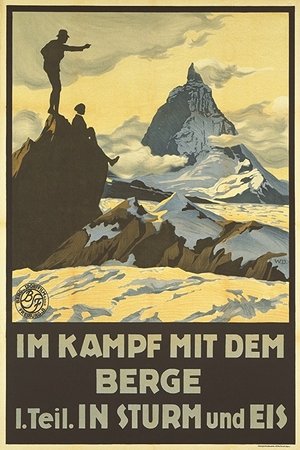
The film follows two mountain enthusiasts, battling through a glacier area in the Swiss mountains. The mountaineers are two very prominent skiers at the time, Hannes Schneider and Ilse Rohde, who climb the Lyskamm. The sublime beauty of the film is effectively staged. It pays attention both to the observation of nature and to capture the action and technical difficulty of mountaineering. This is a symphony that celebrates in images the beauty of the mountains with their majestic cloud formations and mountain vistas. It is the second film of the mountain film pioneer Arnold Fanck after his 'Das Wunder des Schneeschuhs' both filmed with the collaboration of Sepp Allgeiger. In 2013 the film was restored by the Friedrich Wilhelm Murnau Foundation and released in DVD.
1903, cinematography by Frank Ormiston-Smith
The peculiarity of this waterfall, with its narrow funnel-shaped opening, from which, on to the jagged rocks the torrent dashes, is here portrayed in all its pristine grandeur and beauty.