After the Carnation Revolution, Portugal became a democracy and opened itself to the world. One of its consequences was the spread of erotic and pornographic films. This documentary tells the story of how these films arrived at Theatro Gil Vicente, an emblematic cultural venue of Barcelos.
A behind-the-scenes look at "Viagens", one of the greatest portuguese records of the 1990s, in the year of its 20th anniversary.
"O Regresso" is a documentary featuring renowned Portuguese actor Ruy de Carvalho as he returns to Macau after a 10-year absence. Directed to mark the 10th anniversary of his visit, the film captures Ruy de Carvalho revisiting key locations across the city, reflecting on the cultural and social transformations that Macau underwent in the lead-up to its handover from Portuguese to Chinese administration in 1999. Blending personal memories with the evolving landscape, the documentary offers a nostalgic look at Macau's unique blend of Portuguese and Chinese heritage, seen through the eyes of one of Portugal’s most beloved actors.
Três Realizadoras Portuguesas
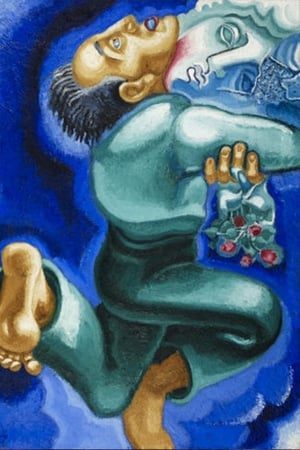
Documentary about the life and work of Mário Eloy, one of the greatest painters of the second generation of modernism in Portugal.
Synthesis of the first 110 years of the history of Portuguese cinema, made almost exclusively with archive material from the series of eight episodes History of Portuguese Cinema, produced by Pedro Efe in 1998, and combining excerpts from films with testimonies from some of the most prominent actors of the same story. It is attempted to relate it chronologically, and in spite of certain gaps, in an accessible, concise and didactic way.
Film directors with hand-held cameras went to the streets of Lisbon from April 25 to May 1, 1974, registering interviews and political events of the Portuguese "Carnation Revolution", as that period would be later known.
About the Portuguese author José Saramago, based on a long interview with the writer at his home on the island of Lanzarote, in which he analyzes his work and shares his reflection on some aspects of his personal life.
Baptismo de Terra
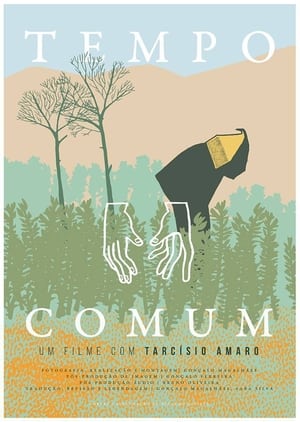
The film follows Tarcísio Amaro, a retired miner living in the vicinity of Serra da Estrela, interweaving thoughts on the past and the present, and looking at the decline of rural life in the deserted Portuguese hinterland.
A documentary that brings together interviews with 20 activists who address the issue of intersectional feminism and patriarchy in Portugal.
Three juxtaposing stories taking place in Portugal, Austria and Cuba create an intimate and poetic portrait of the daily lives and struggles of the elderly in an unstable world, seen through the eyes of their grandchildren.
This film tells the story of rap music in Almada and Miratejo, one of the first major spots of this musical genre in Portugal. Guided by the protagonists who built and lived the movement intensively, we travel through their memories, stories, and inspirations to discover the great landmarks of this culture on the south banks of the Tagus River — built in a territory of demanding and politized working classes, with great cultural diversity in the post-Carnation Revolution.
Poet, agricultural engineer and revolutionary Amílcar Cabral was born in Guinea-Bissau to Cape Verdean parents. After studying in Portugal, he emerged as the charismatic leader of the anti-colonial struggle against Portuguese rule. With his utopian ideas, he sparked a cultural and an armed uprising that went on to inspire other African liberation movements.
Images and sounds expose the duality of Portugal during the days of WW2: a peaceful, god-loving, rural country, providing an escape route for over one hundred thousand European refugees to the Americas; and a political and cultural elite that disguised their Nazi inclinations just enough to play its neutral role in international politics.
Short documentary about the town of Famalicão, in the North of Portugal.
Graça Morais – As Escolhidas
Launch of a competition, organized by the newspaper O Século, entitled Statues of Portugal.
A story with almost 100 years told by the 95 years old woman Floripes.
In 1975, Ryszard Kapuściński, a veteran Polish journalist, embarked on a seemingly suicidal road trip into the heart of the Angola's civil war. There, he witnessed once again the dirty reality of war and discovered a sense of helplessness previously unknown to him. Angola changed him forever: it was a reporter who left Poland, but it was a writer who returned…