Violence dans les Champs
An uplifting insight into the lives of seven-year-old conjoined twins, who weren’t expected to live more than a few days. Cared for by their devoted father, the girls have defied all odds.
The documentary follows oral accounts from people in the Cariri region of Paraíba and Pernambuco who have witnessed or heard stories about the "pagan baby." This refers to the practice of burying infants who were born and died before being baptized near crossroads and gateways—an old custom that was once widespread in the region. According to tradition, some people would later hear the cries of these souls and would perform improvised baptisms to help guide the child's spirit to heaven.
Searching for Life
Rockie Lynne: Where I Belong illuminates singer/songwriter/guitar virtuoso Rockie Lynne's music career, his non-profit Tribute to the Troops, his search for original family, and his work with young musicians. It's an engaging story of dedication, resilience, and redemption. Rockie's latest album "Love" reflects his belief that love is the one thing which can bring us together as people.
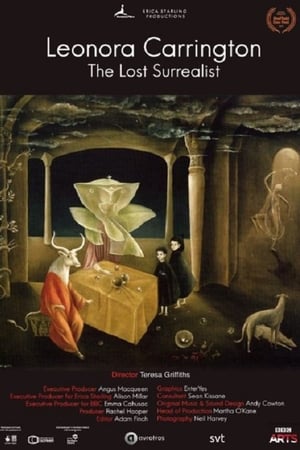
British surrealist Leonora Carrington was a key part of the surrealist movement during its heyday in Paris and yet, until recently, remained a virtual unknown in the country of her birth. This film explores her dramatic evolution from British debutante to artist in exile, living out her days in Mexico City, and takes us on a journey into her darkly strange and cinematic world.
Voices in Wartime is a 2004 documentary that explores the human experience of war through poetry. Combining interviews with soldiers, journalists, and historians, it reveals how war affects individuals and societies across time and place. The film features poets from around the world – from Homer and Wilfred Owen to Shoda Shinoe and modern writers in Iraq and Nigeria – showing how poetry expresses the pain, trauma, and truth of conflict. By linking verse with real-life accounts, Voices in Wartime highlights how poetry helps us understand the emotional and moral impact of war.
Buddhist monk and photographer Matthieu Picard as he returns to the Asian country in the Himalayas where he spent a decade after seven years away, revisiting breathtaking landscapes and experiencing local traditions.
Wittig Yes! introduces Wittig’s political, theoretical, and literary ideas through the creative collaborations with her partner Sande Zeig and a new generation of international academics and writers who articulate the foundations of her conceptual revolution. Zeig interweaves excerpts of work they developed over the years through archival film, photographs, personal notes, as well as theatrical readings. We move with them from France, to Greece, California, and Arizona. The three decades of public and private archival materials unveil Monique Wittig not only as a revolutionary writer, thinker, and activist but also as a multifaceted individual with a profound compassion for others, a deep love of nature, and an exceptional sense of humor. She leaves a legacy that continues to have an impact on our current ideas of gender and political thought.
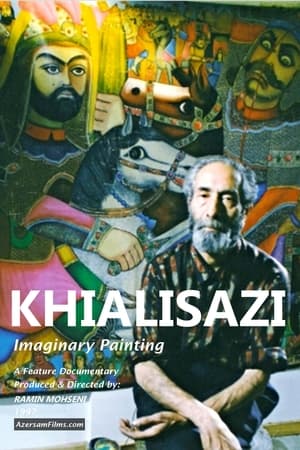
A documentary about the life and works of the maestros of Imaginary Painting School who made Iranian popular old style Khialisazi or Coffee-House Painting.
Under the pretext of fighting terrorism or crime, the major powers have embarked on a dangerous race for surveillance technologies. Facial recognition cameras, emotion detectors, citizen rating systems, autonomous drones… A security obsession that in some countries is giving rise to a new form of political regime: numerical totalitarianism. Orwell's nightmare.
In 1952, Amédée took his own life by jumping into the Seine. No one knows the reason for this tragic act. His story comes to us in bits and pieces.
From the hills of Puerto Rico to the streets of Spanish Harlem to the World Stage; José Feliciano – Behind This Guitar chronicles the sixty-year career and ‘against all odds’ life of 9-time Grammy winner and musical icon, José Feliciano.
Every New Year, and in celebration of their Independence, Haitian families gather together to feast in honor of a line of ancestors that fought for their freedom. The centerpiece of the festivity is the joumou soup—a traditional soup dating back centuries ago. The joumou soup is a concretization of war and victory, oppression and emancipation, and the deeply rooted celebratory traditions of the Haitian culture.
The 1960s opened with La Dolce Vita by Federico Fellini and its unforgettable lead: Marcello Mastroianni. The actor seemed to glide effortlessly through his roles — and through life — as if to say that life is not all that serious, or perhaps that it is far too serious not to be laughed at. But what kind of man was hiding behind the actor with the handsome, boyish looks, who appeared so gentle and nonchalant?
A short documentary capturing the experiences and feelings of staff at a Family Video rental store in Kalamazoo, Michigan on their last day of operation following the steady rise of streaming services and the final blow dealt by the pandemic.
Varda focuses her eye on gleaners: those who scour already-reaped fields for the odd potato or turnip. Her investigation leads from forgotten corners of the French countryside to off-hours at the green markets of Paris, following those who insist on finding a use for that which society has cast off, whether out of necessity or activism.
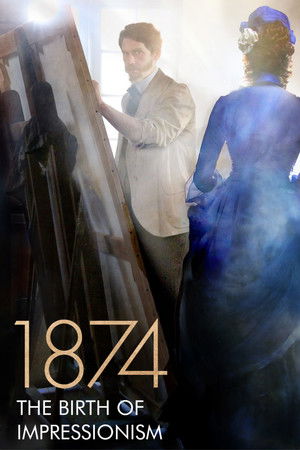
April 15, 1874, boulevard des Capucines, Paris: a group of young feverish painters shunned by the official Salon and mocked by the classical masters, chose to come together to exhibit their paintings freely, in the studio of photographer Nadar. At the end of a teeming century, when modernity was emerging, this group of rebellious artists, revolutionized the world of art.
The story of how the Satanic Panic of the 1980s was ignited by "Michelle Remembers", a memoir by psychiatrist and his patient. The book relied on recovered-memory therapy to uncover Michelle's abduction by baby-stealing Satanists.
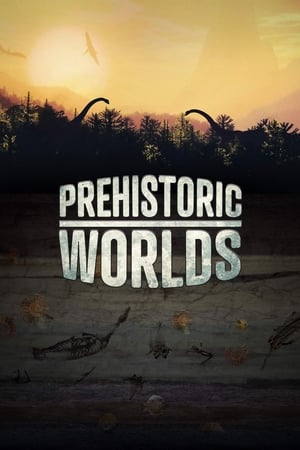
Five times, Earth has faced apocalyptic events that swept nearly all life from the face of the planet. What did these prehistoric creatures look like? What catastrophes caused their disappearance? And how did our distant ancestors survive and give rise to the world we know today?