In 2003, eight Rhode Islanders created a secret apartment inside a busy mall and lived there for four years, filming everything along the way. Far more than a prank, the secret apartment became a deeply meaningful place for all involved.
We look first at Westminster Abbey and the Towers of Parliament. And the sight-seeing only starts there as it continues to all the famous buildings of London.
In a quiet Rajasthani village, young Ali clings to his cricket bat as his friends chase it. What starts as playful mischief reveals a film crew struggling to finish their shoot, blurring childhood and the fragile magic of cinema.
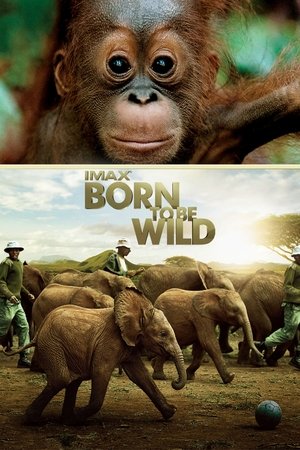
Born to Be Wild observes various orphaned jungle animals and their day-to-day behavioural interactions with the individuals who rescue them and raise them to adulthood. The film unfurls in two separate geographic spheres. Half of it takes place in the rain forests of Borneo, where celebrated primatologist Dr. Birute Galdikas assists baby orangutans; the other half takes place on the arid savannahs of Kenya, where zoologist Dame Daphne Sheldrick works with baby elephant calves.
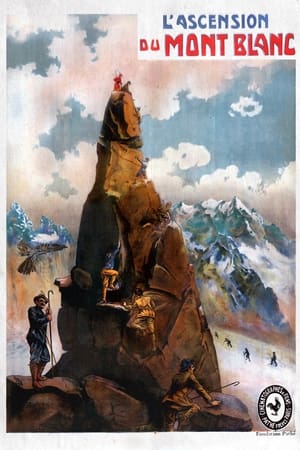
Joseph Vallot and his team of guides and porters climb Mont Blanc in 1906. Their ascent will take three days. They spent their nights at the Grands Mulets refuge and the Grand Plateau refuge. This is the very first successfully filmed ascent. Joseph Vallot (1854-1925), rich heir of Lodève in Occitania. He devotes part of his fortune to the observation of the Alps, sometimes opposing the scientific community. He built an observatory, still standing today.
Making of the cinematographic shooting of "Premier de cordée" directed by Louis Daquin in the Mont-Blanc massif. In 1943. Alain Pol films the risky adventure of filming in the high mountains with a team of seventy people. The images of the making-of reveal the technical constraints encountered by the actors and technicians: falling rocks, crossing glaciers and long approach walks at altitude to the filming locations. Six actors and technicians will also be injured and the main role - that of Pierre - will be reassigned to André Le Gall following a bad fall by Roger Pigaut.
On September 28th, 1903, the Urban Mountaineering Expedition, headed by Frank Ormiston-Smith, left Zermatt to attempt the conquest of the Matterhorn. On the 29th, the conquest was completed by the filming of the panorama from the actual summit of the mountain. The film consists of 20 scenes and illustrates the whole ascent from Zermatt through the Hornli Ridge. A copy of the film was found in Zermatt in 1953 and was was erroneously attributed to Frederick Burlingham and dated 1901. Since then, the film has been widely publicized as the first mountain film under the title of 'Cervin 1901', but this is incorrect. Ormiston previously had made 'Alpine series' (1901), 'The ascent of Mont Blanc' (1902), 'Climbing the Great Schreckhorn' (1902) and 'Ascent of the Jungfrau' (1903). The pictures and descriptions of the Charles Urban Trading 1903 film catalogue show without any doubt that 'Ascent of the Matterhorn' and 'Cervin 1901' are the same film.
At the eastern end of Seoul, in a huge apartment complex, it has long been a paradise for cats and people to run around and give love and joy together. However, there are people who are worried about cats who are not leaving the place which will be demolished soon, ahead of reconstruction. "I want to ask. Do you want to keep living here?" For the happy farewell of cats and people, a beautiful struggle begins!
Land and Housing
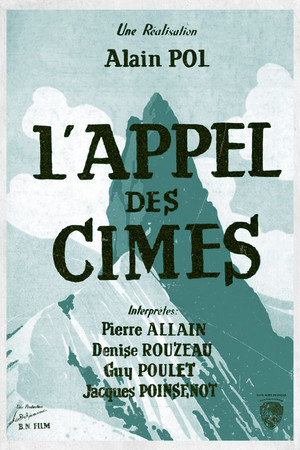
L'Appel Des Cimes, directed by Alain Pol, is a documentary commissioned by the CAF and the various French ministries on the practice of post-war mountaineering. In 1946, climbers trained at the Fontainebleau Climbing School. Guy Poulet and Jacques Poincenot try to climb the Aiguilles de Chamonix but fail during the climbing phase. After a night in a refuge with Denise Rouzeau and the guide Pierre Allain, the mountaineers make a new attempt. Successful demonstration for those who continued the approach walk then the passage of the seracs of the glacier. On the rock, the roped party crosses a chimney and a crack to reach the summit and abseil down. Led by high mountain scouts, Guy and Jacques rediscover the glaciers and needles of the Mont-Blanc massif during the next lesson.
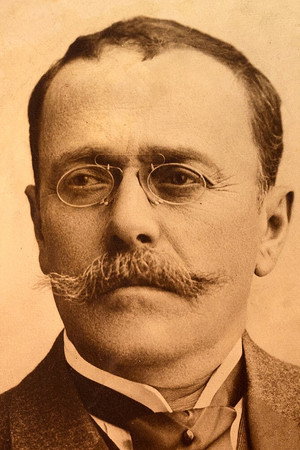
A documentary about classic Romanian playwright Ion Luca Caragiale's time of exile in Berlin, Germany.
Twins Abraham and Shraga are prisoners of all the dreck piled high around their Brooklyn apartment - until concerned neighbors intercede.
Produced by Burton Holmes. Released on June 8th, 1919.
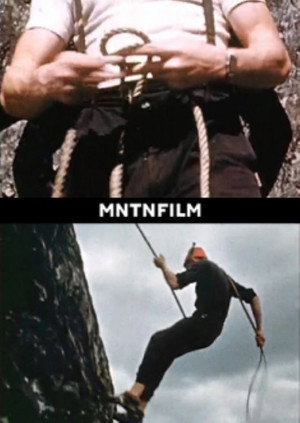
An ascent of 'The Tooth' via the South-east Face. The film was made by Burge Bickford and Lyman Boyer. It features Jim Crooks leading Fred Beckey on a rock climbing ascent of the southeast face of The Tooth, near Snoqualmie Pass, Washington. At the summit, the climbers find a brass tube with a Mountaineers register book inside. Illustrates Cascade Mountains climbing just before World War II. The leader never places any protection such as pitons or slings. The film focuses on the climbers' hand and foot work intermixed with mountain views.
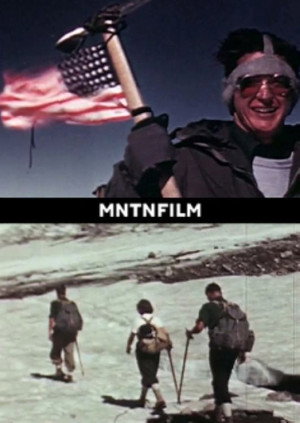
An early silent color film of Glacier National Park and Mount Rainier. The film is part of the 'Our Colorful World' series, produced by Bell & Howell. It shows a drive up to the Logan Pass in Glacier National Park, and a two-day ascent to Mount Rainier through Nisqually Glacier by two men and a woman. This Filmosound Library series produced in the early 1940s initially included thirty-seven single reels, for the most part silent, bringing beauty spots and wildlife of America and the world to the school screen in full natural color.
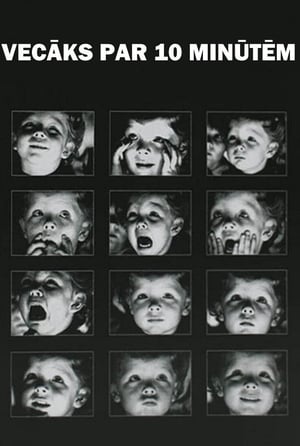
In this ten-minute documentary experiment, director Herz Frank films a group of children watching a puppet show, keeping the camera fixed on their faces in a single continuous shot. The performance itself remains unseen, while the children’s shifting expressions—fear, laughter, curiosity, and suspense—suggest the story unfolding before them as ten minutes of their lives quietly pass.
"Flammes de Pierre" is the first documentary made by Gaston Rébuffat himself in 1947. It depicts Rébuffat in full ascent of the Flammes De Pierre, wild ridges in the heart of the Mont Blanc massif overlooking Chamonix. Like Roger Frison-Roche, Walter Bonatti, René Desmaison or Giusto Gervasutti, Gaston Rébuffat has written and filmed the great pages of contemporary mountaineering but above all, he knew how to talk about it with enough poetry so that it is not simply airtight race stories for spectators. Stories that have been triggers for many readers, who have come to know “stone flames” thanks to him.
Jean des Bossons is a documentary-fiction which recounts the activities of a high mountain guide in 1947. Around Chamonix Mont-Blanc, the guide Jean des Bossons, interpreter by the mountaineer Armand Charlet, accompanies on mountain hikes, Jean-Pierre, an apprentice guide. The novice, skis on the shoulder, is already clumsy. The professional taught him how to travel on skis uphill and downhill, then mountaineering in ice and rock parishes. By dint of training, Jean-Pierre has made it his job. Guides are also lifeguards. A group went to a glacier to rescue a man who had fallen into a crevasse. During this rescue, Jean des Bossons is the victim of an accident. A drama that prevents him from practicing the profession, but not climbing. The man sinks into the fog and Jean-Pierre cannot find him.
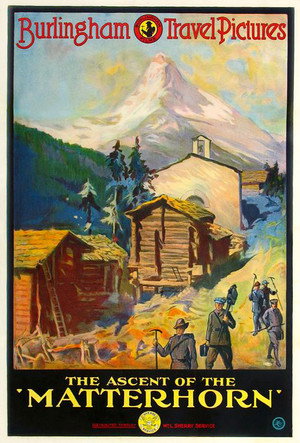
The ascent of the Matterhorn by the Hornli Ridge, filmed in July 1913 by Frederick Burlingham. The team, composed of Burlingham and four mountain guides from Zermatt, carried the 15-kilo camera and the 10-kilo tripod to the top the mountain to film the summit of the Matterhorn. Frederick Burlingham, known at the time as 'The man who kinomatographed the Matterhorn', was a traveller cinematographer and one of the mountain film pioneers. Continuing the mountain film tradition established by Ormiston-Smith, Burlingham filmed several mountaineering films largely in Switzerland, taking mountain film in a new direction of immediacy and perceived peril.
A lyrical portrait of Amsterdam and its changing appearance during a rain-shower.