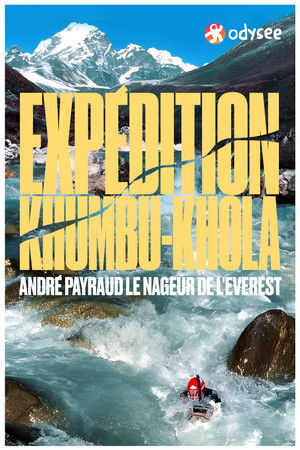
André Payraud, a pioneer and specialist in torrents and raging rivers, is nicknamed "the highest swimmer in the world." In October 1999, after the great monsoon, he swam down the Khumbu-Khola, a torrent that originates at 4,807 meters at the foot of Mount Everest, over five days. Furthermore, André Payraud wanted to connect with the people and culture of Nepal.
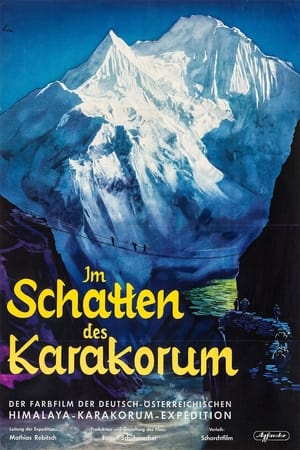
In 1954, a German-Austrian expedition led by Mathias Rebitsch set off for the difficult-to-access Karakoram Mountains, geographically north of the Himalayas. They come across the Hunza, a people who live in the valley of the same name and believe they are descended from the soldiers of Alexander the Great. The documentary conveys impressions of the poor life of the Hunza people, the harvest, a court hearing, festivals and the children's everyday school life. Finally, the expedition sets off again and sets up its main camp on the moraine ridge of a glacier, where they measure the glacier and the earth's magnetic field. Finally, some men from the research community set off for a sub-peak of Batura.
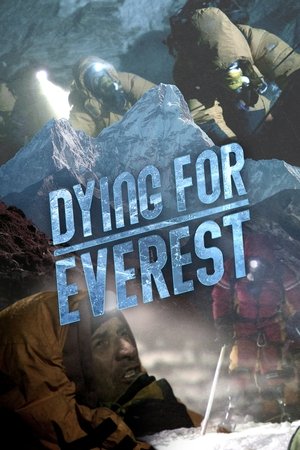
On 15 May, 2006, double amputee Mark Inglis reached the summit of Mt Everest. It was a remarkable achievement and Inglis was feted by press and public alike. But only a few days later he was plunged into a storm of controversy when it was learned that he had passed an incapacitated climber, Englishman David Sharp, leaving him to a lonely end high in the Death Zone.
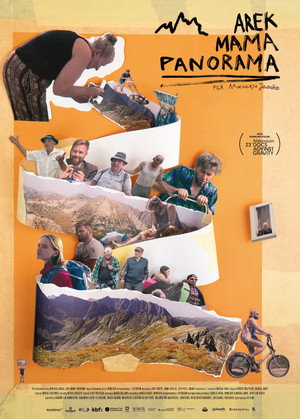
An overprotective mum, a taciturn dad and a creative crisis? Arek Pasożyt really has his work cut out for him! In search of inspiration, he heads off to the Tatra Mountains. There, he stumbles upon a clue leading to the Panorama of the Tatras — the largest painting in Polish history, which went missing 130 years ago. Arek decides to find it.
In this documentary, Bear Grylls takes us on a journey through the most extreme version of the world's highest and most legendary peak: Mount Everest. Several leading figures in mountaineering and extreme sports, for whom a standard ascent is no longer enough, transform Everest into a laboratory for extreme challenges. Told through archival footage and reenactments, this elite group seeks new forms of performance, attempting to ski the slopes, snowboard down them, hang-glide or paraglide above the summit ridge, open new routes on more technical and exposed faces, and break climbing records. The documentary also highlights the essential role of the Sherpas, the colossal logistics behind each attempt, the explosion of commercial expeditions, and the moral debate surrounding the ever-increasing risks involved in breaking records or achieving unprecedented feats.
Physical endurance meets the resilience of the human spirit. Sally Orange MBE is taking her mental health message to the highest marathon in the world. Having faced the uphill battle of cancer recovery, Sally shares the essential tools and wisdom she used to find strength in the wild. Alongside a community of survivors and experts, she shows us that no matter how steep the challenge, nature provides a way up.
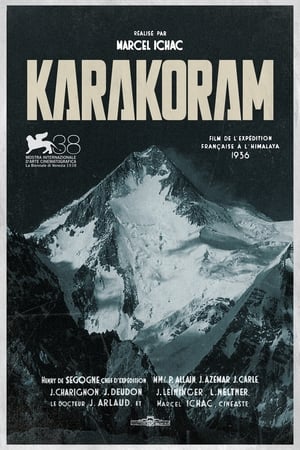
Account of the first French expedition to the Himalayas, which attempted to climb the hidden peak (Gasherbrum I) in 1936, from the preparations for the trip to the end of the ascent. After a long approach walk through quasi-desert regions, then on a huge glacier, the caravan of 700 porters arrives at the foot of Hidden Peak. The expedition was led by Henry de Ségogne, with Jean Charignon, Pierre Allain, Raymond Leininger, Jean Carle, Jean Deudon, Louis Neltner, Jacques Azémar, doctor Jeand Arlaud and director Marcel Ichac. Weather conditions, logistical problems and a strike among Sherpas forced the team to retire at 6900m on the south face. The film received the Silver Lion at the Venice Film Festival in 1938.
Nestled in a mountainous rainforest in Alaska is the town of Whittier, where nearly the entire population lives in a single apartment building. They bring new meaning to the idea of getting along with your neighbor.
Cœurs d'athlètes
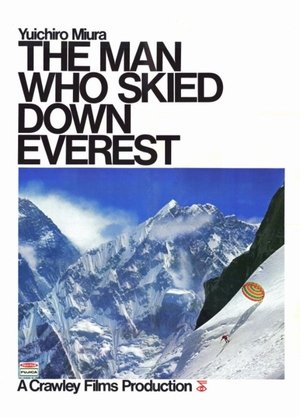
This Oscar-winning documentary tells the story behind Japanese daredevil Yuichiro Miura's 1970 effort to ski down the world's tallest mountain.
The French High Mountain Military Group (G.M.H.M.) expedition to Everest in 1981, led by General Pierre Astorg, took place on the north face of the mountain. Fifteen military climbers participated in this expedition, which lasted approximately ninety days. Their goal was to reach the summit by following a siege approach, but despite their efforts, the expedition failed to reach the summit. The French military, engaged since the beginning of March on the north face of Everest (8,848 meters), gave up less than 300 meters from the summit. The climbers, Jean-Claude Mosca, Hervé Sachetat, and Hubert Giot, gave up on setting up Camp 7, the last planned intermediate camp, at 8,600 meters. Poor weather conditions and the physical condition of the expedition members were the reasons for the failure of this meticulously prepared expedition...
Making of the cinematographic shooting of "Premier de cordée" directed by Louis Daquin in the Mont-Blanc massif. In 1943. Alain Pol films the risky adventure of filming in the high mountains with a team of seventy people. The images of the making-of reveal the technical constraints encountered by the actors and technicians: falling rocks, crossing glaciers and long approach walks at altitude to the filming locations. Six actors and technicians will also be injured and the main role - that of Pierre - will be reassigned to André Le Gall following a bad fall by Roger Pigaut.
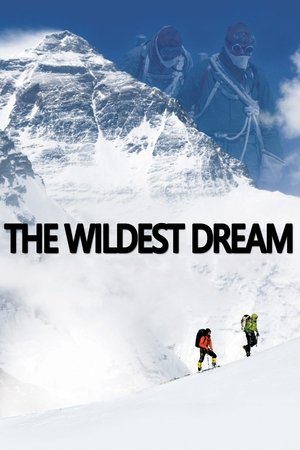
Uses astonishing visuals to tell the intersecting stories of George Mallory, the first man to attempt a summit of Mount Everest, and Conrad Anker, the mountaineer who finds Mallory's frozen remains 75 years later.
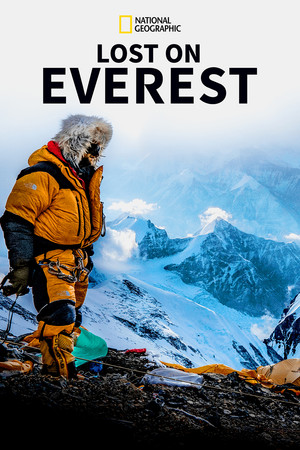
Reaching 29,029 feet, Mount Everest has long captivated mountaineers of all stripes. But a peak that draws athletes and mountaineers to new heights isn’t without danger — or a dark side. Perhaps the peak’s greatest mystery is the missing body of Andrew “Sandy” Irvine who disappeared alongside George Leigh Mallory in 1924 just 800 vertical feet from the summit. In Lost on Everest, we follow along as a team of elite climbers with new intel on the location of his missing body set out to solve what may be mountaineering’s great mystery. Along with the body, the team hopes to find Irvine’s camera and the footage that could rewrite history.
With Olin's 85-year-old father as guide, we experience Norway's most adventurous valley, Oldedalen in Nordfjord. He grew up here, and here generations before him have lived in balance with nature.
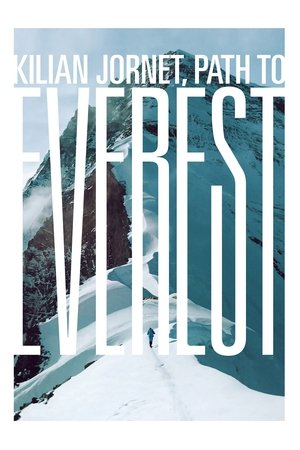
Surrounded by the mountains and people who are his inspiration, in ‘Path to Everest’, the mountain athlete Kilian Jornet reveals his most intimate fears, contradictions and passions. Summits of My Life is the personal project of Kilian Jornet, in which for five years he has traveled to some of the most important peaks of the planet to try to establish FKT (fastest known time) of ascent and descent of some of the most emblematic mountains of the world. The project is closely linked to values and a way of understanding the purist and minimalist mountain. The experiences lived in each challenge have been captured in different films.
The Guinness World of Records contains the most bizarre human achievements imaginable. But who are the crazy people behind the feats? From the grape catchers, to the hula hoopers and the ‘jogglers’, this humorous, but strikingly insightful documentary introduces us to the colourful characters who devote their lives to the oddest frontiers of human excellence. A delightfully eccentric human odyssey that is not to be missed.
Although technology continues to evolve, a group of die-hard gamers refuses to abandon the classic arcade games of yesteryear. The 80's live on for these enthusiasts, who compete against each other and history to record the world's highest scores. Portland gamer Bill Carlton is one of the most brazen, fearlessly taking on some of the toughest records on the books. HIGH SCORE follows Bill as he attempts to take down the Atari classic Missile Command and its twenty year-old record. To get the 80 million points he'll have to play the game on one quarter for over two days straight. There is no pause button. There will be no sleep. There can only be one victor in this classic story of Man versus Missile Command.
In 1924, British climber George Mallory and his partner Andrew Irvine attempted to conquer Everest for the third time. They never returned. Could they have been the first to successfully climb the mountain before meeting their deaths? In 1999, German geologist Jochen Hemmleb discovered Mallory's body just below the summit, reigniting speculation. In 2010, he organized a new expedition to follow up on this sensational discovery. His goal: to find the base camp from which Mallory and Irvine set out to conquer the summit.
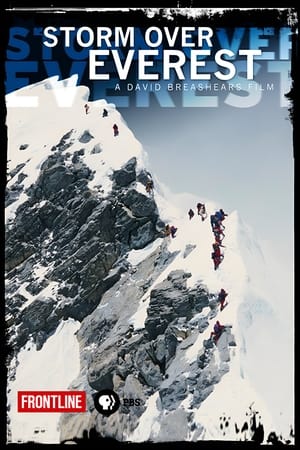
As darkness fell on May 10, 1996, a fast moving storm of unimaginable ferocity trapped three climbing teams high on the slopes of Mount Everest. The climbers, exhausted from their summit climb, were soon lost in darkness, in a fierce blizzard, far from the safety of High Camp at 26,000 feet. World-renowned climber and filmmaker David Breashears, who aided the rescue efforts back in 1996, now returns to Everest to tell the fuller story of what really happened on that legendary climb. Through remarkably intimate interviews with the climbers and Sherpas many who have never spoken before on American television Breashears sheds new light on the worst climbing tragedy in Mount Everest s history.