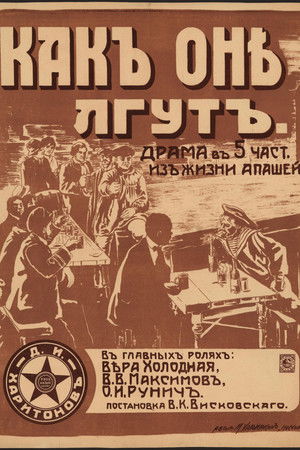
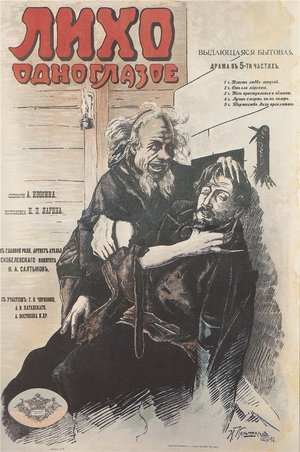
A miner's happiness is destroyed when a rival steals his mine. He becomes obsessed with revenge, and plans a trap for the man who took his mine.
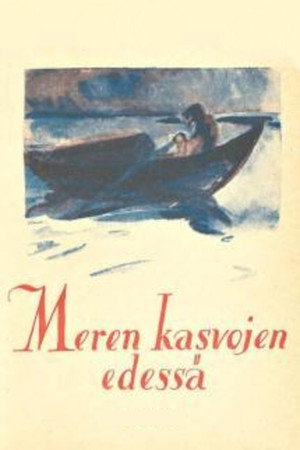
Anna-Liisa carries a secret. Three years ago she killed the baby she had with Mikko, the old hired hand of Kortesuo. Now she's marrying Johannes, when suddenly Mikko comes back.
Student Raskolnikow, who has written an article about laws and crime, proposing the thesis that un-ordinary people can commit crimes if their actions are necessary for the benefit of mankind, murders an old woman, who operates a crooked loaning house, as well as her sister, who made the mistake of visiting her at the wrong time. He is suspected of the crime, but somebody else confesses to the murder.
Charlie, a backpacker, is walking through the bushes with a pen and notebook in his hand. He sways with the rustling of the trees as the music plays in his ears. While walking he sees a lady, Anna, a teenager, swimming in the river. That river became their meeting place and they easily became friends. But Anna’s father, Mang Berting, prohibited Charlie from coming to the river and even threatened him. How far will Anna and Charlie’s friendship go?
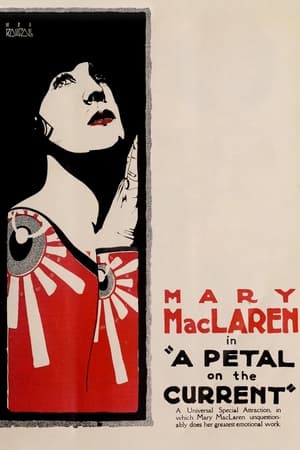
An insecure wife fears her husband may be straying back to an old flame.
Harry Yquem buys his beloved wife some jewelry in a place where underworld middlemen trade in fake and stolen goods. By chance, he spots a man with whom his wife had an affair in the past.
The Black Death is ravaging Spain. As Camille Saint-Saëns's "Danse Macabre" plays on the soundtrack, a mix of animation and acted scenes tells the story of Youth and Love meeting one night. They dance, embrace, and kiss. As the night wears on, exuberant Death, a skeletal figure with a violin, pursues the couple. They try to elude him. Eventually, Love swoons. Youth is powerless to protect her. Is she doomed?
After Ingeborg Holm's husband becomes sick and dies, the family's small grocery store fails, Ingeborg becomes bankrupt, and she is forced to move to the workhouse. Her three children go to foster homes. Ingeborg simply must see them again.
It's early autumn and Dr. Headley eagerly demonstrates what seems to be a miraculous cure for tuberculosis. Not far from where he is working, the disease seems preparing to soon claim yet another life, a teenage girl named Winifred. Winifred's mother and little sister Trixie are devastated. When Trixie hears the family doctor say of Winifred that "when the last leaf falls, she will have passed away," she interprets the doctor's words literally. Thinking over what she has heard, she determines to do everything possible to save her sister.
A student comes up with various schemes to avoid paying a tailor the money he owes him. Considered to be a lost film.
A young couple jump into the sea as part of a suicide pact. The man is rescued and subsequently discovers that his lover is also alive and working in a dance hall. Considered to be a lost film.
A man is framed for the murder of his uncle, a bank president, and sentenced to hang. His sister and a mail clerk who's helping her discover information that may clear him, but they have to get to the governor in time to present their new evidence and get a stay of execution.
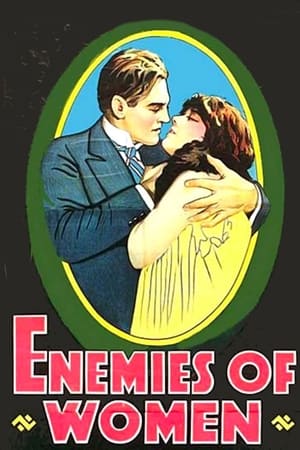
A Jewish parvenu climbs the social ladder by seducing wealthy women.
A man peeping through a keyhole at an attractive young woman gets his comeuppance. This film, presumed lost, is often mistaken for Ferdinand Zecca's "What Is Seen Through a Keyhole" (1901).
A six-year-old boy in pre-hippie 1960s United States endures ridicule from his schoolmates and worry from his father over his fixation with a TV star named Dottie.
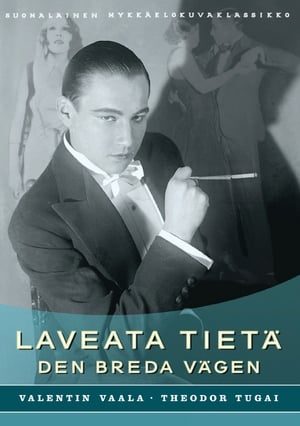
Niilo, a son of a rich estate owner, is in love with a poor crofter's adopted daughter Heleena. However, on his father's orders, Niilo instead becomes engaged to Loviisa, a daughter of a wealthy landowner. When Niilo wants to call off the engagement, his proud and rejected bride begins to interfere with the lovers' relationship with the help of Penttula, who is said to be able to perform miracles.
The daughter of a wealthy industrialist falls for a pickpocket.
"This beautiful example of far-fetched blasphemy accompanies a happy, ugly nun into the woods for her constitutional, replete with charming bird noises. Praying to and fondling a priapic mushroom, she is unaware of the evil rapist shadowing her. When the rape occurs, it is in long shot, hidden from view, under a huge tree. Articles of clothes and her cross sail through the air; the tree - entirely dominating the screen - sways rhythmically and repeatedly. A few minutes later it stops; then another tree, a few feet away, begins to sway in identical fashion. The rapist finally emerges, exhausted." (Amos Vogel, Film as a Subversive Art)
A short silent movie based on the tale Little Red Riding Hood.
“Interior of Barber Shop. Man comes in, takes off his coat; sits down, smokes; is handed a paper by attendant, who points out a joke; both laugh. Meantime the man in the chair is shaved and has his hair cut. Very funny.” (Edison's Latest Wonders, 1894)