At the start of the First World War, in the middle of Africa’s nowhere, a gin soaked riverboat captain is persuaded by a strong-willed missionary to go down river and face-off a German warship.
Ferraty
Tom Whitney, well connected but a social derelict because of his weakness for drink, is released from the draft because of an old football Injury, but a policeman persuades him that he can still do his bit in the shipyards. He takes a job in the yard owned by the man to whose daughter he was engaged in happier times. Three German propagandists seek to foment a strike to delay the work, and largely through Tom's efforts the plan goes amiss and the strike is called off. Rehabilitated by work, the launching of The Liberty is a forecast of his own rebirth.
Le Baron et l'Empereur : Japon, la voie de la guerre
World War I has left golfer Rannulph Junuh a poker-playing alcoholic, his perfect swing gone. Now, however, he needs to get it back to play in a tournament to save the financially ravaged golf course of a long-ago sweetheart. Help arrives in the form of mysterious caddy Bagger Vance.
In early 20th-century Montana, Col. William Ludlow lives on a ranch in the wilderness with his sons, Alfred, Tristan, and Samuel. Eventually, the unconventional but close-knit family are bound by loyalty, tested by war, and torn apart by love, as told over the course of several decades in this epic saga.
In 1917, the First World War is raging. Julien is from Luxemburg, so instead of having to go to war he studies piano in Paris. One day his friend Jacques, also a musician and now a fighter pilot on the front, invites him to spend a few days in his family's empty house in Bray. The housekeeper, a beautiful stoic woman lets Julien in, but his friend is late and he is obliged to wait. In the meantime, he starts reminiscing of the pre-war days spent with his friend and Jacques' girlfriend Odile.
Vladimir Ilyich Ulyanov, better known as Lenin, is remembered as the instigator of the October Revolution of 1917 and, therefore, as one of the men who changed the shape of the world at that time and forever, but perhaps the actual events happened in a way different from that narrated in the history books…
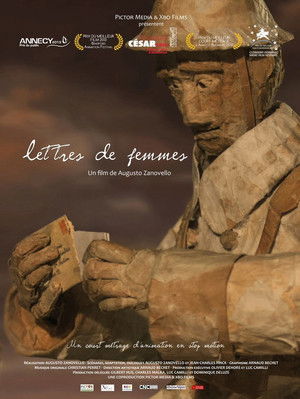
LETTERS, a dramatic historical fiction written by Mrs. Evelyn Merritt in 2010, tells the story of U.S. soldiers and their loved ones through their correspondence beginning with the Civil War and ending with the War in Iraq. Sahuarita High School students adapted the Readers’ Theatre play into a movie, reasoning the student actors would be kept safe from Covid-19 by filming them individually, and afterward the footage could be reassembled into a screenplay following the original dialogue.
Based on the true story of the Bandō prisoner-of-war camp in World War I. It depicts the friendship of the German POWs with the director of the camp and local residents at the stage of Naruto, Tokushima Prefecture, in Japan.
Lea Lyon, the daughter of a rabbi, lives happily with her father in their Gulicinu village, but there are rumblings of war. Soon, the village is overrun with the Imperial troops of the Russian Czar, with Constantine in Imperial command. He is attracted by the beauty of Lea and commands her to come to his quarters. She refuses and he is outraged. He orders the townspeople barred behind their doors and the village burned. Though she loves her honor above everything else, she can not bear to see the villagers suffer, and makes the lonely walk through the village to the Inn.
Lieutenant Lukáš was transferred to the marching battalion in České Budějovice together with Švejko. On the way, Švejk makes Lukáš uncomfortable with a bald superior, a passenger in civilian clothes, and then because of pulling the handbrake, he is removed from the train and brought to the station master. The fine for Švejk will be paid by one lucky man, for whom Švejk's stopping of the train catapulted his beloved woman directly into his arms. Švejk goes to Budějovice on foot. His journey is full of humorous incidents. After arriving at the barracks, the regiment with Švejk and Lukáš is soon sent to Hungary, where Lukáš has an adventure with Mrs. Kakonyová. Eventually, the unit including Švejk arrives all the way to the Russian front. (According to the period label.)
Directed by Svatopluk Innemann.
The first World War is in its third year and aerial combat above the Western Front is consuming the nation's favored children at an appalling rate. By early 1917, the average life-span of a British pilot is less than a fortnight. Such losses place a fearsome strain on Gresham, commanding officer of the squadron. Aces High recreates the early days of the Royal Flying Corps with some magnificently staged aerial battles, and sensitive direction presents a moving portrayal of the futilities of war.
Alfred Carlton Gilbert invented the Erector Set and is trying to get it onto the toy shelves of the country. A.C. is startled to be summoned to the White House, where top officials ask him to convert the toy factory into a weapons manufacturing company for the duration of the war. "No" is really not an option, for fear of being labeled unpatriotic so the switch is made. Later, government officials ask A.C. to be their spokesman for a campaign to avoid "toy giving" for the coming holidays and buy war bonds instead. With a young son himself, who looks forward to Christmas like any other child, what will A.C. do this time?
The story begins in 1917 with Stan and Ollie being drafted into the U.S. Army to fight in World War I. While in the Army, the pair befriend a man named Eddie Smith, who is killed by the enemy during a battle. After the war is over, Stan and Ollie venture to New York City, where they begin a quest to reunite Eddie's little daughter with her rightful family. The task proves both monumental and problematic as the boys discover just how many people in New York have the last name Smith.
This educational film was compiled from original footage from 1917. It shows, among other things, guns, troop transports in the port of Libau and a bombardment of the Russian coastal batteries on Ösel with on-board artillery.
At the end of the Great War, a soldier burdened with informing a mother of her son's death, faces an impossible decision... Tell her a noble lie, or the horrible truth?
In northern Finland in the fall of 1916, Saima Niva rescues a man drifting in the river, who turns out to be a German lieutenant Braun. Braun and his six comrades have managed to escape the prisoner of war at the Muurmann railway station, but the lieutenant has had to get rid of the lost group. While Braun is recovering, under the good care of Saima, Niva's neighbor and henchman of the gendarmes, the greedy policeman Simpura, gets a tip about the refugees camped in the desert.
Her father does everything he can to help Gül, who is confined to a wheelchair as a result of a traffic accident, to walk again. The only way for Gül to walk again is to give birth and go through shock. Gül's father makes an agreement with lawyer Ali for him to become Gül's husband. Orhan, Gül's father's secretary, also plans to marry Gül in order to inherit her fortune. Gül and Ali's happiness will not last as long as they had planned.