The collapse of the bridge was recorded on film by Barney Elliott, owner of a local camera shop. The film shows Leonard Coatsworth leaving the bridge after exiting his car. In 1998, The Tacoma Narrows Bridge Collapse was selected for preservation in the United States National Film Registry by the Library of Congress as being culturally, historically, or aesthetically significant. This footage is still shown to engineering, architecture, and physics students as a cautionary tale. Elliott's original film of the construction and collapse of the bridge was shot at 16 frames a second, on 16mm Kodachrome film, but most copies in circulation are in black and white because newsreels of the day copied the film onto 35 mm black-and-white stock (not to mention, often showed the film at the wrong speed).
A short film which retells the story of Jesus Christ's death and resurrection.
The dive sites around Phuket are among the most fascinating in the world. Colourful coral reefs, puffer fish and turtles are among the extraordinary sea dwellers living in an 85 meter-long sunken ferry. These 3D dives in paradise make a spectacular highlight. Experience a unique underwater tank dive with sharks at Siam aquatic World in Bangkok. For anyone who meets the three half-meter-long sand tiger sharks in this way, their experience is never to be forgotten.
A captivating documentary following a young polar bear venturing on his first solo journey across the Canadian Arctic during the summer thaw. As the ice disappears, he must adapt to a challenging landscape without the one thing polar bears depend on most: sea ice. With stunning cinematography and heartfelt narration, this film offers a rare glimpse into the resilience and struggle of polar bears facing a rapidly changing climate.
The story begins in a Russian sauna where very buff naked cadets fan birch branches on each other to stimulate their circulation. The story is of a seduction of a Russian soldier that may or may not go well.
Meet Ralph Whittington, who amassed one of the largest private collections of pornography ever. His collection can now be seen and studied at the Museum of Sex in New York City. Produced by Jeff Krulik. Premiered at AFI Theater, Kennedy Center, Washington DC as part of the I QUIT MY DAY JOB FILM FESTIVAL in 1996. –JK
Tips for students giving their first speech.
A short documentary on gender parity in politics. In a few minutes, alternating interviews with French personalities and theorists (Geneviève Fraisse, Françoise Gaspard, Laurence Parisot) and archive footage, this film mischievously tackles gender disparities in French politics. It was produced for the Canadian international program The 5 Minutes Project.
Trevor spends a week away from home to spend some time writing and hiking.
This documentary about the 70s porn legend attempts to verify his existence as there are practically no Asian male porn stars in the history of American adult cinema. Dick Ho was so well endowed that rumors arose of a conspiracy within the porn industry to eliminate any knowledge of his existence. Includes alleged film footage and testimonials from porn veterans.
This film was made by Bass' company as a presentation to AT&T executives. It would have extended to be shown to the public, but a number of his ideas in the film were not ultimately adopted, like his phone booth designs, and men's and women's uniforms. But a great many of the design were adopted—including, most memorably, the telephone vans and hardhat designs of the 1970s. Bass designed down to the details, showcasing in this film a myriad of ideas, like Yellow Pages book designs, cufflinks for executives, and flags. (AT&T Archives)
Images of the Church of the Sagrada Familia by Antoni Gaudí confronted with brief flashes of housing projects and industrial areas. The furious display of a effervescent imagination is opposed to a grey functionality.
The Palestinian Film Archive contained over 100 films showing the daily life and struggle of the Palestinian people. It was lost in the Israeli siege of Beirut in 1982. Here interviewees describe from memory key moments from the history of Palestinian cinema. These scenes are drawn and animated. Where film survives, the artist’s impressions are corroborated. This is a film about reconstruction and the idea that cinema is an expression of cultural identity – that cinema fuels memory.
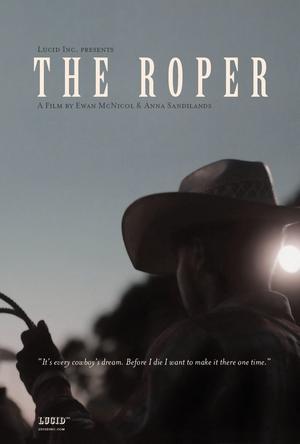
The Roper is the true short story of Kendrick, a young calf roper in Lafayette who dreams of one day making it to the rodeo national championship in Las Vegas.
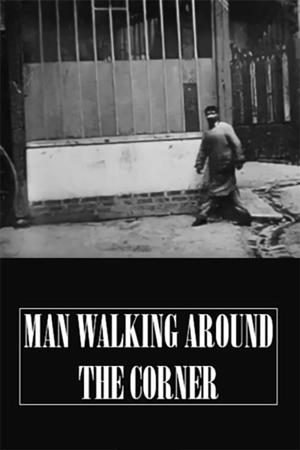
The last remaining production of Le Prince's LPCC Type-16 (16-lens camera) is part of a gelatine film shot in 32 images/second, and pictures a man walking around a corner. Le Prince, who was in Leeds (UK) at that time, sent these images to his wife in New York City in a letter dated 18 August 1887.
Lee Martin, one of the cowboy stars in 'Buffalo Bill's Wild West', rides a bronco as a crowd looks on. While the horse is trying to throw Martin off its back, another cowboy stands on top of a fence rail and occasionally fires his six-shooter, to spur on both horse and rider.
In the background, five fans lean on the ropes looking into the ring. The referee is to the left; like the fans, he hardly moves as two fighters swing roundhouse blows at each other. Mike Leonard, in white trunks, is the aggressor; in black, Jack Cushing stands near the edge of the ring, warily pawing the air as Leonard comes at him. A couple of punches land, but the fighters maintain their upright postures.
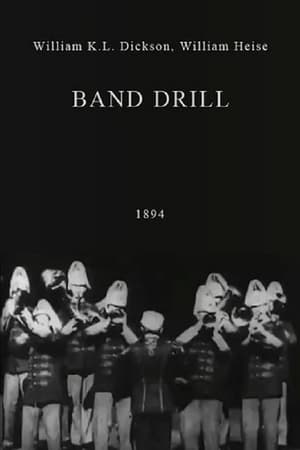
A scene from Charles Hoyt's 'A Milk White Flag': A brass band marches out, led by bandmaster Steele Ayers. When Ayers reaches his position, he turns around and directs the musicians as they take up their own positions.
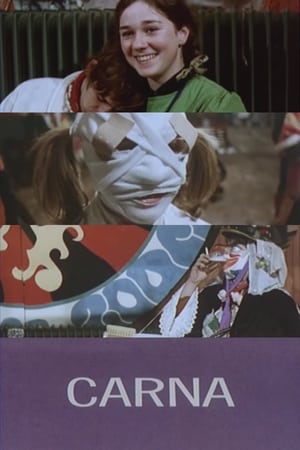
Although it was actually an impersonal commissioned film, the director's style is clearly recognizable. Once again he manages to make something that is normal very strange: the dancing people in costumes are filmed in such a way that they look bizarre and absurd. Jan de Bont's camerawork shows a series of color images of dancing people, edited to the rhythm of the music. Halfway through the film, a lonely clown can be seen among the dancing crowd, accompanied by sad music. This clown is played by Ditvoorst himself.
1909, cinematography by Frank Ormiston-Smith.