Professor Owl gives a lecture on the evolution of Western musical instruments, starting with the advent of rudimentary brass, woodwind, string and percussion instruments by ancient cave dwellers at the dawn of history.
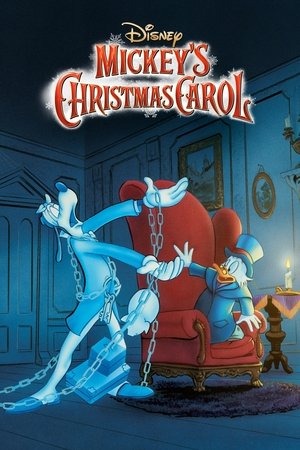
On a dark and stormy night, four bored ghosts decide to have some fun by calling the Ajax Ghost Exterminators.
In this clever satire of toxic men, a cartoon pickup artist is violently torn apart by the women he targets, seen only through his own one-sided, ridiculously misogynistic point of view. Don Hertzfeldt's first student film, he plays the part of a mentally unwell animator who's losing his grip within his own movie; an idea he'd later revisit in other early "meta" shorts "Genre" and "Rejected". Despite being produced at the age of 18 and not intended for exhibition, HBO named it "The World's Funniest Cartoon" in 1998.
In Don Hertzfeldt's second student film, a hapless cartoon character is dragged through a spectrum of cinematic situations by his frustrated animator.
Lily and Jim are interviewed about their disastrous blind date.
Evolution on Earth over the course of a billion years.
A magical tale of friendship and loneliness, which tells the story of a little boy who one day finds a penguin on his doorstep. Although at first he is unsure what to do, the boy becomes determined to help the penguin find his way back home... even if that means rowing all the way to the South Pole!
Scrat tries to finish his rather large collection of acorns when things start going nutty.
Follow a day of the life of Big Buck Bunny when he meets three bullying rodents: Frank, Rinky, and Gamera. The rodents amuse themselves by harassing helpless creatures by throwing fruits, nuts and rocks at them. After the deaths of two of Bunny's favorite butterflies, and an offensive attack on Bunny himself, Bunny sets aside his gentle nature and orchestrates a complex plan for revenge.
A man is trapped in a sinister flat, where nothing seems to obey the laws of nature.
"Mahou Tsukai Jiji" was created as part of a project promoting the relation between young and old people.
Jesus is asked to judge an inheritance dispute, but instead He uses this conflict to affirm the eternal ideals of His Beatitudes taught in the Sermon on the Mount. Jesus teaches the wronged brother to forgive and love his brother. All who follow Jesus must learn that what we own has little to do with who we are. Important ideals of stewardship and preparedness are emphasized through the parable of the House Built on Rock.
Babylonian forces invade Jerusalem and carry away many of the city’s finest young people, including Daniel and his three young friends, Shadrach, Meshach and Abednego. In captivity, the youths are in the king’s service and outperform all their rivals— pleasing the king and frustrating their enemies. When Darius, the new king, makes Daniel his first president, Daniel’s enemies plan a trap to have him killed. When Daniel survives being thrown in the lions’ den, he proves that God still rules over the affairs of men.
Jesus often taught His followers using stories called parables. The parables of The Talents, The Rich Man and Lazarus, and The Two Sons, are presented together to reinforce important principles. They teach us how to be good stewards of the things that we have been given. These timeless truths help us focus on our faith in God and His power to help us live our lives in accordance with His teachings.
The Easter bunny brings an egg for Tom and Jerry that hatches into the little duckling. He keeps getting into water he shouldn't: the aquarium, water cooler, bathtub, sink, as the boys keep rescuing it. They try to give the duck back to the Easter bunny - no go. They leave it in the pond at the park and think they're home free, until the duckling brings his friends home.
Tom is shipwrecked on an island, which is inhabited by at least one mouse - Jerry. To thwart the hungry cat, Jerry disguises himself as a cannibal.
The seven short films making up GENIUS PARTY couldn’t be more diverse, linked only by a high standard of quality and inspiration. Atsuko Fukushima’s intro piece is a fantastic abstraction to soak up with the eyes. Masaaki Yuasa, of MIND GAME and CAT SOUP fame, brings his distinctive and deceptively simple graphic style and dream-state logic to the table with “Happy Machine,” his spin on a child’s earliest year. Shinji Kimura’s spookier “Deathtic 4,” meanwhile, seems to tap into the creepier corners of a child’s imagination and open up a toybox full of dark delights. Hideki Futamura’s “Limit Cycle” conjures up a vision of virtual reality, while Yuji Fukuyama’s "Doorbell" and "Baby Blue" by Shinichiro Watanabe use understated realism for very surreal purposes. And Shoji Kawamori, with “Shanghai Dragon,” takes the tropes and conventions of traditional anime out for very fun joyride.
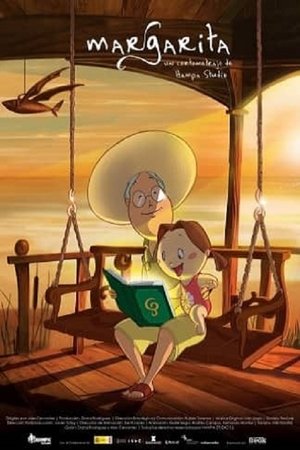
Father, son, the lighthouse as the center of their lives. Both grow up, the son leaving every day to pursue his studies, then returning to an increasingly elderly father who welcomes him with the same warmth, taking him, as he has always done over the years, to the piano to play together.
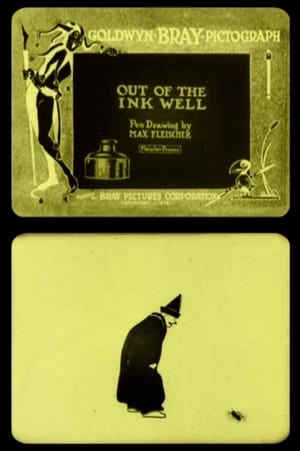
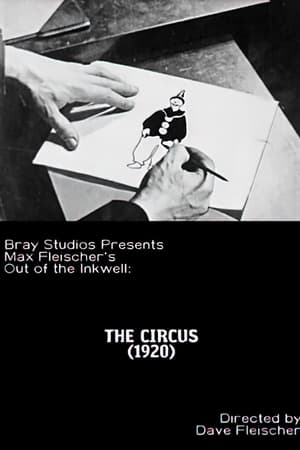
One of the "Out of the Inkwell" series of silent short films featuring a combination of live action and hand-drawn animation.
Chosen the world’s protector against the Seven Deadly Enemies of Man – pride, envy, greed, hatred, selfishness, laziness and injustice – young Billy Batson accepts his destiny as Captain Marvel. Battling alongside Superman against nefarious Black Adam, Billy soon discovers the challenge super heroes ultimately face: is it revenge or justice?