Stop for Bud is Jørgen Leth's first film and the first in his long collaboration with Ole John. […] they wanted to "blow up cinematic conventions and invent cinematic language from scratch". The jazz pianist Bud Powell moves around Copenhagen -- through King's Garden, along the quay at Kalkbrænderihavnen, across a waste dump. […] Bud is alone, accompanied only by his music. […] Image and sound are two different things -- that's Leth's and John's principle. Dexter Gordon, the narrator, tells stories about Powell's famous left hand. In an obituary for Powell, dated 3 August 1966, Leth wrote: "He quite willingly, or better still, unresistingly, mechanically, let himself be directed. The film attempts to depict his strange duality about his surroundings. His touch on the keys was like he was burning his fingers -- that's what it looked like, and that's how it sounded. But outside his playing, and often right in the middle of it, too, he was simply gone, not there."
A unique LaserDisc release. Billy is a 23-year-old Welshman from the South Wales Valleys. He is mentally and physically disabled, confined to a wheelchair and only able to work his upper body. Though he is conceived as mentally challenged, his disability has actually made him not only a genius, but also superhuman, as he also has the ability to literally hear radio waves throughout all frequencies without aid.
DO
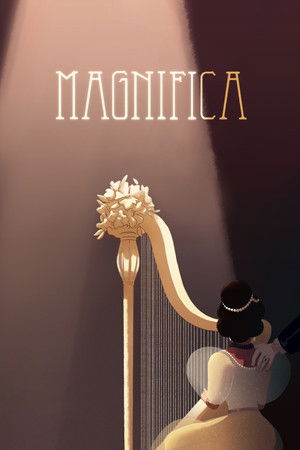
1907. Magnifica, young Costa Rican harpist, is preparing for her concert at the Royal Conservatory of Brussels where she studies with her fiancé. Inspired by the life of Pacifica Zelaya.
A comedy musical Directed by Monty Banks.
Rhys Day presents NO DIVIDE - a sticky mashup biopic/ videofeast.
A girl with amnesia believes she is a bachelor's wife.
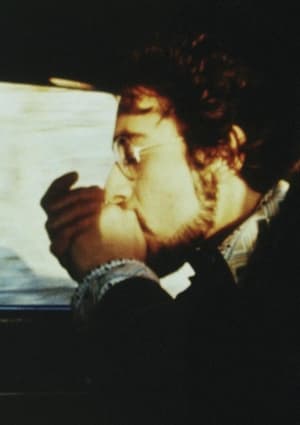
Arguably Larry Gottheim’s most exuberant experiment in the single-shot, single-roll format (and his first with a soundtrack), HARMONICA trains the camera on a friend improvising a tune in the backseat of a moving car. Held out the window, the harmonica becomes a musical conduit for the wind, while Gottheim's film transforms before our eyes into a playful meditation on wrangling the natural elements into art. - Max Goldberg
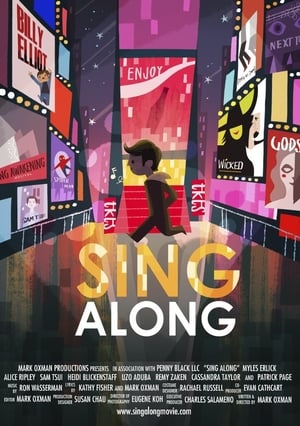
A sheltered boy with a dream of starring on Broadway survives day-to-day life by imagining the world as a musical.
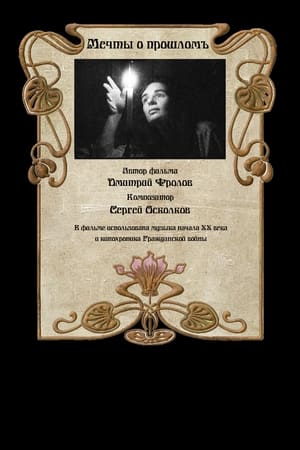
A film about peace, love and war. Dedicated to the 100th anniversary of the end of the Civil War in Russia. The film takes place at the end of the summer of 1917, when Russia and the whole world were at a crossroads between two eras. None of the people could even imagine how much his life would change in the very near future. In a strange way, the atmosphere of the film echoes our current reality and what is happening in Russia today. According to the form of visualization, the film belongs to experimental mockumentary cinema. To give greater authenticity to what is happening on the screen, the shooting was carried out on black-and-white negatives of 16 and 35 mm, hand-operated cameras were used and the material was developed in manual spiral tanks. The documentary chronicle of the Kolchak army of 1919 and the White army in the Far East of 1922 is embedded in the finale of the film.
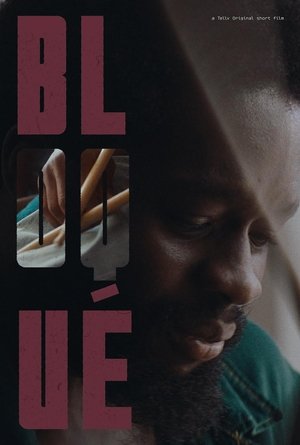
A struggling drummer trapped by his creative block embarks on an isolated journey through his memories, confronting the turmoil that stands between him and his rhythm.
"Frozen Jumper" begins in hit-and-run style with a pulsating textural noise. Flickering, nearly rectangular patterns join on the image plane, at first in black-and-white, bringing to mind the sprocket holes in celluloid film and, not least due to the lack of geometric precision, giving the impression of a pre-digital origin. As the soundtrack rattles on in a minimalistic way, the pattern’s twitchy dance is submerged in various warm hues such as yellow, pink, light green and light blue, which in a different rhythm and to a more agreeable music could be perceived as the signature of slightly retro psychedelia.
On a summer day in the 1950s, a native girl watches the countryside go by from the backseat of a car. A woman at her kitchen table sings a lullaby in her Cree language. When the girl arrives at her destination, she undergoes a transformation that will turn the woman’s gentle voice into a howl of anger and pain.
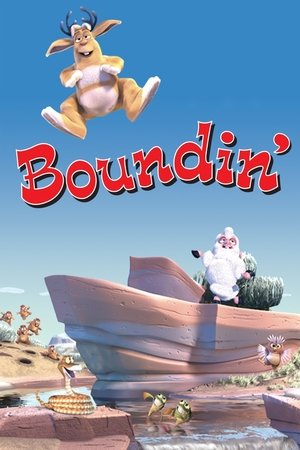
On a high mountain plain lives a lamb with wool of such remarkable sheen that he breaks into high-steppin' dance. But there comes a day when he loses his lustrous coat and, along with it, his pride. It takes a wise jackalope - a horn-adorned rabbit - to teach the moping lamb that wooly or not, it's what's inside that'll help him rebound from life's troubles.
Childhood best friends and Hip-Hop artists, Michelle Shockley and Brandon Rothrock, struggle with their lives and artistic endeavors as they mourn the loss of their crew member and find themselves moving in different directions.
Walter Winchell meets a budding country journalist and shows her around the Biltmore Hotel.
In a bland, utilitarian world of order, one worker finds his inner jazz
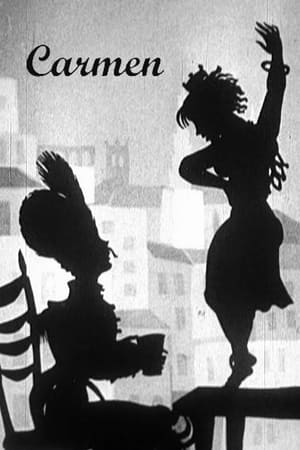
Silhouette film. Based on Bizet’s opera “Carmen”.
Images from 2000s music videos are transferred onto the film strip, torn and abstracted until the visuals convulse and shift—a tactile, poetic exploration of materiality, memory, and medium.
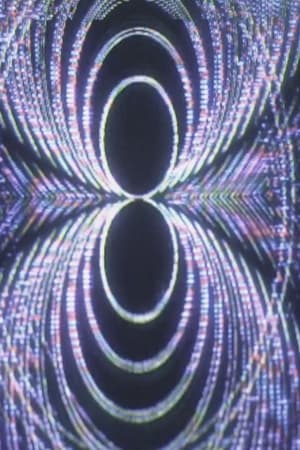
Circuit bent gain controller run into a CRT TV