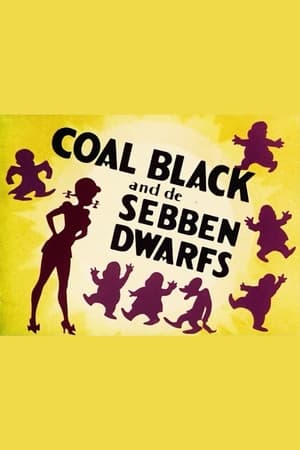
Spoof of Snow White and the Seven Dwarfs (1937) with an all-black cartoon cast. One of the “Censored 11” banned from TV syndication by United Artists in 1968 for racist stereotyping.

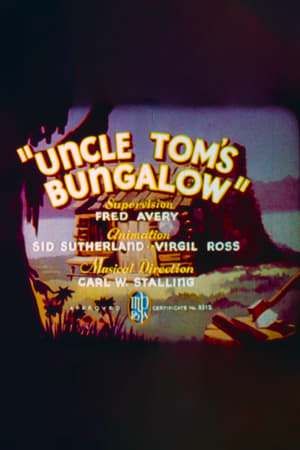
Warner Bros. cartoon parody of Uncle Tom's Cabin. One of the “Censored 11” banned from TV syndication by United Artists in 1968 for racist stereotyping.
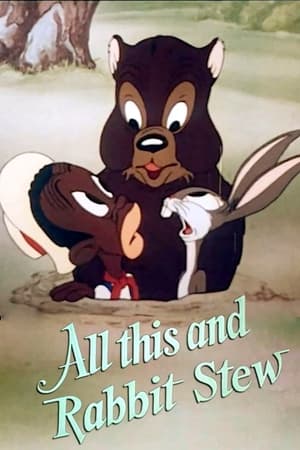
Bugs Bunny heckles a black hunter and escapes from a bear. One of the “Censored 11” banned from TV syndication by United Artists in 1968 for racist stereotyping.
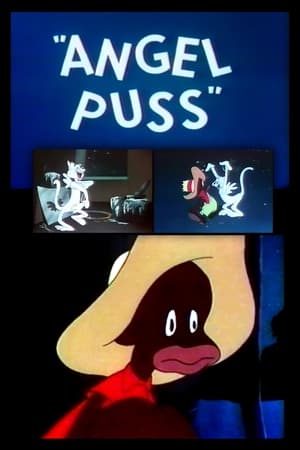
A little black boy is hired to kill a cat, but the feline escapes and proceeds to play tricks on the kid, pretending he's a ghost come back to haunt his "killer". One of the “Censored 11” banned from TV syndication by United Artists in 1968 for racist stereotyping.
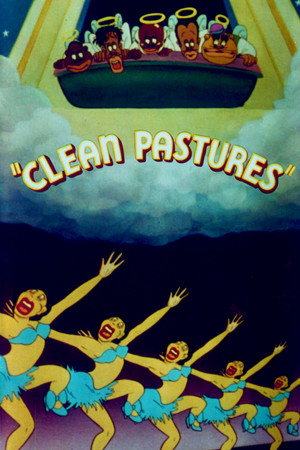
The Lord sees that the stock value of "Pair-o-dice" is dropping on the exchange so he dispatches a slow-witted and slow-talking angel to sinful Harlem to recruit new customers. When this fails, God finds success sending a group of musical angels with a little more swing in their style, so much so that even the Devil wants to join up! One of the “Censored 11” banned from TV syndication by United Artists in 1968 for racist stereotyping.
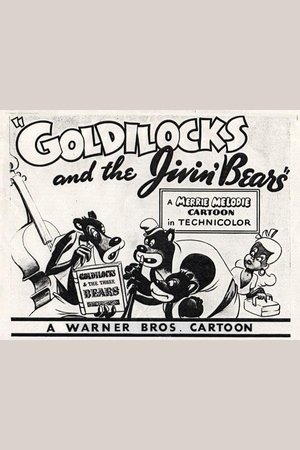
The stories of "Goldilocks" and "Little Red Riding Hood" collide with the world of jazz, resulting in three jiving bears and a jitterbugging Big Bad Wolf. One of the “Censored 11” banned from TV syndication by United Artists in 1968 for racist stereotyping.
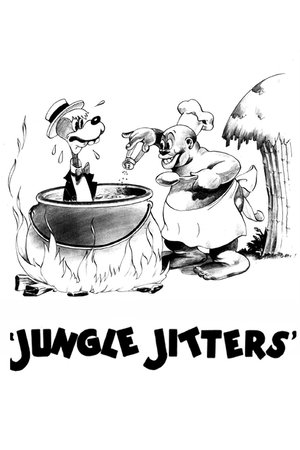
Starts out with a tribe of African cannibals imitating Native Americans. After this, they do the new Warner Bros. Looney Tunes theme "The Merry-Go-Round Broke Down." Then a sloppy stuttering salesman knocks on their doors, and they bring him in and put him in a pot of boiling water. The queen of the tribe wants to see the man. She falls in love with him. They get married, but when the salesman sees he has to kiss the bride, he decides he'd be better off being dinner for a tribe of hungry cannibals. One of the “Censored 11” banned from TV syndication by United Artists in 1968 for racist stereotyping.
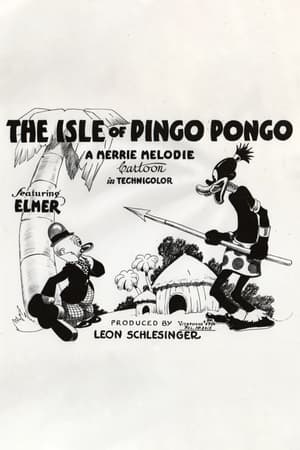
A travelogue spotlights the tropical island of Pingo Pongo, showing the unusual flora and fauna and the lives of the happy natives. One of the “Censored 11” banned from TV syndication by United Artists in 1968 for racist stereotyping.
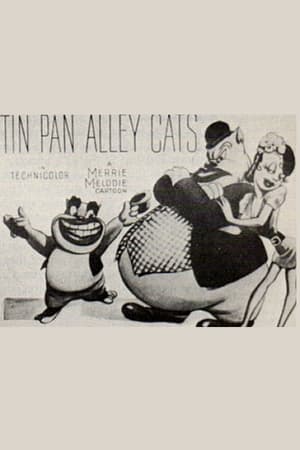
A jazz cartoon involving a "Fats Waller"-like cat who leaves the "Uncle Tomcat Mission" for the local jazz club. One of the “Censored 11” banned from TV syndication by United Artists in 1968 for racist stereotyping.
Piggy and Fluffy, which is the ripoff of Mickey and Minnie, have adventures on a riverboat and Uncle Tom is chased by skeletons promising to take him to Hallelujah Land. One of the "Censored Eleven" banned from TV syndication by United Artists in 1968 for racist stereotyping.
The romance of a couple set in the time of Juan Manuel de Rosas with a federal corporal serving as a link.
Dr. Moreau is an abstract horror short, adapted from H.G.Wells' classic novel, that will invite the viewer to board on a tangible journey to the borders of science, where the differences between nature and humanity are blurred.
An obese 11-year-old attempts to give a love letter to his elementary school crush and winds up at dinner with her intensely suburban family and her new flame.
A drug dealer in love with university student Ikhlas resorts to taking revenge when she refuses to marry him because of her love for Omar.
The order comes in the summer of 1941 from propaganda minister Joseph Goebbels himself: The best animators are summoned to Berlin. Their task: Producing feature-length cartoons in ‘Disney-Quality’ with the newly founded ‘Deutsche Zeichenfilm GmbH’. To get trained, the Disney movie “Snow White” is re-traced frame by frame. After the final victory, one new feature-length production of quality shall be released every year from 1947 onwards. – that is the plan. Only in 1943, the first production is completed: “Armer Hansi” a 17-minute-long colour movie, realized with the effortful Multiplane-technology. The second film by the ‘Deutsche Zeichenfilm’ is only completed in 1946 – by DEFA. In the territories occupied by Germany, cartoons are produced as well, sometimes harmless ones, sometimes propagandistic ones. With excerpts from animated movies, life-action film documents, and witness reports by contemporaries, this documentary draws a picture of the cartoon production in the third Reich.